Nearly Two Million Ghanaian Children Attend Schools Within Five Kilometres of Toxic Contamination Sites, Study Reveals
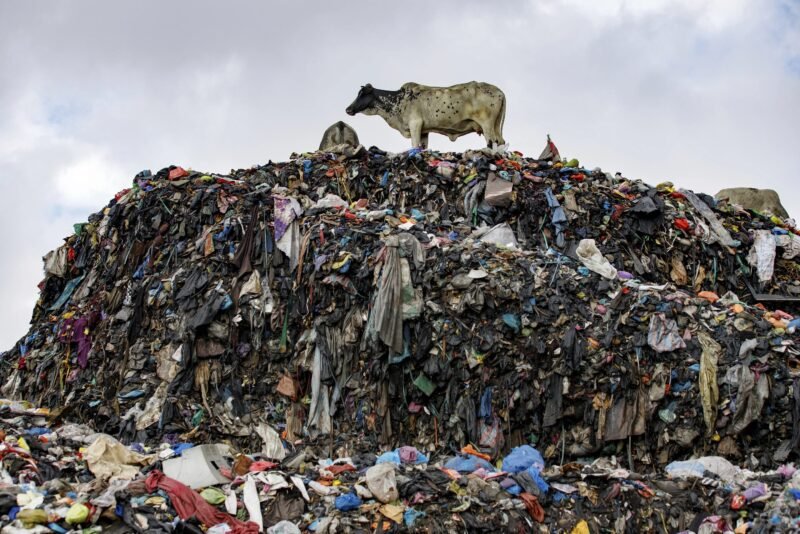
Approximately two million Ghanaian children attend schools located within five kilometres of documented toxic contamination sites, according to a sweeping new study that examined the proximity of educational institutions to environmental hazards across the developing world.
The research, published by the Center for Global Development under the title “Schools in the Shadow of Toxic Sites: Pollution Proximity in Low- and Middle-Income Countries,” analysed the locations of more than 2.6 million schools across 17 countries. In Ghana, the findings paint a troubling picture of how urbanisation and industrial activity have placed young learners squarely in the path of environmental risk.
The Numbers in Ghana
The study found that 1,094 schools, representing 4.8 per cent of all schools nationwide, sit within one kilometre of a contaminated site. Within a five-kilometre radius, the figure rises sharply to 5,861 schools, or roughly 26 per cent of all schools in the country. In raw terms, that translates to approximately 400,000 children within a kilometre of contamination and some two million within five kilometres.
Lead contamination is a particular concern. Some 660 schools are located within one kilometre of documented lead-contaminated sites, affecting around 200,000 children. Within five kilometres, 4,770 schools and an estimated 1.6 million children are exposed to lead-related hazards. Lead is a well-documented threat to children’s cognitive development, behaviour, and academic performance, with even low-level exposure capable of causing lasting harm.
A Surprising Wealth Paradox
One of the study’s more counter-intuitive findings challenges the common assumption that pollution exposure is concentrated mainly in poorer communities. In Ghana, students attending schools in the wealthiest neighbourhood quintile were 71.7 per cent likely to be located within five kilometres of a documented contaminated site, compared with just 3.2 per cent for the poorest quintile.
Researchers explained that this pattern reflects the concentration of industry, businesses, schools, and economic activity in major urban centres rather than evidence that poorer communities face lower environmental risks overall. The finding carries important implications for how policymakers target interventions, suggesting that wealth does not necessarily translate into environmental safety for children.
Urban Concentration and Air Quality
The geographic distribution of risk is heavily skewed towards urban areas. In Greater Accra, 67.6 per cent of schools lie within five kilometres of a contaminated site, far exceeding the national average. Across the country, 45.2 per cent of urban schools fall within this radius compared with only seven per cent of rural schools.
Air quality adds another layer of concern. According to satellite-based estimates, every mapped school in Ghana exceeds the World Health Organisation’s latest annual guideline for fine particulate matter, known as PM2.5. The average concentration across Ghanaian schools stands at 26 micrograms per cubic metre, more than five times the WHO guideline of five micrograms per cubic metre. Nearly all schools also exceed the WHO’s previous interim target, while only two per cent surpass the higher threshold set by the US Environmental Protection Agency.
What Must Change
The study’s authors call for better monitoring, stronger environmental regulation, and improved land-use planning to reduce risks to pupils across the developing world. Specifically for Ghana, the findings suggest that policymakers should prioritise keeping new schools away from known contaminated sites, particularly in urban zones. Environmental agencies need robust monitoring of PM2.5 and heavy-metal levels around schools, while public health officials should consider targeted health screenings and mitigation measures such as air filtration systems and lead-free infrastructure for schools closest to contamination.
The question of campus safety in Ghana has drawn growing public attention in recent years, and this study adds an environmental dimension to a conversation that has so far focused primarily on security and health services at educational institutions.
Globally, 252,000 schools are located within five kilometres of documented contaminated sites, affecting roughly 42.8 million children. Some 6.9 million children attend schools within a single kilometre of such sites.
Image Source: MYJOYONLINE