Mahama’s Lean Government Claim Misleading When Full Appointments Are Considered, Says Jinapor
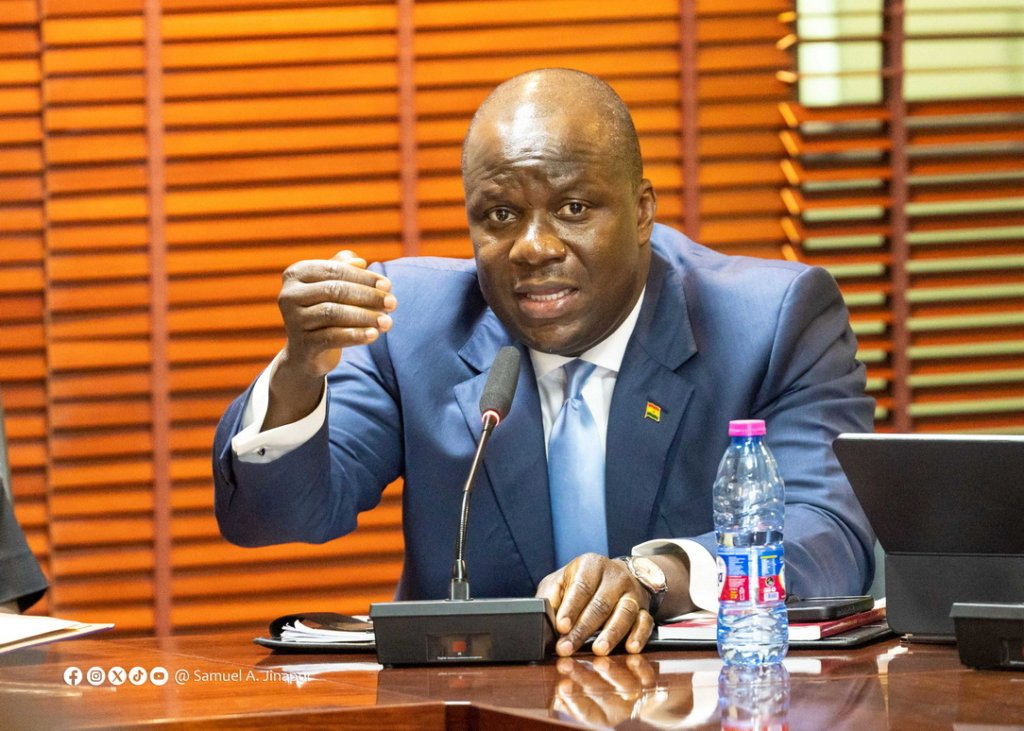
The assertion by the Mahama administration that it runs a leaner, more efficient government has come under sharp criticism from Samuel Abu Jinapor, the Member of Parliament for Damongo and Ranking Member on the Parliamentary Foreign Affairs Committee, who argues that the claim becomes untenable when the full scope of public appointments is examined.
Speaking on the matter, Mr Jinapor pointed to a stark disparity in diplomatic appointments as evidence that the government’s size, in substance, far exceeds its carefully curated image. Under the previous Akufo-Addo administration, six deputy ambassadors were appointed. Under President John Dramani Mahama, that figure has tripled to eighteen.
“Why do we have a so-called lean government today, and yet the cost of running that government is much bigger?” Mr Jinapor asked, challenging what he described as a narrative built on selective accounting.
The Mahama administration has frequently touted its reduction in the number of ministers and deputy ministers as proof of fiscal discipline and streamlined governance. But critics like Mr Jinapor argue that counting ministers alone presents a distorted picture. The true measure of government size, he contends, must include all appointments across ministries, agencies, state-owned enterprises and diplomatic missions.
The numbers, when viewed in their entirety, tell a different story. Despite fewer ministers at the cabinet table, the overall cost of running government has risen. The public wage bill has expanded, and the broader administrative footprint has grown rather than contracted.
“The emphasis on the reduced number of ministers creates a false impression of efficiency,” Mr Jinapor said. “The wider network of appointments suggests a government structure that is larger in substance than it appears on paper.”
The criticism touches on a broader governance question that transcends partisan politics: how should the size and cost of government be measured? Administrations of both political traditions have historically counted heads at the top while leaving the sprawling apparatus beneath largely untouched. The lean government label, critics argue, has become more of a communications strategy than a genuine reform metric.
Constitutionally, the President retains broad discretion over the structure of government, and there is no legal cap on the number of deputy ambassadors or similar positions. But the political argument is less about legality and more about public trust. If citizens are told their government has been trimmed, they expect to see savings reflected in the national accounts, not merely in the ministerial roll call.
The debate is unlikely to subside. With the cost of governance remaining a perennial concern for Ghanaians across the political spectrum, the pressure on the administration to account for the full scale of its appointments and the expenditure they entail will only intensify as the electoral cycle progresses.
Image Source: MYJOYONLINE