Mahama Urges Traditional Leaders to Champion Free Primary Healthcare in Ghana
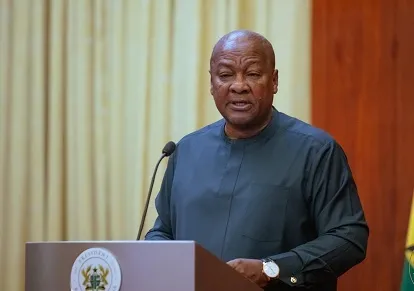
Ghana’s healthcare landscape stands at a pivotal juncture as the government seeks to deepen preventive care through community engagement, with President John Dramani Mahama calling on traditional leaders to champion the Free Primary Healthcare policy. The appeal, delivered during a durbar in Gomoa Akamu, Central Region, forms part of a broader strategy to decentralize health advocacy and harness local authority in fostering early intervention — an approach that could reshape access to essential services across the nation.
At the heart of the initiative lies a simple yet potent premise: regular check-ups at Community-based Health Planning and Services (CHPS) compounds and health centres can detect illnesses early, preventing progression to severe stages that strain both individuals and the public health system. President Mahama emphasized that traditional authorities, as trusted figures within their communities, are uniquely positioned to encourage residents to utilize these facilities routinely. By promoting preventive visits, the government aims to shift the paradigm from reactive treatment to proactive wellness, thereby reducing avoidable deaths and alleviating pressure on higher-tier hospitals.
The President was careful to delineate the Free Primary Healthcare policy from the existing National Health Insurance Scheme (NHIS), clarifying that the two are complementary rather than redundant. While the new policy guarantees free basic treatment and preventive services at the primary level — covering CHPS compounds, health centres, and polyclinics — the NHIS continues to subsidize more specialized care at district, regional, and teaching hospitals. This tiered structure ensures that patients receive appropriate care at the right level, optimizing resource allocation within the constrained fiscal environment.
Complementing the primary care push, the Mahama Care initiative targets patients burdened by chronic conditions such as kidney disease, cancer, hypertension, stroke, heart disease, and diabetes. By offering specialized support for these prevalent ailments, the government addresses a critical gap in the healthcare continuum, particularly for non-communicable diseases that have risen sharply in recent years. President Mahama urged citizens to maintain their NHIS enrollment, framing it as a vital safety net for secondary and tertiary care needs.
Infrastructure development remains a cornerstone of the strategy, with the President highlighting the newly completed CHPS compound at Ohiaba in the Abura-Asebu-Kwamankese District as proof of the government’s commitment to expanding physical access. Such facilities, especially in underserved rural areas, are vital for bridging the urban-rural health divide. These efforts align with the NDC administration’s 2024 election promises to restore economic stability and improve Ghanaian welfare, a goal bolstered by recent macroeconomic improvements including a more stable cedi and declining inflation — indicators that signal recovering investor confidence and macroeconomic resilience.
The durbar also served as a forum for sector ministers to detail ongoing projects under the Resetting Ghana Agenda, spanning infrastructure, economic interventions, and policy reforms. Vice President Professor Jane Naana Opoku-Agyemang reinforced the need for civic partnership, urging Ghanaians to engage with the government through responsible citizenship and constructive criticism. She specifically appealed to Central Region residents to avoid inflammatory language when expressing concerns, fostering a dialogue rooted in mutual respect.
Earlier in the visit, the Presidential party inspected the Apam–Mankoadze–Otuam–Deregyaoad road project, a key component of the Big Push Programme aimed at enhancing connectivity. With an expected completion date in June 2027, the initiative reflects the administration’s holistic view of development, where health, infrastructure, and economic policies are interlinked. Improved roads, for instance, facilitate access to health centres and enable timely medical referrals, creating synergies that amplify the impact of individual interventions.
As Ghana advances its healthcare reform agenda, the involvement of traditional leaders could prove decisive. Their grassroots reach and cultural authority offer a powerful channel for disseminating health information and encouraging behavioral change. Yet, success will depend on sustained funding, adequate training for health workers, and robust monitoring to ensure accountability. If effectively implemented, the Free Primary Healthcare policy has the potential to not only improve health outcomes but also strengthen community resilience and contribute to broader national development goals.
Image Source: MYJOYONLINE