Macron Reparations Invite Draws Fire as Critics Call It a French Public Relations Exercise
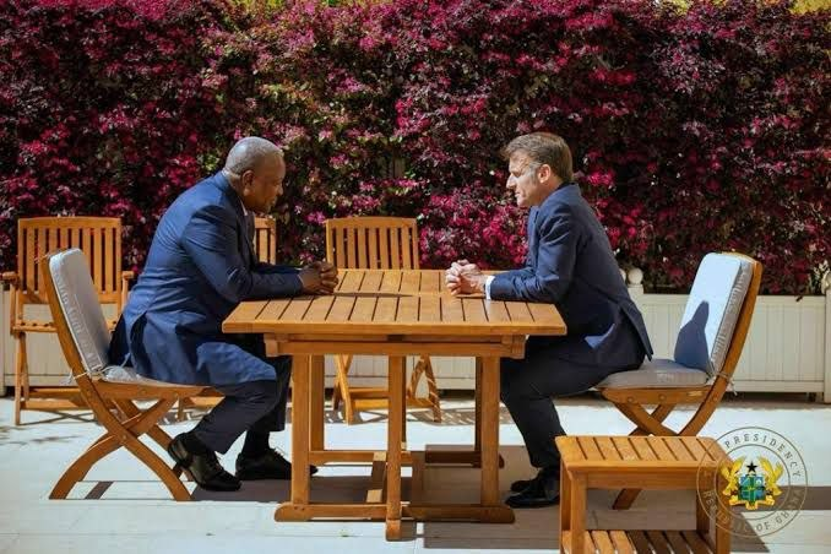
When Ghana’s President John Mahama invited French President Emmanuel Macron to address the Next Steps Conference on Reparatory Justice in Accra this week, the gesture was meant to signal a new chapter in the global conversation about slavery’s legacy. Instead, it has ignited a fierce backlash from civil society groups who argue the invitation hands France a platform to rehabilitate its image without confronting the full weight of its colonial history.
The conference, convened on 17 June 2026, brings together world leaders, policymakers, and academics to chart practical pathways for addressing the historical wrongs of the trans-Atlantic slave trade and European colonialism. Mahama, who serves as the African Union’s Champion for Reparations, positioned the event as a landmark moment for justice-focused dialogue. But critics see Macron’s presence as something far less noble.
“His presence and address at the summit are deeply problematic, undignified, and an affront to the very cause it claims to advance,” said Atisu Olivia, youth wing leader of the Ho Collective of the Socialist Movement of Ghana. The group called for a boycott of the conference, comparing the invitation to “inviting a rapist to a therapy session.”
The criticism rests on a concrete foundation. France controlled much of Africa for roughly 170 years through the Code Noir, a legal code that defined enslaved people as property. While the French Parliament eventually repealed the statute, critics point out it was never formally nullified—a legal distinction that, they argue, has allowed France to sidestep accountability for the economic plunder and human suffering that followed.
More recently, France abstained from a United Nations resolution declaring the trans-Atlantic slave trade the “greatest crime against humanity.” For many observers, that abstention speaks louder than any diplomatic gesture. “How do we give Macron the voice to speak, when a couple of months ago France could not vote a yes?” Olivia asked. “How does the accused, who has shown no remorse, offered no apology, or shown any accountability, become the central voice in this conference?”
Macron’s recent Africa itinerary has also raised eyebrows. The French president has visited Ghana and Kenya three times in under two months, a pace that coincides with France’s declining influence in the Sahel following the withdrawal of French troops from Mali, Burkina Faso, and Niger. To sceptics, the accelerated diplomacy looks less like genuine engagement and more like a scramble to remain relevant on a continent that is increasingly rejecting French influence.
The economic dimension of the complaint is equally pointed. Olivia and other activists highlight the CFA franc—a currency used by 14 West and Central African nations that remains pegged to the euro under arrangements critics describe as neocolonial. “If Emmanuel Macron, as President of France, wants to contribute to Reparatory Justice in Africa, the right thing for him is to start with our brothers and sisters in Francophone West Africa who have suffered for many years under the crisis of the CFA,” Olivia said.
Supporters of the invitation counter that engagement, however imperfect, is preferable to isolation. They argue that bringing former colonial powers to the table—even under uncomfortable circumstances—is the only way to move from symbolic gestures to binding commitments. The conference’s organisers have framed Macron’s participation as an opportunity to hold France accountable in a public forum rather than behind closed doors.
Yet the risk, critics warn, is that the event becomes a stage for French image management rather than a catalyst for genuine reparatory action. If the conference produces warm speeches but no concrete commitments—no restitution of looted artefacts, no renegotiation of exploitative trade arrangements, no formal apology—then the invitation will have served France’s interests far more than Africa’s.
The debate underscores a broader tension in the global reparations movement: whether to engage former colonial powers on terms that might legitimise their carefully curated narratives of reform, or to demand accountability on African terms, with or without their participation. As the Accra conference unfolds, that question remains unanswered.
Image Source: MYJOYONLINE