KAIPTC Launches HAWA 2026 to Strengthen West Africa Humanitarian Response
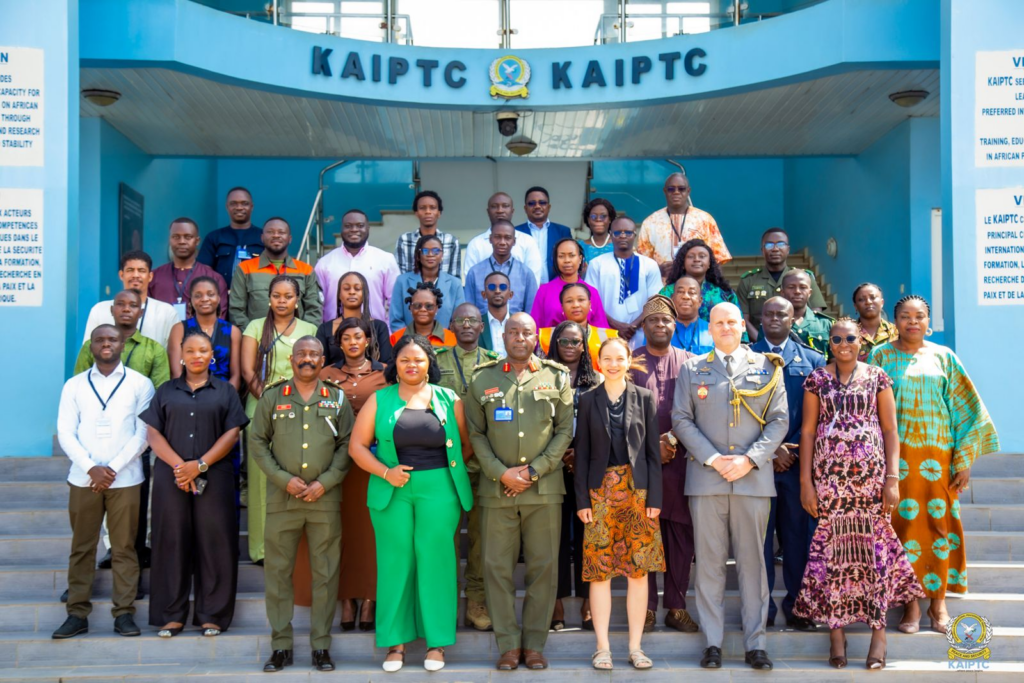
The Kofi Annan International Peacekeeping Training Centre (KAIPTC) has officially launched the Preparedness for Humanitarian Assistance and Peacebuilding in West Africa (HAWA) Core Course 2026 in Accra, marking another milestone in regional efforts to address evolving humanitarian and security challenges across West Africa.
The opening ceremony, held at KAIPTC headquarters in Accra on Monday, July 6, 2026, brought together participants from across the region and beyond, underscoring the programme’s growing reputation as a critical platform for building humanitarian response capacity. Speaking on behalf of the Commandant, Deputy Commandant Brigadier General Zibrim Ayorrogo welcomed participants and emphasized the programme’s role in strengthening regional cooperation.
Now in its fifth phase and thirteenth iteration, the HAWA programme has evolved into a vital mechanism for fostering collaboration among humanitarian actors, security institutions, civil society organizations, and development practitioners. Jointly implemented by KAIPTC, CARE International, CARE International in Ghana, and the Austrian Centre for Peace, with support from Austrian Development Cooperation and the Austrian Ministry of Defence, the programme has built sustainable capacities across the region over multiple iterations.
Brigadier General Ayorrogo highlighted the increasingly complex humanitarian landscape in West Africa, citing violent extremism, forced displacement, climate and environmental stress, food insecurity, governance deficits, and socio-economic fragility as interconnected drivers of instability that transcend national borders.
“These challenges are increasingly interconnected and often transcend national borders,” he stated, stressing that fragmented responses are inadequate. “We need coordinated and inclusive action that cuts across sectors and institutions, bringing together governments, civil society, local communities, and regional bodies.”
Particular emphasis was placed on vulnerable border regions between Ghana, Burkina Faso, Togo, and Côte d’Ivoire, where humanitarian pressures are often most acute. “These border communities often experience the direct effects of insecurity, climate stress, and humanitarian pressures, reminding us that crises do not stop at national boundaries and neither should our responses.”
The HAWA Core Course 2026 curriculum has been structured to provide practical, context-driven skills through real-life scenarios, interactive discussions, and applied learning tools. Key thematic areas include gender-responsive crisis response, environmental peacebuilding, climate-security linkages, and inclusive humanitarian action—areas now recognized as central to building resilient societies rather than peripheral concerns.
Highlighting the importance of inclusive approaches, the Deputy Commandant stressed the significance of the Women, Peace and Security agenda and the Youth, Peace and Security framework, calling for greater inclusion of women and young professionals in peacebuilding and humanitarian decision-making processes.
HAWA Project Manager Sophia Stanger issued a timely warning about the growing impact of climate change on humanitarian operations, noting that extreme weather events are becoming permanent features of global climate patterns rather than isolated incidents.
“In Ghana, as in many West African coastal countries, the situation is the opposite: severe rains and flooding have caused emergencies, resulting in the loss of lives, homes, and livelihoods,” she said, contrasting the situation with heatwave challenges in Austria. “Humanitarian systems must urgently adapt by integrating environmental and climate considerations into planning, preparedness, and response mechanisms.”
Stanger noted that even the timing of the course had been affected by heavy rains in the region, underscoring the very realities the programme seeks to address. She emphasized that the effectiveness of the training depends on active participant engagement and the integration of field experience into discussions, arguing that effective learning must be grounded in field realities.
The programme extends beyond classroom instruction through specialized courses, Training of Trainers (ToTs), field engagements in border regions, and an active alumni network designed to sustain collaboration and knowledge sharing long after the course concludes.
Image Source: MYJOYONLINE