Government Meets Transport Operators on Fare Hikes
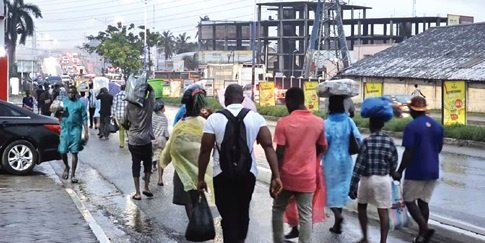
The Ministry of Transport is scheduled to hold crunch talks with commercial transport operators following concerns over the alleged deliberate creation of scarcity in the sector to hike fares.
The Minister of Government Communications, Felix Kwakye Ofosu, disclosed this when he took his turn at the Government Accountability Series briefing to the media in Accra yesterday.
The meeting will also discuss general transport fares in the wake of the recent consistent fuel price reductions.
Commercial transport operators have used fuel price hikes as justification for fare increments in the past, but have not responded to the periodic and consistent reduction in prices with similar zeal.
In recent times, they have cited the cost of automobile spare parts for maintaining current transport fares, which they last reduced by 15 percent in May 2025, a first-time occurrence in many years.
Economic gains have been noted, with the Minister rejecting assertions that recent macroeconomic improvements had failed to impact the daily lives of ordinary citizens, pointing to consistent reductions in fuel prices as evidence of lowered living costs.
The reduction in prices of fuel at the pumps puts money back into the pockets of households and businesses, according to Mr. Kwakye Ofosu.
The primary focus of the upcoming meeting with transport operators is to address what the government views as rent-seeking behavior, with some operators allegedly limiting the availability of vehicles to artificially hike fares despite government interventions to reduce operational costs.
These interventions include recent reductions in fuel prices and the removal of import duties on selected spare parts, aimed at cushioning the transport sector and the riding public.
However, reports indicate some operators are engaging in rent-seeking by not making vehicles available to create artificial scarcity and keep fares up.
The government’s meeting with transport operators aims to ensure benefits from relief measures are passed on to commuters through corresponding adjustments in transport fares.
Additionally, a detailed analysis from the Ministry of Finance shows a direct correlation between exchange rate movements and receipts from customs duties, with the recent appreciation of the Ghana cedi lowering costs for importers but leading to substantial reductions in potential government revenue.
The government is committed to strengthening revenue mobilization efforts to build resilience against external volatilities, with Mr. Kwakye Ofosu stating that exchange rate stability is paramount for predictable revenue forecasting and collection.
The government has implemented policies to alleviate cost pressures on transport operators and has made progress in the fight against illegal mining and infrastructure development through the Big Push Programme.
Image Source: MYJOYONLINE