Ghana Prepares to Scale Up Solar Power and Mini-Grid Projects Nationwide
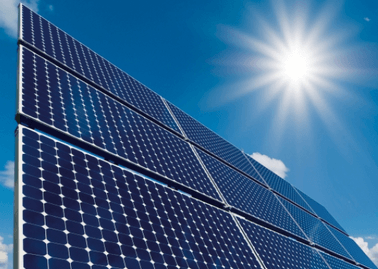
Ghana is preparing for a significant expansion of renewable energy deployment, moving beyond pilot projects and policy frameworks toward large-scale solar installations, mini-grids, and off-grid systems designed to extend clean electricity access to underserved communities across the country.
Dr Robert Sogbadji, Deputy Director for Renewable Energy and Green Transition at the Ministry of Energy and Green Transition, announced the initiative at the Second Edition of the Ghana Green Investment Dialogue and Capacity Building Workshop in Accra on Thursday. The event, organised by the Climate Parliament in partnership with the United Nations Industrial Development Organisation (UNIDO) and the Parliament of Ghana, brought together policymakers, investors, and development partners to chart a course for the country’s green energy future.
“We must now accelerate the pace — moving from pilot projects and policy frameworks to large-scale deployment and bankable investment pipelines at the constituency level,” Dr Sogbadji told delegates. The statement marks a shift in tone from a government that has long articulated renewable energy ambitions but has struggled to translate them into the kind of bankable, investment-ready projects that attract private capital at scale.
Ghana’s electricity access rate has surpassed 89 per cent, placing it among the leading nations in sub-Saharan Africa. Yet significant pockets of underserved populations remain, particularly in island and lakeside communities where extending the national grid is prohibitively expensive. The government’s Scaling-Up Renewable Energy Programme (SREP) has already installed solar mini-grids in some of these areas, delivering clean electricity to thousands of previously disconnected residents and powering homes, schools, health centres, and productive economic activities such as agro-processing.
The next phase of expansion will focus on four key areas: solar power systems, mini-grids, rooftop solar installations, and other off-grid renewable energy solutions. Central to the strategy is a forthcoming national net-metering framework that would allow households and businesses with rooftop solar systems to feed excess electricity back into the national grid. The initiative is expected to help consumers reduce electricity bills while encouraging private sector participation in distributed solar energy technologies — a model that has driven rapid rooftop solar adoption in countries from Australia to India.
The policy infrastructure supporting the expansion includes the Renewable Energy Act, the Renewable Energy Master Plan, and the National Energy Transition Framework. A revised Renewable Energy Master Plan, expected to be launched soon, will provide updated guidance for the country’s renewable energy development agenda. The government is also promoting Green Energy Zones as magnets for sustainable investment and local economic development.
Mr Samuel Arkurst, Director of the Real Sector Division at the Ministry of Finance, framed the transition as both an environmental necessity and an economic imperative. He noted that climate-related disasters — flooding, coastal erosion, and erratic rainfall — continue to place mounting pressure on Ghana’s economy and public finances, making the case for renewable energy investment increasingly difficult to ignore on purely fiscal grounds.
The economics are shifting in Ghana’s favour. The cost of solar photovoltaic systems has fallen by more than 80 per cent over the past decade, making solar competitive with diesel generators and, in many contexts, with grid-connected thermal power. For rural communities that have never had reliable electricity, solar mini-grids offer a faster and cheaper path to energy access than waiting for grid extension — a reality that is reshaping energy planning across the continent.
The test now is whether Ghana can move from announcements to execution. The country has no shortage of renewable energy plans and policy documents; what has been missing is the institutional capacity and financing structures to deliver projects at the speed and scale required. The Green Investment Dialogue represents an attempt to close that gap, but the real measure of success will be how many solar panels are generating electricity on Ghanaian rooftops and in Ghanaian villages twelve months from now.
Image Source: GHANA BUSINESS NEWS