Ghana Opts for Hybrid Investment Model in Extractive Sector, Keeps Door Open to Foreign Capital
Ghana is charting a middle course in the governance of its extractive industries, pursuing a hybrid financing model that blends domestic capital mobilisation with continued foreign investment rather than shutting the door on international mining companies.
The approach, articulated by Mineral Economist Wisdom Puplampu of the Minerals Commission at a recent Joy Business Roundtable Dialogue, represents the government’s attempt to square a circle that has vexed resource-rich African nations for decades: how to maximise the domestic benefits of natural resource extraction without deterring the foreign capital and expertise that large-scale mining operations require.
“If we nationalize the mines, we are telling investors that we are closing our doors, and that is not government policy,” Mr Puplampu cautioned, pushing back against calls for a more exclusionary stance toward foreign participants in Ghana’s mining sector.
The hybrid model under discussion would draw on three distinct streams of capital. Bank debt would provide the foundational financing layer. Equity raised through the Ghana Stock Exchange would open ownership to a broader base of domestic investors. And critically, portions of pension funds — currently under discussion with the National Pension Regulatory Authority — could be channelled into the equity market as patient capital suited to the long investment horizons that mining projects demand.
“If we adopt the hybrid approach, we will be able to make significant impact,” Mr Puplampu said, framing the strategy as a pragmatic alternative to the binary choice between full foreign ownership and outright nationalisation.
The policy also signals a renewed focus on strengthening revenue management and closing the loopholes that have historically allowed value to leak out of Ghana’s extractive sector. Legal and regulatory frameworks are being tightened, with local content regulations serving as a key lever to ensure that a greater share of mining revenues circulate within the domestic economy.
One persistent challenge, however, remains access to finance. Mr Puplampu urged Ghanaian banks to recognise the commercial opportunities within the mining sector and to develop financing products suited to its needs. The stock market alone, he acknowledged, cannot provide the scale of capital required for large-scale operations — hence the interest in mobilising pension funds as a supplementary source of long-term investment.
The timing of these discussions is significant. Ghana’s extractive sector faces mounting scrutiny over its contribution to national development, particularly as the country grapples with fiscal pressures and a weakening cedi. The need to extract greater domestic value from gold, oil, and critical mineral production has become a matter of economic urgency, not merely policy aspiration.
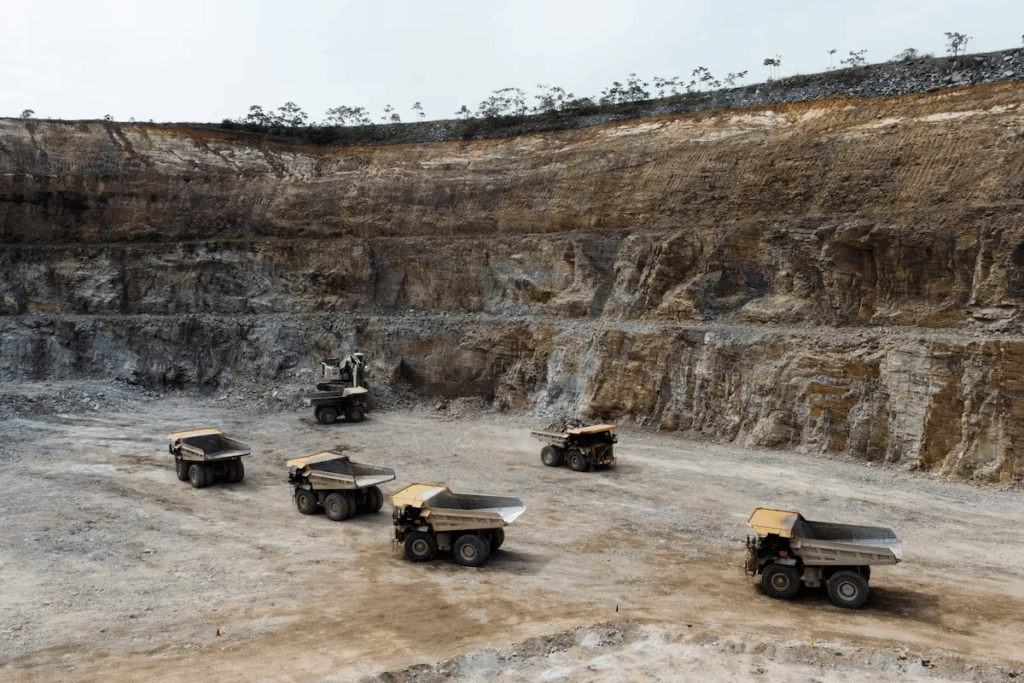
Recent reporting has highlighted the rapid expansion of gold mining activity around Lake Bosomtwe, Ghana’s only natural lake, underscoring both the scale of the sector’s growth and the environmental stakes involved in managing it responsibly.
The government’s approach — keeping foreign investors at the table while progressively strengthening local participation — reflects a calculated bet that partnership, rather than exclusion, offers the most reliable path to sustainable resource governance. Whether the hybrid model delivers on its promise will depend on the detail of its implementation: the rigour of local content enforcement, the willingness of domestic financial institutions to engage, and the discipline with which pension fund investments are managed in a sector not without its risks.
For now, the signal from Accra is clear. Ghana wants more from its minerals, but it intends to get there by widening the circle of participants, not narrowing it.
Image Source: MYJOYONLINE