Ghana National Research Fund Must Drive Job Creation and National Solutions, Says Mahama
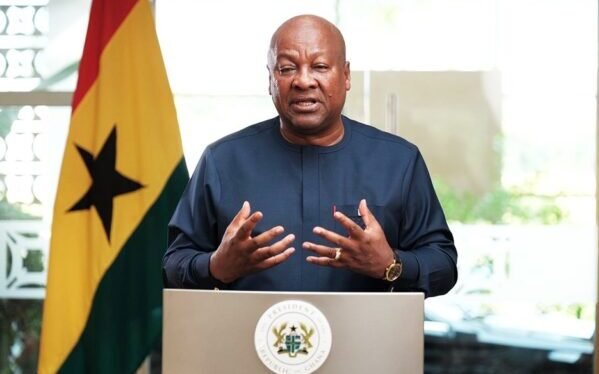
President John Dramani Mahama has launched the Ghana National Research Fund with a clear mandate: the institution must produce research that creates jobs, informs policy, and delivers tangible improvements in the lives of ordinary Ghanaians.
Speaking at the fund’s official launch in Accra on Tuesday, the President set out a vision that deliberately departs from the traditional model of academic research for its own sake. The fund, backed by an initial government release of GH₢100 million, is designed to bridge the gap between scholarly inquiry and the practical challenges facing the nation.
“The objective is not only to produce more research. The objective is to produce research that solves problems, that informs policy, that creates jobs, that strengthens industries and improves the lives of Ghanaians,” President Mahama said. “That is what the fund is about.”
From Theory to Impact
The fund represents a significant philosophical shift in how Ghana approaches knowledge production. Rather than channelling resources into abstract academic pursuits, the government is insisting that publicly funded research must demonstrate clear pathways to economic and social impact.
This approach aligns with broader efforts to ensure that government spending delivers measurable returns. The Feed Ghana Programme, which uses precision soil testing to transform agricultural productivity, offers a recent example of how research-driven approaches can be translated into concrete national development outcomes.
The GH₢100 million seed allocation signals the government’s seriousness about the initiative, though the fund’s long-term success will depend on how effectively it can channel resources toward projects with demonstrable impact rather than becoming another bureaucratic disbursement mechanism.
A Legacy Revisited
President Mahama noted that the concept of a national research fund was originally envisioned by the late President John Evans Atta Mills, his political mentor and predecessor. The decision to revive and implement the idea, years after it was first proposed, adds a layer of political continuity to what is ostensibly a technocratic initiative.
The fund is expected to support research across multiple sectors, including agriculture, health, industry, and technology. By requiring that funded projects demonstrate relevance to national priorities, the government hopes to break down the wall between Ghana’s universities and the practical needs of its economy.
The Challenge Ahead
Ghana’s research ecosystem has long struggled with chronic underfunding, fragmented institutional capacity, and a disconnect between academic output and industrial application. The new fund aims to address all three problems simultaneously, but the scale of the challenge should not be underestimated.
For researchers and institutions, the message is unambiguous: proposals must demonstrate how they will contribute to job creation, industrial strengthening, or policy improvement. Purely theoretical work, however intellectually rigorous, is unlikely to attract funding under this framework.
The fund’s governance structure and disbursement mechanisms will be critical to its success. International experience suggests that research funds work best when they maintain independence from political interference while remaining accountable to clear national priorities. Striking this balance will be the fund’s first and most important test.
Image Source: MYJOYONLINE