Ghana Has Only Two Functional MRI Machines in Public Hospitals, MahamaCares Assessment Reveals
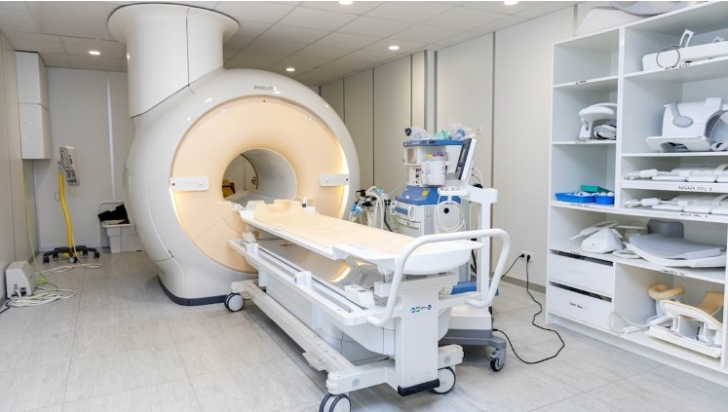
A stark assessment of Ghana’s public health infrastructure has laid bare a critical shortage of diagnostic imaging equipment, revealing that the entire country has only two functional MRI machines in its public hospital system. The finding, disclosed under the MahamaCares initiative, underscores the depth of the healthcare crisis confronting the nation.
The numbers paint a sobering picture. Beyond the two MRI scanners, Ghana’s public hospitals are equipped with just five mammogram machines and two radiotherapy devices. In the entire northern region, home to millions of people, only two cardiologists serve the population. The gap between available specialist care and the needs of ordinary Ghanaians remains vast.
The MahamaCares programme, formally established under the Ghana Medical Trust Fund Act of 2025 (Act 1144), has identified the acquisition of additional MRI scanners as one of its top priorities. The initiative also aims to expand cardiology centres at Korle Bu Teaching Hospital, Komfo Anokye Teaching Hospital, and Tamale Teaching Hospital, while rolling out dialysis machines and intensive care unit equipment to health facilities nationwide.
The programme’s strategic vision rests on four pillars: patient support, infrastructure and equipment, workforce development, and medical research. Officials say the pilot phase will support surgeries and chemotherapy for 50 patients, with nationwide rollout of patient-support services expected across 29 hospitals by the end of June 2026. The long-term target is to place at least 10 specialists per region to provide advanced chronic-disease care.
Funding, however, remains a persistent challenge. On June 15, a cheque for GH¢6.1 million was presented at the Office of the President, drawn from the President’s six-month salary contribution, one-month salary donations from presidential appointees and staff, and deductions from officials who missed the asset-declaration deadline. But that sum barely scratches the surface. Annual financial need for the programme’s first three years is estimated at approximately GH¢3 billion. Parliament has allocated GH¢2.9 billion under the enabling legislation.
The programme’s leaders have issued a broad call for contributions from the public, corporate bodies, and philanthropic organisations, urging appointees who have not yet fulfilled their asset-declaration obligations to make further donations.
“Access to specialised healthcare should not depend on where you are coming from, your need, or your income,” officials stated, framing the initiative as both a moral imperative and a practical necessity. “These are not just statistics; they are our people, our family, our relatives.”
The revelation about Ghana’s MRI shortage arrives at a time when hospitals across the country are grappling with broader systemic challenges, from workforce training gaps to the integration of new technologies into healthcare delivery. The Peace and Love Hospital in the Ashanti Region recently undertook training on weather-based healthcare planning, reflecting a sector in need of innovation at every level.
For a nation of more than 30 million people, having only two functional MRI machines in the public system represents a diagnostic bottleneck that touches every corner of medical practice, from cancer screening to neurological assessment. Whether MahamaCares can bridge the gap between ambition and delivery will depend on sustained political will, consistent funding, and the kind of operational discipline that turns pledges into functioning equipment in hospitals where patients need it most.
Image Source: MYJOYONLINE