Government Reveals 47% of Big Push Projects Were Sole-Sourced, Defends Procurement Record
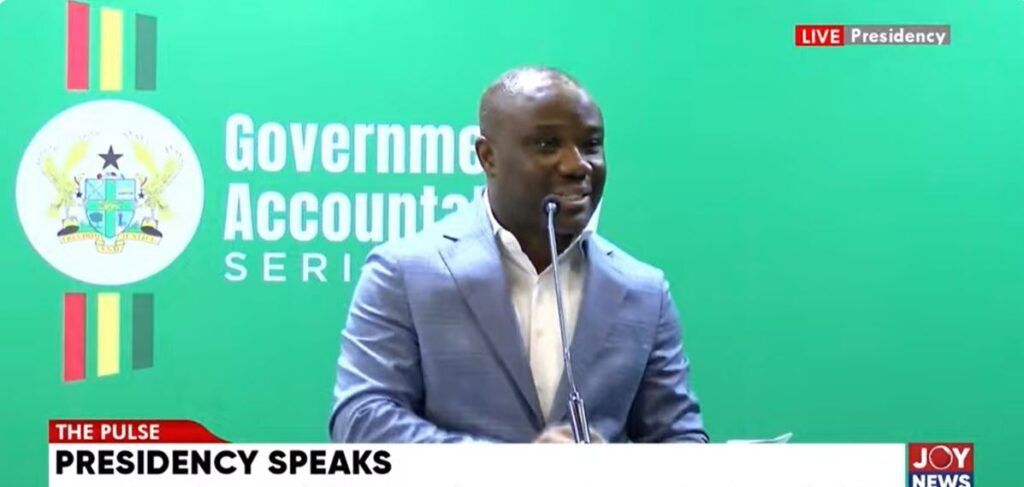
The Ghanaian government has disclosed that less than half of the projects executed under its flagship Big Push infrastructure programme were awarded through sole-source procurement, pushing back against allegations that the initiative was driven by non-competitive contract awards.
Out of 140 projects delivered under the Big Push, 66 — representing 47.14 per cent — were awarded through sole-source procurement, government spokesperson Felix Kwakye Ofosu revealed on Sunday. An additional 51 projects (36.43 per cent) were awarded through restrictive tendering, while the remaining 23 (16.43 per cent) were legacy projects inherited from previous administrations that had already been sole-sourced.
The disclosure forms part of a 72-page independent assessment commissioned by President John Dramani Mahama following allegations from The Fourth Estate and the Media Foundation for West Africa that the Big Push programme was dominated by non-competitive procurement practices.
“These facts clearly show that sole-sourcing was not the primary procurement mechanism employed by the Ministry of Roads and Highways,” Kwakye Ofosu stated at a media briefing.
Beyond the Big Push specifically, the broader picture of roads sector procurement tells an even more striking story. Across the entire ministry and its implementing agencies, a total of 1,441 contracts were awarded, with 90.28 per cent secured through open and competitive tendering. Only 4.58 per cent of all roads contracts were sole-sourced.
The breakdown by agency reveals that the Ghana Highways Authority had the largest share of Big Push projects at 72, of which 51 were sole-sourced and 21 went through restrictive tender. The Department of Urban Roads managed 16 projects (11 sole-sourced, five restrictive), while the Department of Feeder Roads handled 29 (four sole-sourced, 25 restrictive).
The government has stressed that every sole-source and restrictive tender contract received prior approval from the Public Procurement Authority (PPA), as required under Ghana’s procurement laws. An earlier government statement had affirmed that the Ministry of Roads and Highways did not breach any provisions of the Public Procurement Act in awarding contracts under the programme.
The MFWA submitted its report on 1 April 2026, after which President Mahama directed Senior Presidential Advisor Dr. Valerie Sawyer to independently verify the claims. The resulting review, incorporating responses from the Ministry and its agencies, has now been completed and submitted to the President.
The government has pledged to publish the full 72-page report for public scrutiny, a move that signals confidence in its procurement record but also reflects the political stakes surrounding the Big Push programme, which is central to the Mahama administration’s infrastructure agenda.
Critics have long argued that sole-sourcing opens the door to inflated contracts and patronage. The government’s counter-argument — that less than five per cent of all roads contracts were non-competitive — will be tested once the full report enters the public domain and independent analysts can assess the methodology behind the figures.
Image Source: MYJOYONLINE