Flooded Roads Disrupt Academic Activities at KNUST, Leave Students Stranded
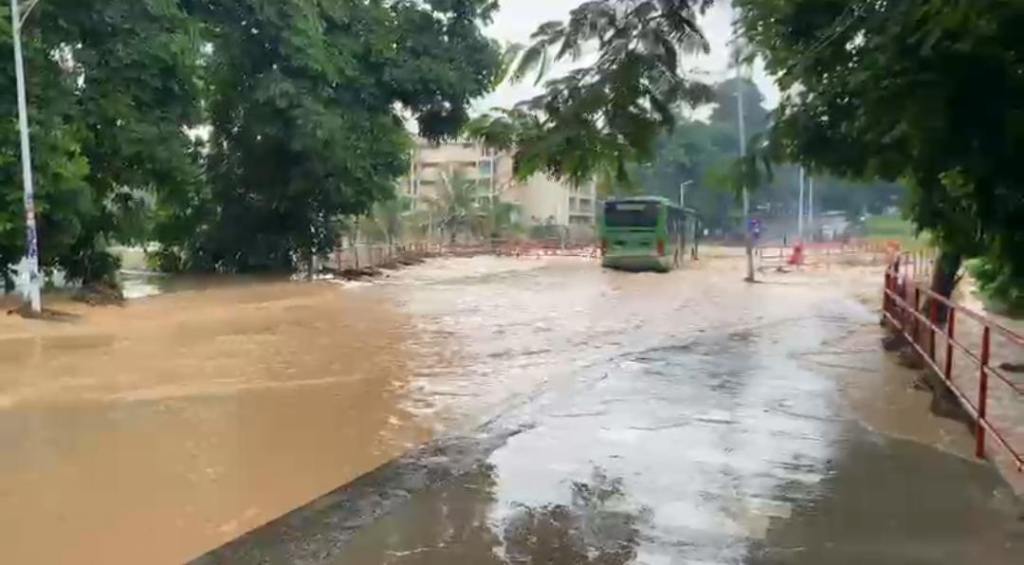
Heavy flooding on the campus of the Kwame Nkrumah University of Science and Technology disrupted academic activities on Thursday morning, leaving students stranded between halls of residence and lecture venues as overwhelmed drainage systems rendered key roads and walkways impassable.
The flooding, triggered by a heavy downpour, swept across sections of the Kumasi-based campus and cut off access to several critical routes. Students attempting to attend lectures were forced to take longer alternative paths, while many others remained in their halls of residence due to safety concerns and the inability to reach their lecture halls.
University buses capable of navigating some of the flooded sections were deployed to transport students across affected areas. However, taxis and smaller vehicles were unable to use many of the inundated routes, compounding the disruption during the morning hours when most lectures are scheduled.
Security personnel were deployed across the campus to monitor the situation and direct traffic around affected areas. As of Thursday afternoon, university authorities had yet to issue an official statement on the extent of the disruption or outline any immediate remedial measures.
The flooding at KNUST is not an isolated incident but part of a recurring pattern that has plagued the university during the rainy season. Students have repeatedly called for urgent interventions to address the campus’s drainage deficiencies, expressing concerns about accessibility, personal safety, and the toll on academic work when lectures are missed or delayed due to impassable routes.
The incident also reflects a wider infrastructure challenge facing educational institutions across Ghana. Earlier this year, the Member of Parliament for Agotime Ziope delivered a six-unit classroom block to Takuve Basic School, ending years of lessons held under trees due to chronic shortages of learning space. While that project addressed one dimension of Ghana’s education infrastructure gap, the KNUST flooding highlights another: the vulnerability of existing facilities to climate-related events.
Flood concerns have also featured prominently in national infrastructure debates. Togbui Fiti, Paramount Chief of the Aflao Traditional Area, recently urged the government to safeguard the “Big Push” road project amid growing worries about flooding and drainage. The message from both traditional leaders and students is consistent: infrastructure that does not account for heavy rainfall is infrastructure that fails.
For the students of KNUST, Thursday’s flooding was more than an inconvenience. It was a reminder that the physical environment in which they study remains vulnerable to forces that proper planning and investment could mitigate. As the rainy season intensifies, the question is whether the university and national authorities will treat the problem with the urgency it demands.
Image Source: MYJOYONLINE