Experts urge comprehensive waste management reforms to tackle Accra's persistent flooding
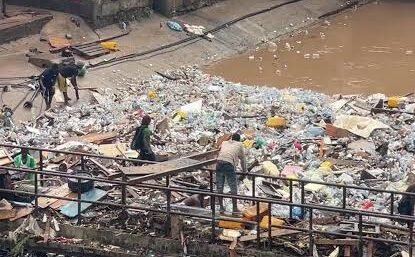
Experts urge comprehensive waste management reforms to tackle Accra’s persistent flooding
An economist and Research Fellow at the Institute of Statistical, Social and Economic Research (ISSER), Dr Kwame Adjei-Mantey, has called for a comprehensive overhaul of Ghana’s waste management governance framework, arguing that meaningful reforms in the sector are essential to tackling Accra’s perennial flooding problem.
Speaking on Citi FM, Dr Adjei-Mantey stated that while investments in drainage infrastructure remain important, policymakers must also focus on improving waste management governance, which he described as a major contributor to the annual flooding experienced in the capital. He noted that the existing institutional framework for waste management requires significant reforms to eliminate inefficiencies and improve coordination among agencies responsible for sanitation and waste disposal.
\”Currently, there is a governance structure around waste management that needs an overhaul or improvement. There are overlapping responsibilities and, if you look at the structure of waste management, we do not have a regulator in the space. That is a gap that restructuring could address,\” he told Citi FM.
He added that waste collection services across the country remain largely inconsistent and inequitable.
\”We have seen that waste collection across the nation is largely inconsistent, and it is not equitable,\” he said.
Dr Adjei-Mantey stressed that the absence of a dedicated regulator has created accountability gaps within the waste management sector, making it difficult to effectively coordinate sanitation efforts nationwide.
He further observed that waste collection services remain uneven, with some communities enjoying regular collection while others lack adequate services. According to him, this disparity often leads to indiscriminate dumping of refuse into drains and waterways, worsening flooding during heavy rains.
The ISSER economist argued that addressing Accra’s flooding challenge will require not only improved drainage infrastructure but also far-reaching reforms that strengthen waste management governance, enhance regulatory oversight and ensure equitable waste collection services across all communities.
His comments come as Ghana grapples with recurring flood disasters in Accra, which have displaced residents, damaged property and disrupted economic activities. Recent studies have shown that poor waste management practices, particularly the blocking of drains with plastic waste and other refuse, significantly exacerbate the impact of rainfall on urban flooding.
Experts note that successful waste management reform requires a multi-faceted approach, including the establishment of a dedicated regulatory body, standardization of collection services, investment in recycling infrastructure, and public education campaigns to reduce littering and promote proper waste disposal.
The call for reform aligns with growing concerns about the environmental and public health implications of inadequate waste management. Beyond flooding, poor waste handling contributes to air and water pollution, the spread of diseases, and the degradation of urban aesthetics.
As the government continues to invest in drainage projects and flood mitigation measures, experts emphasize that sustainable solutions must address the root causes of flooding, including the management of solid waste. A holistic approach that combines structural improvements with governance reforms is seen as essential to building resilience against future flood events.
Image Source: MYJOYONLINE