Energy Ministry, Finance Ministry align priorities to accelerate reforms in Ghana’s energy sector
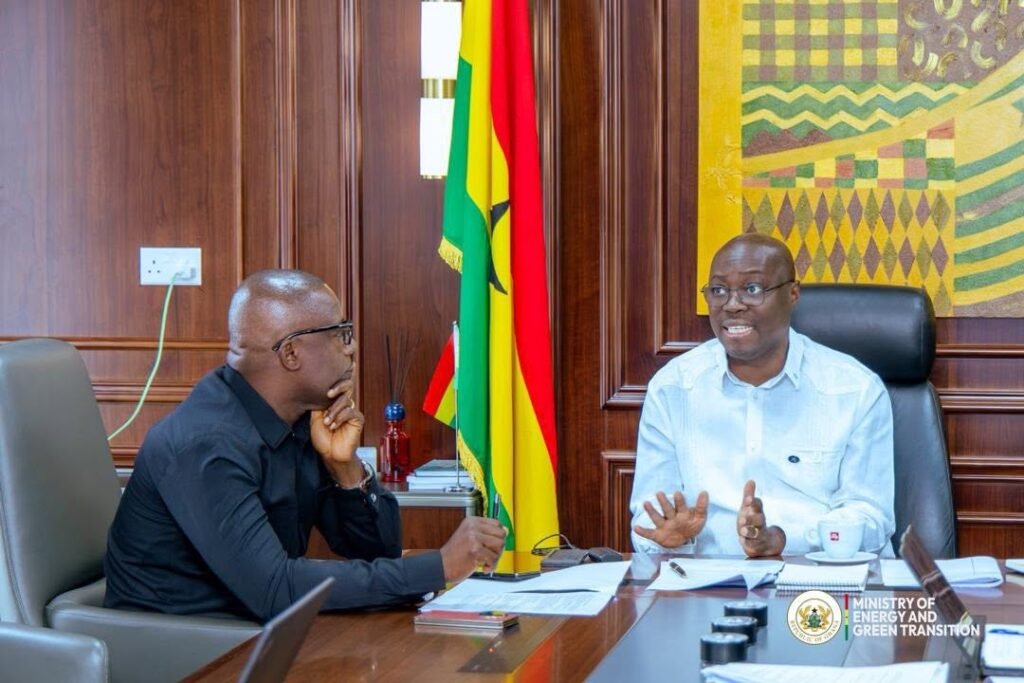
In a significant step towards revitalizing Ghana’s energy sector, the Ministry of Energy and Green Transition and the Ministry of Finance have pledged to deepen their collaboration to accelerate critical reforms and investment initiatives. This commitment emerged from a high-level meeting held on June 30, where Dr. John Abdulai Jinapor, Minister for Energy and Green Transition, led his ministry’s agency heads in presenting strategic roadmaps to the Finance Ministry team led by Dr. Cassiel Ato Forson.
The meeting, described by Jinapor as productive and essential, served as a platform for agencies under the Energy Ministry to outline their operational priorities, ongoing reforms, and funding requirements across the petroleum, power, and renewable energy sectors. By bringing together the technical expertise of the Energy Ministry with the fiscal oversight of the Finance Ministry, the government aims to ensure that energy sector reforms are not only visionary but also financially viable and executable.
This collaboration comes at a pivotal moment for Ghana’s energy landscape. The country has been grappling with periodic power supply challenges, infrastructure deficits, and the urgent need to transition to cleaner energy sources in line with global climate commitments. Previous reform efforts have often been hampered by fragmented approaches, where technical plans lacked adequate funding or financial plans did not fully grasp the technical realities on the ground. By institutionalizing dialogue between these two key ministries, the government is attempting to bridge the gap between ambition and execution.
Jinapor expressed particular encouragement at the Finance Ministry’s demonstrated readiness to support the Energy Ministry’s agenda, noting that this alignment is in line with President John Dramani Mahama’s broader vision of resetting and transforming Ghana’s energy sector. He emphasized that such inter-ministerial cooperation is fundamental to building a more secure energy future—one that strengthens energy security, expands access to electricity, attracts sustainable investment, and accelerates the transition to clean energy solutions.
The discussions focused on identifying practical measures to improve energy delivery, expand infrastructure, and position the sector to support Ghana’s economic growth and industrial development. Specific initiatives discussed included upgrades to aging transmission and distribution networks, investments in renewable energy projects such as solar and wind farms, and measures to enhance efficiency in petroleum refining and distribution. As the country seeks to recover from economic challenges and meet its developmental goals, the economic challenges and meet its developmental goals, the energy sector stands as a critical lever for progress. Reliable and affordable energy is not just a household necessity but a prerequisite for industrial competitiveness, job creation, and improved quality of life. Moreover, a well-functioning energy sector is essential for attracting foreign direct investment, particularly in energy-intensive industries, as highlighted in recent efforts by Ghana’s financial authorities to present a unified front to global investors (link).
By fostering stronger collaboration between key government institutions, the administration is laying the groundwork for a resilient and sustainable energy sector capable of meeting both current and future needs. This approach recognizes that energy transformation cannot be achieved by one ministry acting in isolation; it requires coordinated policy, planning, and resource allocation across the government. The lessons learned from this engagement could inform similar collaborations in other sectors, potentially improving the overall effectiveness of Ghana’s public administration.
Furthermore, a successful transformation of Ghana’s energy sector could position the country as a renewable energy hub in West Africa, influencing regional energy policies and attracting green investments across the subcontinent. As Ghana continues to navigate the complexities of energy transition, the commitment shown by the Energy and Finance Ministries offers a promising model for how integrated governance can drive meaningful change. The success of this collaboration will be measured not just in policy documents, but in tangible improvements in energy access, reliability, and sustainability for all Ghanaians. In an era where energy security is increasingly intertwined with national security and economic stability, such coordinated efforts are not just beneficial—they are essential.
Image Source: MYJOYONLINE