EasyJet says US bidder trying to buy it "on the cheap" as it rejects £4.7bn offer
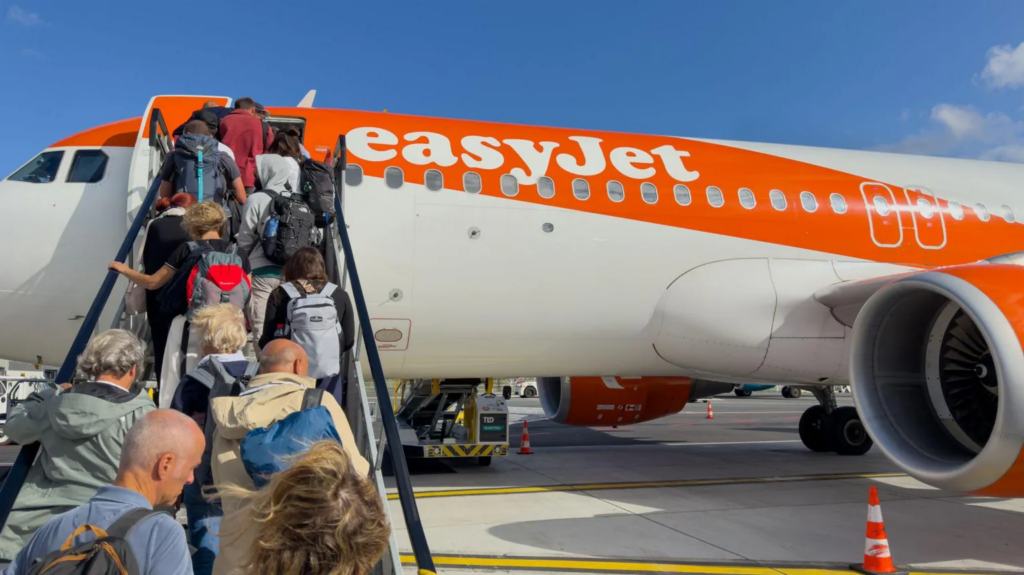
EasyJet has rebuffed a £4.7 billion takeover approach from US private equity firm Castlelake, accusing the bidder of attempting to acquire the airline “on the cheap” amid a temporary downturn in its share price linked to regional geopolitical tensions.
The London-based low-cost carrier, which transported over 90 million passengers last year across 38 countries and 1,200 routes, disclosed that Castlelake had made three separate takeover approaches this month, all of which were rejected by the EasyJet board.
Castlelake responded by publishing the details of its latest offer, valuing EasyJet at £4.7 billion, under which shareholders would receive 625p per share — a 24% premium to the closing price of the previous Friday. The US firm, which already holds a 2.14% stake in EasyJet through its managed funds, contends that the proposal delivers “compelling value” to shareholders.
However, EasyJet’s leadership characterised the offer as “highly opportunistic,” arguing that the airline’s share price had been artificially depressed by the fallout from the Iran conflict, which has weighed on travel demand across the region. The carrier maintained that the timing of the bid exploited a transient market weakness rather than reflecting the company’s intrinsic value.
Adding complexity to the deal, Castlelake outlined a proposed ownership structure designed to satisfy European Union regulations requiring majority EU ownership of airlines headquartered in the bloc. The plan involves forming a partnership with two EU nationals — Peter Bellew, EasyJet’s former chief operating officer who departed in 2022 after a period of operational disruption, and Mark Breen, an aerospace consultant with prior senior roles at Middle Eastern airlines — to create an EU-based entity that would hold majority control of the airline.
EasyJet expressed skepticism about this arrangement, describing it as “opaque” and stating that it lacked sufficient detail to assess the feasibility or deliverability of the proposed partnership. The carrier emphasised that any takeover must not only meet regulatory requirements but also demonstrate a credible plan for sustaining operations and network integrity.
Under current EU takeover rules, Castlelake has until Friday to either submit a formal, binding offer or withdraw its proposal entirely. The outcome will be closely watched by investors and industry observers as a test of cross-border investment dynamics in the European aviation sector, particularly amid ongoing efforts to consolidate amid post-pandemic recovery and geopolitical uncertainties.
The rejected bid underscores the tension between private equity interests seeking undervalued assets and incumbent management defending against what they perceive as predatory timing. Analysts note that airline stocks have faced volatility due to fluctuating fuel prices, shifting travel patterns, and regional instabilities, creating opportunities for investors to target companies during perceived lows.
Castlelake’s involvement in aviation is not new; the firm has previously invested in aviation-related assets and has stated its intention to support EasyJet as a “stronger, more resilient European airline under European control.” The partnership with Bellew and Breen aims to leverage their industry experience while navigating the complex ownership restrictions that prevent non-EU entities from holding more than 49.9% of an EU airline.
Bellew’s tenure at EasyJet coincided with a challenging period marked by staff shortages and widespread flight cancellations in 2022, which ultimately led to his departure. Breen, meanwhile, has built a consultancy focused on aerospace strategy and has advised airlines across the Middle East on operational efficiency and market expansion.
EasyJet’s board has insisted that any transaction must prioritise the airline’s long-term viability and its commitment to maintaining a pan-European network. The carrier has pointed to its recent performance, including a rebound in passenger numbers and efforts to stabilise operations, as evidence of its underlying strength independent of external suitors.
As the deadline approaches, shareholders will weigh Castlelake’s revised offer against the board’s rejection, with particular attention to whether the proposed EU partnership structure adequately addresses regulatory concerns and whether the premium offered represents fair value given the company’s prospects.
The bid comes at a time when the European aviation industry is navigating a complex recovery from the pandemic, with airlines balancing debt reduction, fleet modernization, and pressure to meet environmental targets. EasyJet, in particular, has been investing in more fuel-efficient Airbus A320neo family aircraft and exploring sustainable aviation fuels as part of its net-zero carbon emissions goal by 2050.
Private equity interest in airlines has fluctuated in recent years, with some firms seeing opportunities in distressed assets while others retreat due to the sector’s inherent cyclicality and exposure to external shocks such as geopolitical events or pandemics. The outcome of this bid may signal how investors view the resilience of point-to-point carriers like EasyJet compared to traditional network airlines in the current climate.
Image Source: MYJOYONLINE