DR Congo takes Rwanda to international court over decades of conflict
DR Congo takes Rwanda to international court over decades of conflict
The Democratic Republic of Congo has taken a significant step in its long-standing conflict with Rwanda by filing a case at the International Court of Justice (ICJ), marking a renewed effort to hold its neighbor accountable for alleged violations of international law dating back to the aftermath of the 1994 Rwandan genocide.
In its application to the ICJ, located in The Hague, Netherlands, DR Congo accuses Rwanda of violating multiple international treaties through its alleged support for armed groups operating within Congolese territory. The filing specifically alleges that Rwandan forces have been dispatched and armed groups have been backed to conduct unlawful military operations in the eastern regions of the DRC.
Congolese Justice Minister Guillaume Andali announced the filing on Friday, stating that the country seeks accountability for alleged breaches of conventions covering genocide prevention, racial discrimination, women’s rights, and torture. The case represents a formal legal challenge to what Kinshasa describes as decades of destabilizing interference by its eastern neighbor.
The application requests that the ICJ order Rwanda to cease its alleged harmful activities and award reparations to Congolese authorities and victims of the claimed violations. This is not the first time DR Congo has sought redress through the ICJ regarding Rwanda; an initial case was filed in 2001 but later dropped by Congolese authorities, while a second case filed in 2006 was dismissed by the court on jurisdictional grounds after Rwanda refused to recognize the court’s authority.
The historical context of this conflict is deeply rooted in the 1994 Rwandan genocide, during which approximately 800,000 people—primarily from the Tutsi ethnic group—were systematically murdered by Hutu extremists over approximately 100 days. In the aftermath, fears of reprisal prompted an estimated one million Hutus to flee across the border into what is now the Democratic Republic of Congo.
This mass migration created complex demographic and political tensions in eastern DRC, where Tutsi communities such as the Banyamulenge found themselves increasingly vulnerable amidst a sudden influx of Hutu refugees, some of whom included participants in the genocide. Rwanda has twice invaded its larger neighbor, stating its objectives were to pursue those responsible for the genocide and to address security concerns posed by refugee camps housing elements of the former génocidaire regime.
A key element in the ongoing tensions is the Democratic Forces for the Liberation of Rwanda (FDLR), a Hutu-led armed group active in eastern DRC that includes individuals accused of participating in the 1994 genocide. Rwanda characterizes the FDLR as a “genocidal militia” posing an existential threat to its national security, while the Congolese government denies allegations that it collaborates with or supports the group.
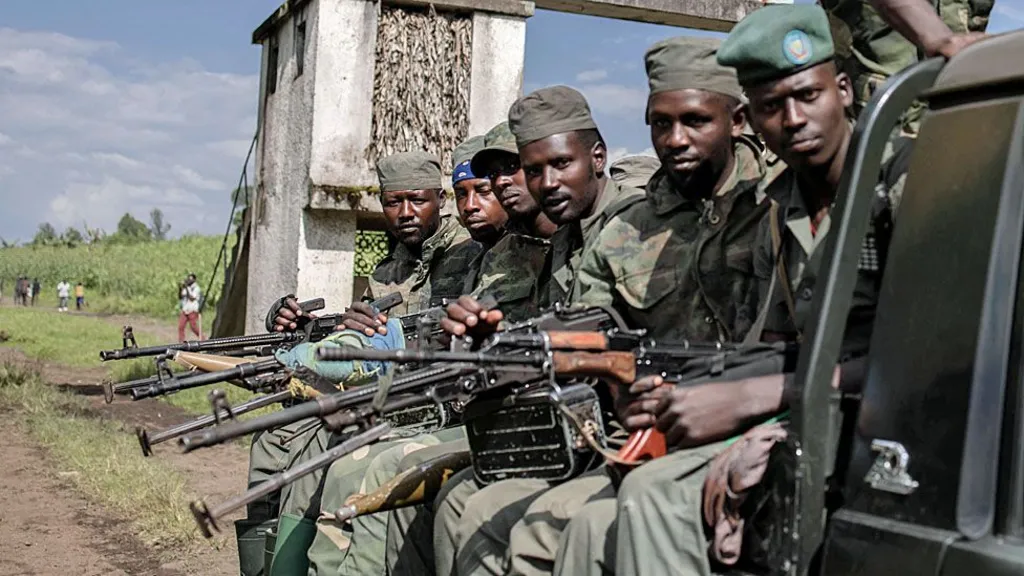
Recent years have seen renewed escalation, with the M23 rebel group capturing significant territory in mineral-rich eastern DRC, including the regional capital Goma, in late 2023 and early 2024. Despite a U.S.-brokered peace agreement signed in December 2023, fighting has continued intermittently, complicating efforts to achieve lasting stability in the region.
Western governments and United Nations experts have repeatedly asserted that Rwanda provides support to the M23, allegations that Kigali consistently denies. The ICJ case represents DR Congo’s most formal attempt to date to resolve these disputes through international legal mechanisms rather than continued bilateral tensions or regional conflict.
As the court begins its examination of the claims, the case carries implications not only for bilateral relations between these two Central African nations but also for the broader principles of non-interference, sovereignty, and accountability in international law. The outcome could establish important precedents regarding how states address historical grievances and ongoing security concerns through judicial rather than military means.
Image Source: MYJOYONLINE