Government Praised for Revoking L.I. 2462, Urged to Strengthen Forest Protection
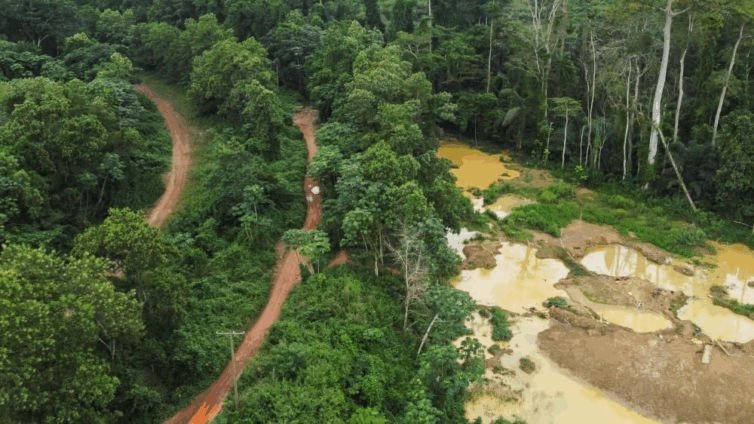
A coalition of civil society organisations (CSOs) and public interest groups has lauded the government and Parliament for revoking the Legislative Instrument (L.I.) 2462, a decision they hail as a significant win for Ghana’s forest reserves and environmental stewardship.
The coalition, in a statement released in Accra on Thursday, December 18, 2025, expressed deep gratitude to the government and lawmakers for repealing the regulation. They argued that L.I. 2462 had exposed the nation’s forests, including areas of critical biodiversity, to the dangers of mining operations.
The revocation follows the initiative of the Acting Minister for Environment, Science and Technology and Minister for Lands and Natural Resources, Emmanuel Armah-Kofi Buah, who presented a new Legislative Instrument to Parliament on October 31, seeking the annulment of L.I. 2462. After the mandatory 21 sitting days, Parliament’s lack of intervention effectively repealed the controversial law.
Describing the repeal as a landmark moment in Ghana’s recent environmental history, the coalition emphasized that it represents a critical step in safeguarding the country’s diminishing forest cover. “We are excited that L.I. 2462 has effectively been revoked,” the statement read.
The groups also extended their appreciation to the media and the public for their support during the advocacy campaign. “We particularly extend our sincere appreciation to the media for amplifying our voices, and the voices of various individuals and institutions who added their support, including every Ghanaian who signed the petition calling for the repeal of L.I. 2462,” the coalition noted. “Together, we have contributed our quota to give forests and future generations a chance. Ayekoo!”
L.I. 2462, introduced in 2022, had amended existing mining regulations to permit mining activities within forest reserves under specific conditions. Environmental advocates warned that this undermined long-standing forest protection policies and conflicted with the National Forest Development Master Plan (2016–2036), which aims to eliminate mining in forest reserves by 2036.
According to the coalition, prior to 2022, only 2% of designated production forest areas were open to mining, with the remaining 98% fully protected. However, L.I. 2462 potentially exposed 89% of forest reserves to mining, threatening over 50 of Ghana’s 288 forest reserves. Even after amendments in 2025, a substantial 80% of forests remained at risk, the statement added.
Furthermore, the coalition contended that the regulation weakened Ghana’s commitment to international environmental agreements like the Paris Agreement and the Convention on Biological Diversity.
While celebrating the revocation, the coalition cautioned that Ghana’s forests continue to face mounting threats from illegal mining (galamsey), logging, and encroachment. They stressed the importance of following up the repeal with substantive reforms.
“The repeal of L.I. 2462 marks a pivotal turn,” the statement declared. “To secure Ghana’s natural heritage and a sustainable future, action must now follow commitment.”
The coalition has called on President John Dramani Mahama to honour his commitment to revise Act 703 to explicitly prohibit mining in forest reserves. They also advocate for the creation of a National Forest Protection Strategy and stronger measures to combat illegal artisanal mining, poaching, and logging.
Additionally, the groups urged for the effective implementation of the government’s Tree for Life initiative and for the Forestry Commission to receive increased support to manage and address emerging threats to forest sustainability. “We remain committed to mobilising and holding leadership accountable, ensuring that every policy reflects our urgent environmental, social, and climate priorities,” the coalition affirmed.
The statement was signed by representatives from 17 organisations, including the Coalition Against Galamsey–Ghana, A Rocha Ghana, WACAM, Oxfam, the Christian Council of Ghana, and the Ghana Institute of Foresters.
Image Source: MYJOYONLINE