Beyond Potholes: How Ghana's Nkwanta-Dadiase Road Rehabilitation Boosts Regional Trade and Local Livelihoods
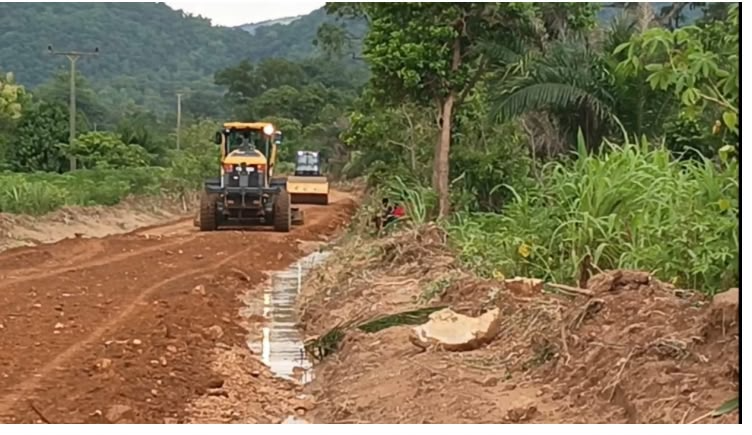
The rehabilitation of the Nkwanta-Dadiase feeder road in Ghana’s Oti Region represents more than just a routine infrastructure upgrade – it is a vital lifeline for cross-border commerce and local economic resilience that has been neglected for far too long.
This strategic artery connecting Nkwanta township to the farming community of Dadiase serves as a critical conduit for trade between Ghana and Togo, facilitating the movement of agricultural goods that sustain livelihoods on both sides of the border. For years, potholes and erosion had rendered this route nearly impassable during rainy seasons, cutting off vital economic exchanges and isolating communities that depend on cross-border trade for their survival.
The current intervention, which involves reshaping and gravelling the roadway, addresses immediate accessibility concerns while laying the groundwork for more comprehensive improvements. As noted by local legislator Geoffrey Kini, the project’s significance extends beyond mere drivability – it represents recognition of how infrastructure investments can unlock economic potential in underserved regions.
What makes this road particularly important is its role in facilitating informal but vital trade flows. Traders from Togo regularly cross into Ghana to sell produce at Nkwanta’s markets, while Ghanaian residents rely on Togolese supplies of tomatoes, garden eggs, peppers and other crops predominantly cultivated by women farmers. This exchange creates a symbiotic economic relationship that benefits communities on both sides of the artificial border drawn during colonial partitioning.
This project’s timing is significant. In an era when regional integration initiatives like the African Continental Free Trade Area (AfCFTA) aim to reduce trade barriers across the continent, investments in border infrastructure take on renewed importance. Roads like the Nkwanta-Dadiase route serve as the physical manifestation of trade agreements – without functional transportation networks, even the most progressive trade policies remain theoretical exercises. Recent discussions at forums such as the Ghana GIS Conference on border security coordination highlight how infrastructure development must go hand-in-hand with effective border management to maximize trade benefits.
Local officials have rightly emphasized that the current graveling work is just the first step. Plans to eventually extend the improved route all the way to the border post demonstrate a forward-looking approach that considers not just immediate repairs but long-term connectivity needs. This progressive vision acknowledges that sustainable development requires infrastructure that can evolve with changing economic demands.
Community response to the project has been overwhelmingly positive, with both traditional leaders and elected officials praising the initiative. The NDC Constituency Chairman and local Assembly Member highlighted how the road’s previous state had hindered business growth and discouraged potential investors, while expressing optimism that rehabilitation would revitalize commercial activity and create new opportunities for entrepreneurs. This grassroots endorsement underscores an important principle: infrastructure projects succeed when they align with local needs and aspirations – a perspective echoed by community development advocates who emphasize that sustainable progress requires initiatives that grow from within communities rather than being imposed from outside.
Of course, challenges remain. As with any construction project, temporary disruptions are inevitable, and officials have appropriately urged caution from road users during the works period. More fundamentally, sustaining the improvements will require ongoing maintenance commitments – a challenge that has plagued many African infrastructure projects where initial construction is celebrated but long-term upkeep is neglected.
Nevertheless, the Nkwanta-Dadiase rehabilitation represents a step in the right direction. It acknowledges that true progress requires more than just fixing potholes – it demands a holistic approach that considers how transportation networks serve broader economic and social objectives. By reconnecting communities and revitalizing cross-border trade, this project demonstrates how targeted infrastructure investments can yield dividends that extend far beyond the immediate stretch of roadway.
As Ghana continues to develop its infrastructure backbone, projects like this offer valuable lessons: prioritize routes that serve genuine economic functions, engage local communities as partners in the process, and always plan with an eye toward future expansion and sustainability. Only then can we build transportation networks that don’t just move vehicles, but actually move societies forward.
Image Source: MYJOYONLINE