Africa Must Urgently Expand Pharmaceutical Manufacturing to Cut Import Dependence, Expo Told
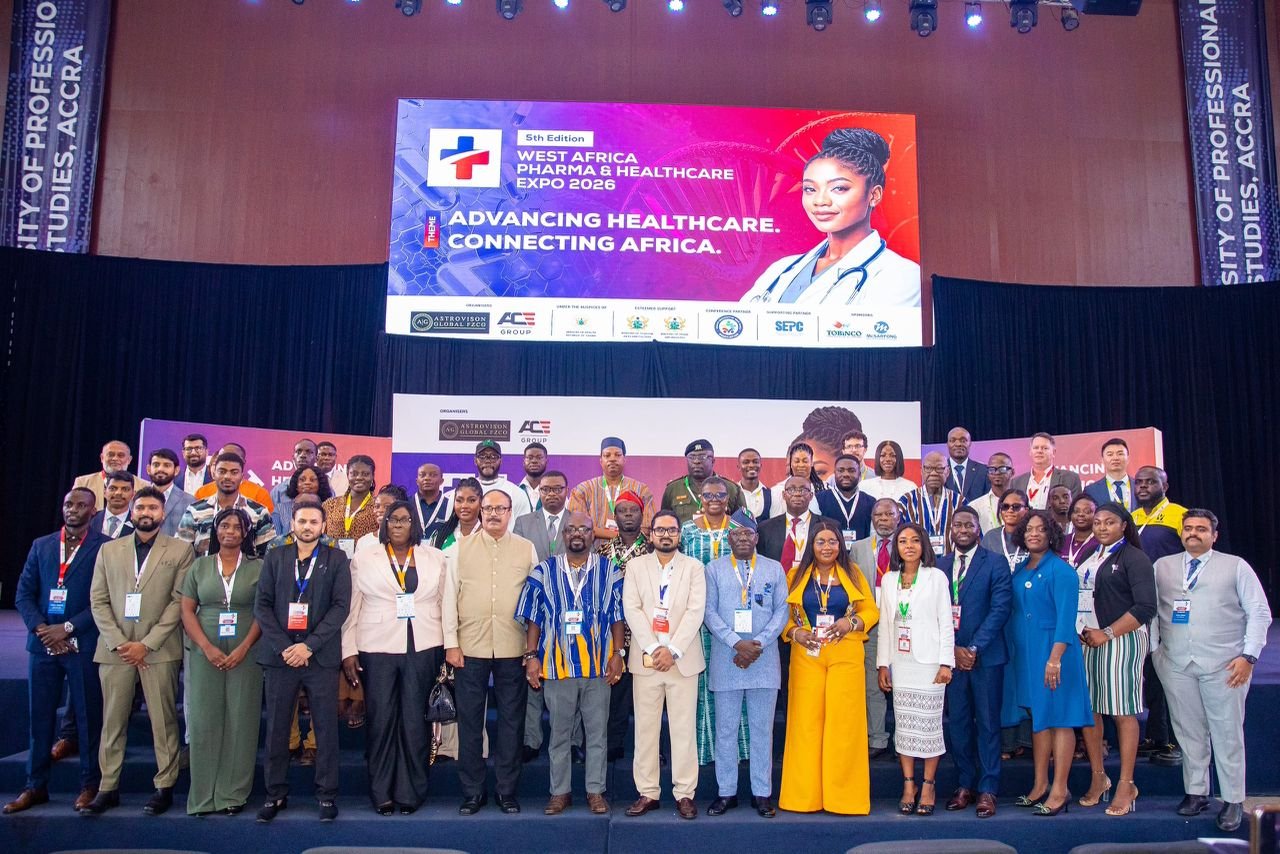
Africa must urgently expand pharmaceutical manufacturing and healthcare innovation to reduce its crippling dependence on imports and secure a market projected to exceed $100 billion by 2030, speakers at the 5th West Africa Pharma and Healthcare Expo in Accra have warned.
Despite carrying nearly a quarter of the global disease burden, the continent continues to rely heavily on imported medicines, vaccines, active pharmaceutical ingredients and medical devices—a vulnerability that the COVID-19 pandemic laid bare with devastating clarity.
A Continent Dependent on Others for Its Medicine
Mr Anthony Ameka, Chief Executive Officer of the Federation of Africa Medical Equipment, Disposables and Devices Manufacturers and Suppliers (FOAMEDDMS), delivered sobering figures in his opening address. Africa currently produces only about three per cent of global pharmaceutical output while importing between 70 and 80 per cent of medicines consumed by its population.
The dependence extends further. The continent relies on imports for more than 95 per cent of active pharmaceutical ingredients used in local manufacturing and over 90 per cent of advanced medical devices and healthcare technologies.
“This dependence presents significant challenges for healthcare security, economic resilience and sustainable development,” Mr Ameka stated.
Yet he pointed out that Africa’s expanding healthcare market also offers significant opportunities for industrial growth, job creation and technological advancement—if the right investments and partnerships are put in place.
Pandemic Exposed the Risks
Dr Paul Owusu Donkor, President of the Pharmaceutical Society of Ghana (PSGH), described local pharmaceutical manufacturing as a strategic necessity for national and continental health security.
“When countries closed their borders during the pandemic, many African nations experienced shortages of essential medicines and healthcare supplies. That experience demonstrated why local manufacturing is critical,” he said, in a speech read on his behalf.
Dr Donkor urged governments to support local industries through investments in infrastructure, research and development, technology transfer, financing and workforce development. He noted that the African Continental Free Trade Area (AfCFTA) offers manufacturers a unique opportunity to expand production, access larger markets and strengthen regional supply chains.
Regulation Must Keep Pace
The Food and Drugs Authority (FDA) stressed that the growth of pharmaceutical manufacturing must be accompanied by strong regulatory systems and quality assurance mechanisms. Regulatory excellence, the Authority noted, is essential for ensuring that locally produced medicines, vaccines and medical devices meet international standards of safety, quality and efficacy.
Stakeholders at the Expo also highlighted the need to develop a highly skilled workforce to support manufacturing ambitions, citing shortages in pharmaceutical sciences, biotechnology, biomedical engineering, regulatory science and clinical research. They called for stronger partnerships between industry and educational institutions to equip young Africans with the expertise needed to drive healthcare innovation.
A Growing International Platform
The three-day Expo, on the theme “Advancing Healthcare. Connecting Africa,” is organised by Astrovision Global FZCO, Dubai, and ACE Group under the auspices of the Ministry of Health.
Mr Praveen Singh, Chief Executive Officer of ACE Group, said the 2026 edition was the largest and most international in the event’s history, attracting more than 100 exhibitors from countries including India, Turkey, the United States, Egypt, Italy and Ghana. Organisers expected between 4,000 and 5,000 professional trade visitors from across West Africa over the three-day event.
“Our biggest competitor is ourselves. Every year, we challenge ourselves to do better than the previous year by improving the quality of exhibitors, attracting more professional visitors, creating more business opportunities, and delivering greater value to the industry,” he said.
The African Union has set a target of producing 60 per cent of the continent’s medicine requirements locally by 2040. Achieving that goal, participants agreed, would require stronger collaboration among governments, regulators, industry, academia and development partners—and a willingness to treat pharmaceutical manufacturing not as a commercial afterthought, but as a pillar of national security.
Image Source: GHANA BUSINESS NEWS