Adaklu Landslide: 5 Devastating Impacts as Dozens Left Homeless in Volta Region
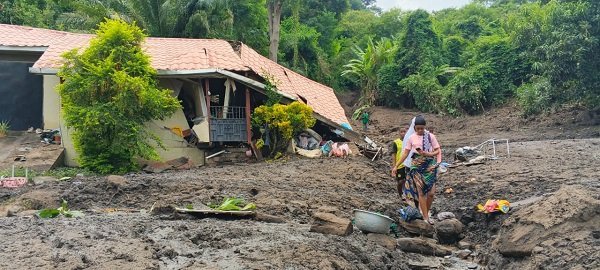
The Adaklu landslide that struck communities near the Adaklu Mountains in the Volta Region on Wednesday evening has left dozens of residents homeless, destroyed homes and vehicles, and reignited urgent calls for environmental protection measures in mountainous areas across Ghana.
Residents of Adaklu-Helekpe and surrounding communities are living in fear after heavy rainfall triggered a debris flow from the Adaklu Mountains, sending mud, stones and debris rushing into the community shortly after the rains subsided. Although no lives were lost, the Adaklu landslide destroyed houses, vehicles, household property and killed several domestic animals.
How the Adaklu Landslide Unfolded
The Adaklu landslide occurred on Wednesday evening following hours of heavy rainfall in the Adaklu District of the Volta Region. One of the victims, Ms Jessica Lola, told The Ghanaian Times that the incident was unprecedented in the area.
She explained that after hours of heavy rainfall, mud, stones and debris rushed down from the Adaklu Mountains into the community shortly after the rains subsided. The sudden nature of the Adaklu landslide left residents with little time to salvage their belongings or evacuate to safety.
Many of the displaced residents are now seeking shelter with relatives and friends, while others have taken refuge in public buildings, including schools. The scale of displacement has placed significant pressure on the local community and relief infrastructure.
Environmental Degradation Behind the Adaklu Landslide
Ms Lola attributed the Adaklu landslide to increasing environmental degradation around the mountain. She pointed out that indiscriminate tree felling and bush burning had destroyed the vegetation cover, thereby exposing communities in the area to danger.
The Volta Regional Director of the Ghana Geological Authority, Mr Frank Awuah, confirmed that the incident was a “debris flow” — a situation where mud, stones and other materials are washed from mountains or hills into lower-lying areas, usually after heavy rainfall. His assessment provides the scientific context for understanding how the Adaklu landslide occurred.
Mr Awuah noted that the Adaklu landslide was not the first of its kind in the Volta and Oti regions. He recalled similar occurrences in the past at Kabakaba Hills at Klefe near Ho in the Ho Municipality and at Santrokofi in the Guan District of the Oti Region, although those incidents also did not record any casualties.
The pattern of such events across the region underscores the growing vulnerability of communities situated near mountains and hills, particularly where vegetation cover has been compromised by human activity.
Adaklu Landslide: Calls for Investigation and Prevention
The Assembly Member for the Adaklu-Helekpe Electoral Area, Mr Mark Honyeku, has appealed to the Geological Survey Authority, the National Disaster Management Organisation (NADMO) and other environmental agencies to investigate the cause of the Adaklu landslide and propose measures to prevent a recurrence.
Mr Awuah advised residents to take precautionary measures, stating that people living in such areas should evacuate when there are clear signs of heavy rains and remain away for some time afterwards to avoid possible harm.
He further advised residents living around mountains and hills to plant trees around their homes as a long-term solution, explaining that vegetation could help reduce the impact of such incidents and protect lives and property. This recommendation directly addresses the environmental degradation that residents identified as a contributing factor to the Adaklu landslide.
Adaklu Landslide Highlights Broader Climate and Environmental Concerns in Ghana
The Adaklu landslide serves as a stark reminder of the environmental challenges facing Ghana’s communities. The destruction of vegetation cover through indiscriminate tree felling and bush burning has left many areas vulnerable to natural disasters, particularly during the rainy season.
Environmental experts have long warned that deforestation and land degradation increase the risk of landslides, flooding and soil erosion. The Adaklu landslide demonstrates how these warnings can become devastating reality for communities that lack adequate environmental protection measures.
The incident also raises questions about the preparedness of disaster management agencies to respond to such events. While NADMO and other agencies play a critical role in disaster response, the Adaklu landslide highlights the need for proactive measures to prevent such disasters from occurring in the first place.
As communities in the Volta Region begin the process of rebuilding, the Adaklu landslide should serve as a catalyst for renewed commitment to environmental conservation and sustainable land management practices across Ghana’s mountainous regions.
Source: Ghanaian Times