Accountability or submergence: Why Ghana’s flooding crisis demands radical behavioural and legal shifts
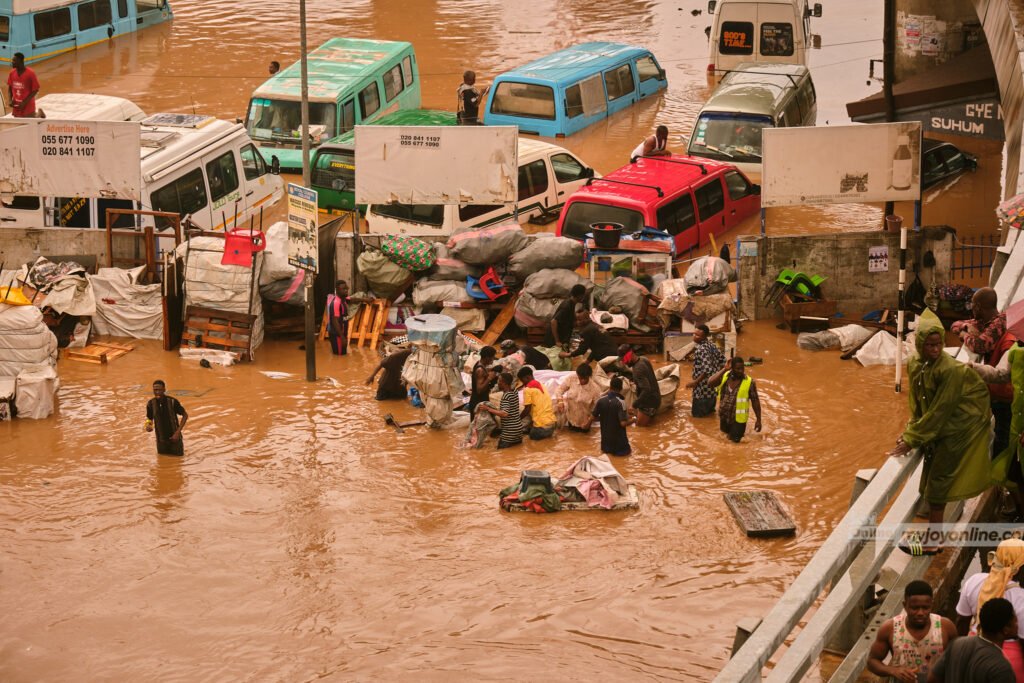
Every rainy season, Ghana’s streets transform into raging rivers, properties worth millions of cedis are destroyed, and precious lives are cut short. As first responders at the Ghana National Fire Service, our personnel are routinely deployed to rescue citizens trapped by rising waters. Yet, as I have consistently maintained across numerous media engagements, the devastating floods we witness today are largely not acts of God—they are the direct consequences of human indiscretion.
We have engineered our own crises through the irresponsible, reckless disposal of solid waste. It is time for a candid, uncomfortable conversation about civic responsibility, institutional enforcement, and the radical shifts required to save our cities from submergence.
The Myth of the “Political Saviour”
There is a pervasive, dangerous mindset among a section of our citizenry: the belief that one can indiscriminately dump refuse into gutters and open drains under the assumption that a Member of Parliament, a Municipal Chief Executive, or a government task force will eventually clean it up.
Let us be unequivocally clear: gutters are designed to channel water, not to serve as trash cans. As radical as it may sound, if we continue to insulate citizens from the direct realities of their actions, we will never achieve the attitudinal change we desperately need. True reform will only happen when individuals realise that no one is coming to carry away their self-inflicted filth.
When communities face the unvarnished reality that their own indiscretions will result in their own displacement, they will naturally become circumspect. They will begin to police one another, establishing community-led surveillance against indiscriminate dumping because they know they must bear the burden of the consequences.
Moving Beyond Pleas: The Case for Punitive Penalties
While public education is vital, moral suasion has proven insufficient. We must transition from begging for behavioural change to enforcing it through aggressive legal and financial deterrents. I propose a concerted, nationwide push for the following punitive measures:
Hefty Mandatory Fines & Community Service: Anyone caught dumping refuse in unauthorised areas should face heavy, non-negotiable financial penalties. If they cannot pay, they should be sentenced to mandatory community service—specifically clearing the very drains they blocked.
Establishment of Dedicated Sanitation Courts: To avoid bureaucratic delays, specialised municipal courts must be empowered to try sanitation offenders swiftly, ensuring that justice is served as a visible deterrent to others.
The “Name and Shame” Protocol: Harnessing the power of social proof, local assemblies should publicly publish the names and photographs of sanitation offenders in national media and community boards.
Professional & Institutional Solutions for Long-Term Resilience
To complement a shift in public attitude, our institutional frameworks must also evolve. To permanently mitigate this perennial crisis, Ghana must implement robust, structural solutions:
- Re-Engineering Urban Drainage Systems
Modern engineering must replace outdated infrastructure. We must transition from open, V-shaped drains to subterranean, covered drainage systems. Closed drains physically prevent the public from using them as waste receptacles and significantly reduce the risk of blockage.
- Digital Surveillance and Citizen Reporting
We should leverage technology by deploying CCTV cameras at notorious dumping hotspots and flooding flashpoints. Furthermore, the creation of a standardised, mobile-friendly “Sanitation Reporting App” would allow citizens to anonymously upload photos and videos of offenders, effectively turning the entire population into a neighbourhood watch.
- Decentralised and Reliable Waste Management
Attitudinal change must be met with structural capacity. Local assemblies must ensure that waste management companies provide affordable, accessible, and highly reliable door-to-door trash collection services. If citizens have a reliable mechanism to dispose of waste, the incentive to dump in drains plummets.
- Integration of National Security and Emergency Interventions
Flooding is no longer just an environmental issue; it is a national security threat. The GNFS, alongside NADMO and the Armed Forces, must be continually equipped with advanced logistical tools, such as high-capacity water pumps and specialized rescue boats, to manage the immediate fallout while long-term structural reforms take root.
Conclusion: A Collective Crossroad
We can no longer afford to treat the rainy season as an unpredictable adversary when we are the ones handing it the weapons. The Ghana National Fire Service will continue to put our lives on the line to rescue those in distress, but we cannot rescue a nation that refuses to save itself from its own habits.
The choice before us is simple: we either enforce strict accountability and embrace a radical attitudinal shift, or we continue to watch our capital and communities wash away. It is time to choose responsibility.
The economic toll of flooding, as highlighted by economist Prof Peter Quartey in a recent warning about drained finances, underscores the urgency of the situation. See related analysis. Experts have long argued that entrusting waste management to the armed forces could curb the indiscriminate dumping that chokes drainage systems. Learn more about this proposal.
Image Source: MYJOYONLINE