What exactly is driving rising utility tariffs? – Minority questions economic gains
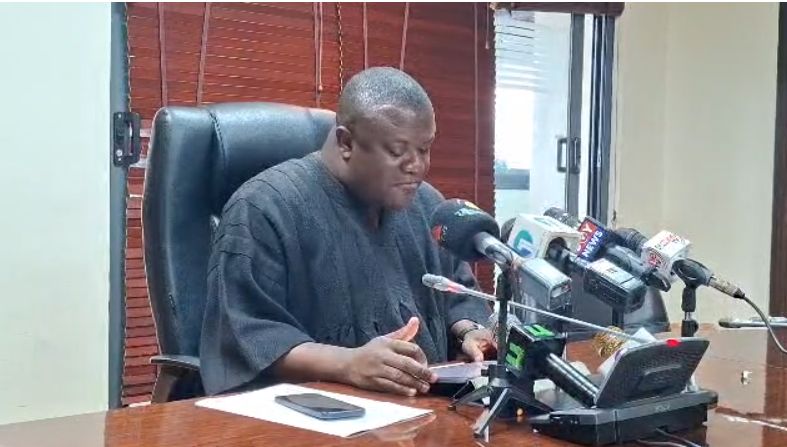
Accra, Ghana – Ghana’s Minority in Parliament has intensified its scrutiny of the government’s utility tariff policy, arguing that recent macroeconomic improvements should be translating into tangible relief for consumers rather than further increases in electricity and water costs.
Speaking at a press conference on Thursday, June 25, Deputy Ranking Member on the Energy Committee Collins Adomako-Mensah challenged the official narrative that the economy’s turnaround – marked by the cedi’s appreciation, declining inflation, and lower interest rates – should automatically reduce the cost of living.
“If those gains are genuine, Ghanaians should be experiencing them in their daily lives,” Adomako-Mensah stated, highlighting the growing disconnect between positive economic indicators and the household budget reality that many citizens face.
The Minority leader pointed to structural vulnerabilities in Ghana’s power sector as a key factor complicating the relationship between currency strength and consumer prices. He emphasized that the country’s electricity generation remains heavily reliant on thermal plants, which depend on imported crude oil and natural gas – commodities priced in foreign currencies.
“The electricity sector depends heavily on thermal generation, whose principal inputs, imported crude oil and imported natural gas, are priced in foreign currency. A cedi that has appreciated by nearly 40% should significantly reduce the domestic cost of these imports,” he explained, suggesting that the currency’s strength should have already lowered production costs for power utilities.
Despite these advantages, Adomako-Mensah noted that tariffs continue to rise, contradicting expectations based on the improving macroeconomic environment and raising questions about the true drivers of utility pricing decisions. This contrasts with the Public Utilities Regulatory Commission’s recent explanation that exchange rate pressures necessitated the increase, despite falling inflation (this explanation) and raising questions about the true drivers of utility pricing decisions.
“Falling inflation and easing interest rates should further reduce cost pressures across the economy. Yet the Public Utilities Regulatory Commission is increasing electricity tariffs once again. This contradiction demands answers,” he said, framing the issue as a matter of accountability and transparency that cuts to the heart of public trust in economic management.
The Minority spokesperson called for regulators to move beyond broad economic justifications and provide specific, evidence-based explanations for tariff adjustments, insisting that the public deserves clarity on the factors actually influencing their bills.
“The Ghanaian people deserve more than broad economic headlines. They deserve full transparency. Until that explanation is provided, Ghanaians will be justified in asking whether the celebrated economic gains are being artificially sustained while households and businesses continue to bear the burden of rising utility costs,” he added, warning that declining living standards could undermine public confidence in the government’s economic narrative, a concern previously highlighted by the Minority’s demand for full disclosure on PURC’s tariff increases (this concern).
Adomako-Mensah also criticised recent tariff adjustments as inconsistent and difficult to justify, citing a specific example of a tariff reduction followed quickly by an increase that he argued revealed a lack of coherent policy direction.
“We therefore say to President Mahama and the NDC government plainly: you cannot celebrate a 4.81% reduction in April and remain silent when a 3.49% increase follows in July. You own this tariff regime. You appointed the leadership of the Public Utilities Regulatory Commission. You set the policy environment. You are accountable for every pesewa increase on every electricity bill in Ghana,” he declared, placing direct responsibility on the government for utility pricing outcomes and suggesting that inconsistent adjustments erode credibility.
Looking ahead, the Minority pledged to maintain rigorous oversight of the Public Utilities Regulatory Commission’s decisions, vowing to challenge any tariff increases deemed unjustified and to pursue greater accountability in the regulation of essential services.
“The Minority will continue to hold this government and the Public Utilities Regulatory Commission accountable for every unjustified tariff increase imposed on the Ghanaian people,” he said, while extending an invitation to broader society to join the push for accountability in utility pricing.
He urged civil society organisations, trade unions, industry associations and other stakeholders to demand transparent and evidence-based regulation of utility pricing, framing it as a collective interest in ensuring fair costs for all citizens and preventing the exploitation of consumers through opaque adjustment mechanisms.
Warning that the issue would remain politically salient as the country approaches the next electoral cycle, Adomako-Mensah concluded with a vivid metaphor underscoring his criticism of the current tariff regime’s failure to deliver proportional benefits despite apparent efforts to increase revenue.
“You cannot keep increasing the pressure on the tap and hand Ghanaians a basket to fetch the water; this tariff regime leaks more than it delivers,” he said, suggesting that current policies are failing to deliver tangible benefits to the public despite appearing to apply pressure for reform, and leaving citizens with inadequate access to essential services despite higher payments.
Image Source: MYJOYONLINE