Tight security as Indian students resit medical exam after alleged paper leak
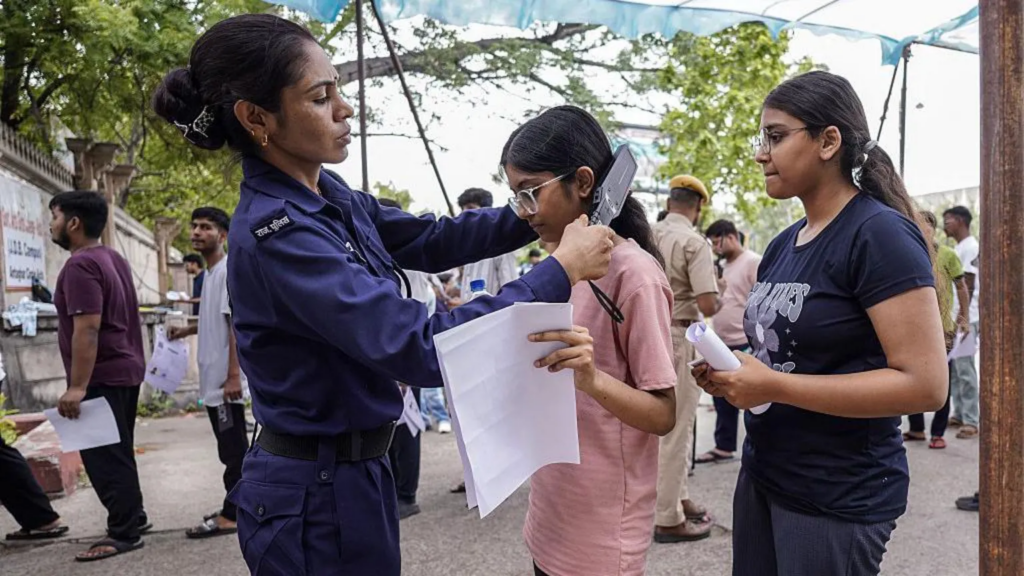
In response to allegations of a paper leak, Indian authorities have deployed unprecedented security measures for the resit of the NEET‑UG medical entrance exam, affecting over 2.28 million candidates nationwide. The scale of the operation—featuring more than 1.3 million surveillance cameras, 51,000 signal‑jamming devices, and tens of thousands of frisking staff—underscores the high stakes of an exam that determines admission to medical colleges across the country.
The first paper of the NEET‑UG was cancelled on May 3 after reports that questions had been leaked, forcing a resit under heightened security. Biometric identification checks, metal detectors, armoured patrols, and armed police and paramilitary officers now guard exam centres. The Indian Air Force has air‑lifted new test papers to remote regions, while CCTV coverage extends to every exam room. Telegram has been temporarily blocked to prevent cheating coordination, and drones and dog squads monitor perimeters of selected centres.
These measures, while extensive, reflect a deeper crisis of trust in India’s examination system. The NEET‑UG has faced similar allegations in previous years, including 2024, when paper‑leak claims, fraud accusations, and irregular grace‑mark awards sparked nationwide protests. The current investigation has been handed to the Central Bureau of Investigation (CBI), signalling the gravity with which authorities are treating the breach.
For students, the resit brings not only the pressure of a high‑stakes test but also the anxiety of studying under a cloud of suspicion. As one aspirant noted, there is fear because the exam paper has leaked before, and it happens every year. Educators are urged to ensure private tutoring materials remain secure, while policymakers must prioritize transparent investigations to restore credibility.
The situation highlights a broader challenge: how to maintain the integrity of mass‑scale testing in an era where digital tools both enable and threaten security. While the current response focuses on deterrence through surveillance and restrictions, long‑term solutions may require rethinking the exam design itself—moving toward question pools, adaptive testing, or stronger encryption—to reduce reliance on secrecy that can be compromised.
As the resit proceeds, the hope is that the stringent security measures will ensure a fair test for the millions of young Indians aspiring to become doctors. Yet, the true measure of success will be whether the exam can regain public trust as a genuine merit‑based gateway to medical education.
Image Source: MYJOYONLINE