Ghana Can Access More Crop Seedlings to Survive Dry Spells, Says IAEA Expert
Ghana has an opportunity to significantly strengthen its food production and shield its agricultural sector from the growing threat of climate-related losses by tapping into crop technologies offered by the International Atomic Energy Agency, according to a leading expert at the organisation’s Vienna headquarters.
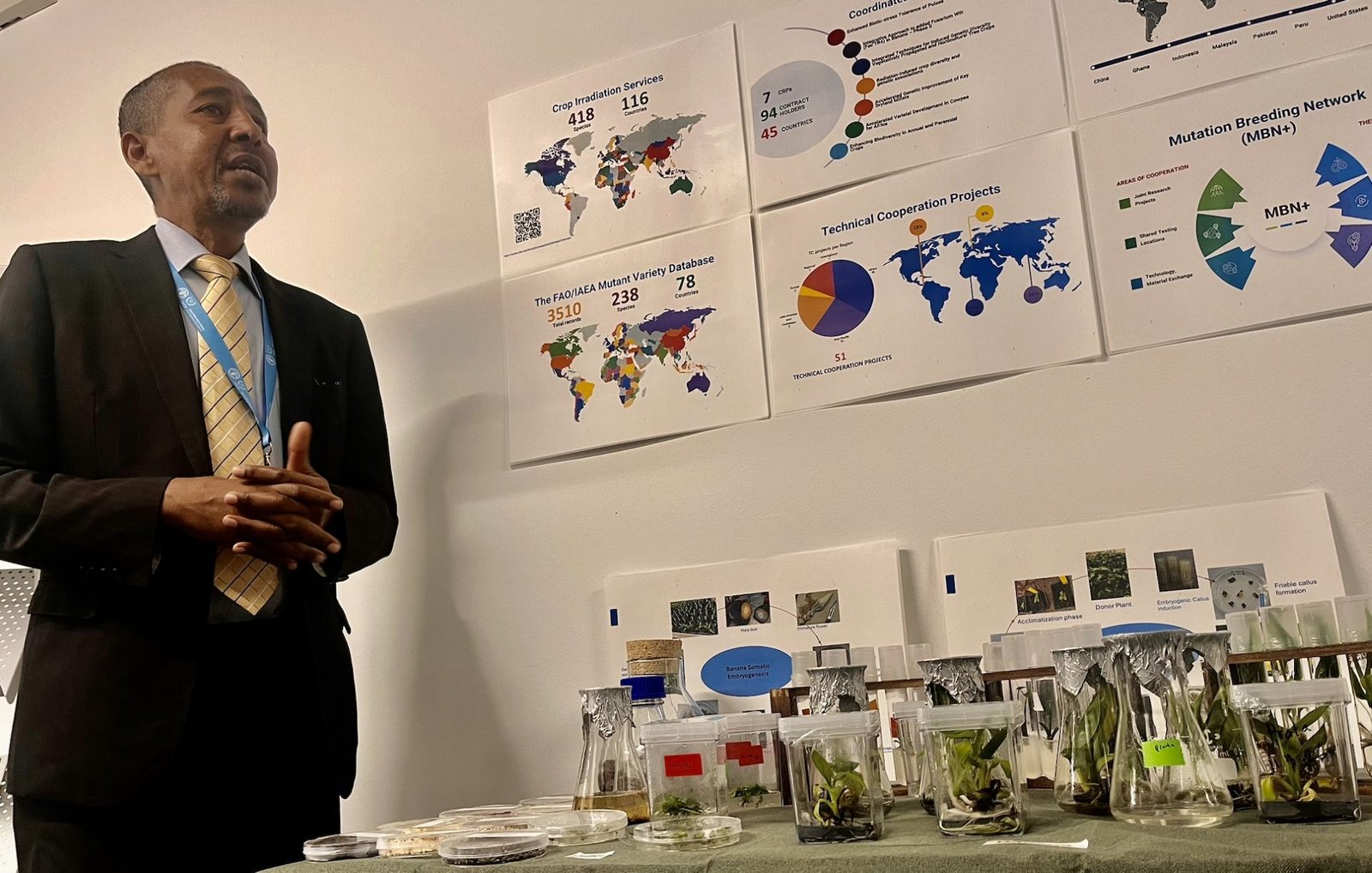
Elsadig Eltayeb Habora Amin, Laboratory Head at the Plant Breeding and Genetics Section of the Joint FAO/IAEA Centre for Nuclear Sciences and Applications, said Ghana is among 78 member states already accessing support to develop stronger, more resilient crop varieties capable of withstanding drought, disease, heat and salinity.
The support comes as Ghana continues to experience changing rainfall patterns and prolonged dry spells that have disrupted agricultural production and raised serious concerns about food security across the country. For a nation where agriculture employs a significant share of the workforce and accounts for a substantial portion of GDP, the stakes could not be higher.
The IAEA’s approach uses controlled nuclear techniques to accelerate crop improvement, a process that does not produce radioactive crops and is offered free of charge to member states. Countries submit seeds or plant materials for scientific assessment, and the IAEA returns improved varieties suited to local conditions for field testing.
The expert disclosed that crop materials from Ghana had already been received under collaboration arrangements available to member countries, noting that the process uses controlled nuclear techniques to accelerate crop improvement but does not produce radioactive crops and that the service was free.
The scale of the programme is remarkable. More than 3,500 improved crop varieties have been developed and distributed across 78 countries using IAEA-supported technologies. For Ghana, this represents a proven pathway to building agricultural resilience without the prohibitive costs typically associated with advanced crop research.
The technology extends beyond traditional breeding. Advanced laboratory methods, including tissue culture, enable the rapid multiplication of healthy planting material for crops such as banana, cassava, coffee and cereals, processes that would otherwise take years to achieve through conventional propagation.
For Ghanaian farmers increasingly battered by unpredictable weather, the practical benefits are clear: access to drought-tolerant seed varieties, disease-resistant strains and heat-adapted crops that can thrive even when rainfall fails to arrive on schedule. The Feed Ghana Programme, which aims to boost crop productivity through precision soil testing, could complement these IAEA-supported technologies to create a more comprehensive agricultural resilience strategy.
Training opportunities are also available for Ghanaian researchers and technical personnel, building local capacity to sustain crop improvement efforts long after external support concludes. For a country seeking to reduce its dependence on food imports and protect its farming communities from climate shocks, the IAEA’s free, proven technology offers a practical and timely lifeline.
Image Source: GHANA BUSINESS NEWS