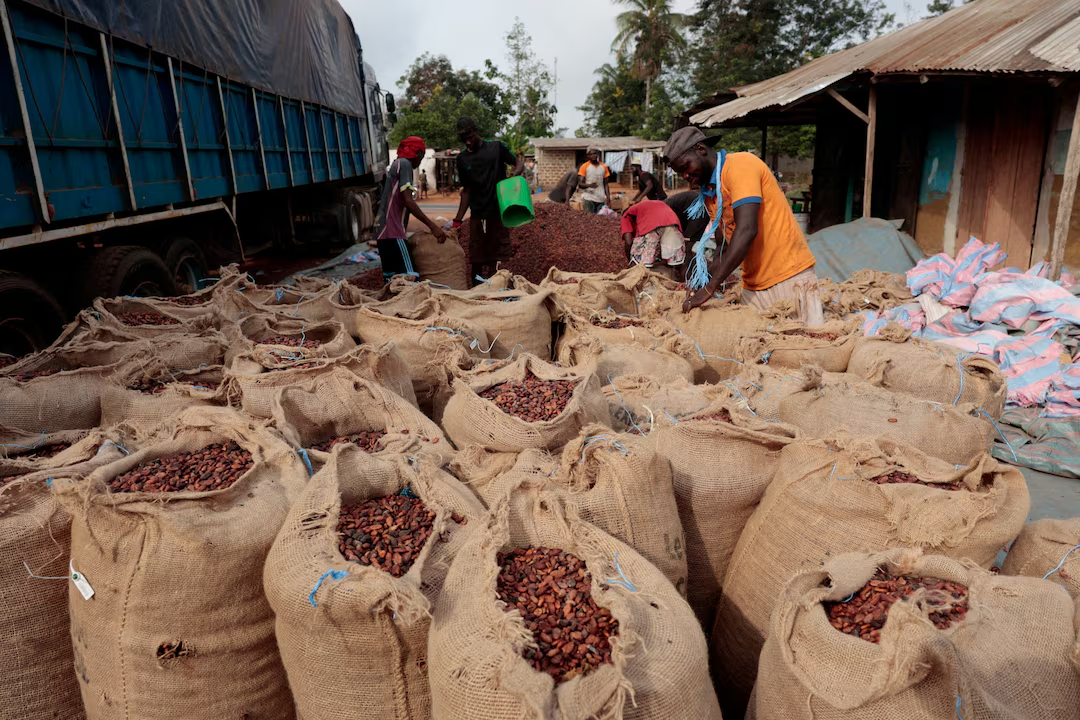
Ghana’s government has rejected a proposal to reduce the cocoa producer price for the 2026 season, choosing instead to keep the rate unchanged in a bid to shield farmers from the fallout of a global market downturn.
The decision, confirmed by Jerome Sam, Head of Public Affairs at the Ghana Cocoa Board (COCOBOD), marks a deliberate departure from what many producing countries have done in response to falling international cocoa prices. While market forces would ordinarily dictate a lower farmgate price, Accra has chosen to absorb the shock rather than pass it on to growers.
“The farmer has already been hit, so we need to make sure that the prices remain unchanged,” Sam said. “Government took into consideration the income levels of the ordinary farmer. That is basically the first thing government took into consideration.”
Ghana’s cocoa pricing system has long followed a predictable rhythm: a producer price is announced at the start of the main crop season and held steady, with a possible adjustment during the light-crop period. That convention was disrupted this year, however, when a series of developments beginning in late 2025 forced COCOBOD to carry out an unusual mid-season review in February.
The February adjustment triggered a wave of public debate about the government’s stewardship of the cocoa sector, which remains one of the country’s most vital economic pillars. Against that backdrop, the decision to freeze prices for the rest of the season represents an effort to restore a measure of certainty to the industry.
For the hundreds of thousands of Ghanaian families who rely on cocoa farming, the announcement offers a reprieve from further financial pressure. The sector’s fortunes ripple well beyond the farm gate, influencing rural economies, export revenues, and government finances alike.
“We’re protecting farmers while ensuring a durable sector that supports livelihoods and the economy,” Sam said, framing the freeze as a calculated trade-off between short-term relief and long-term industry health.
The government has signalled that any future price adjustments will be communicated only after the season concludes, a move intended to give farmers greater clarity as they plan for the months ahead. In the meantime, the producer price holds — a decision that, whatever its fiscal cost, keeps faith with the growers at the base of Ghana’s cocoa value chain.
Image Source: MYJOYONLINE