McCarthy Hill Dump Poses Grave Danger to Weija Dam and Accra's Water Supply, Scientist Warns
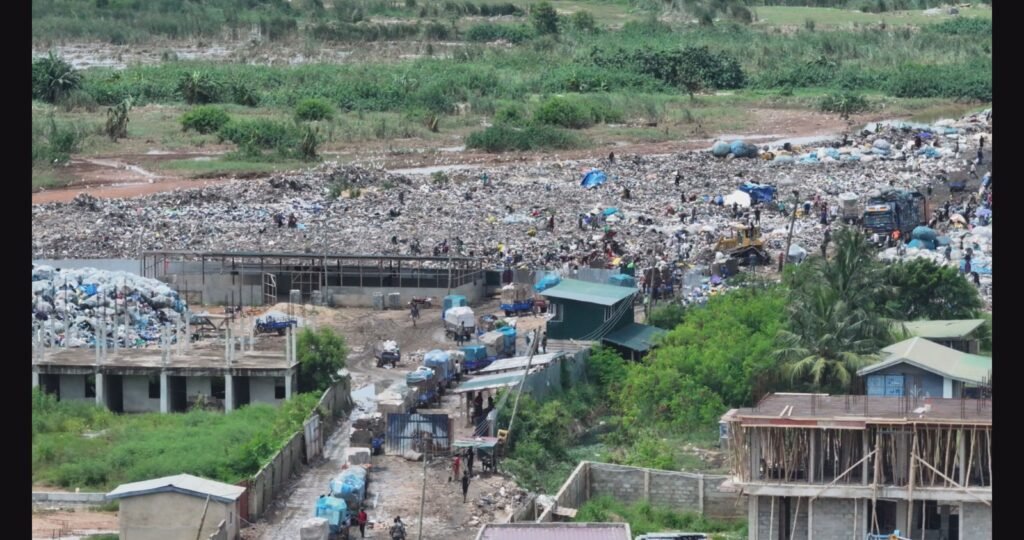
The mountains of refuse accumulating at the McCarthy Hill and Oblogo dumping sites in Accra’s western corridor pose a direct and escalating threat to the Weija Dam, the primary water source for millions of residents in the Greater Accra region, a scientist at the Council for Scientific and Industrial Research has warned.
Dr Pennante Naa Ayikailey Bruce-Vanderpuije, a researcher at CSIR, said that toxic chemicals leaching from the waste, including phthalates, bisphenol A, and heavy metals such as lead, mercury, arsenic, and cadmium, could be washed into the Densu River during floods, ultimately contaminating the Weija Dam reservoir and the drinking water it supplies to consumers.
“The plastics in the refuse contain chemicals such as phthalates and BPA, which are known to have adverse effects on human health,” Dr Bruce-Vanderpuije said. “If floodwaters carry these pollutants into the Densu River, they could eventually reach the Weija Dam and compromise the quality of water supplied to consumers.”
The warning comes amid growing alarm over the unchecked expansion of informal waste disposal around the dam’s buffer zones. Residents and commercial operators, including tricycle waste collectors locally known as aboboyaa riders, have long used the McCarthy Hill site as a dumping ground, despite its proximity to the river system that feeds Accra’s water infrastructure.
Dr Bruce-Vanderpuije said the health implications of such contamination are severe, particularly for vulnerable populations. “Exposure to these heavy metals can lead to serious health complications, especially among children and the elderly,” he cautioned. “In some cases, prolonged exposure may result in skin diseases and even cancer.”
The scientist called for waste at both the McCarthy Hill and Oblogo sites to be classified as hazardous until scientific assessments prove contamination levels are within acceptable limits. He also urged Ghana Water Limited to evaluate whether its existing treatment plants can adequately remove flood-borne contaminants, and recommended a feasibility study on upgrading treatment capacity.
The problem, Dr Bruce-Vanderpuije noted, is not merely one of policy but of institutional coordination. [Ghana’s recurring urban flooding crisis has been attributed to years of poor civic attitudes and weak regulatory enforcement](/ghanas-flooding-crisis-rooted-in-years-of-poor-attitudes-and-weak-enforcement-researcher-says), a pattern that extends to waste management around critical water infrastructure. “The policies are there, but stronger coordination among the relevant institutions is needed to ensure effective enforcement and protection of our water resources,” he said.
The Weija Dam, which draws from the Densu River, has long been at the centre of environmental concern. Previous incidents of illegal construction on buffer zones, industrial effluent discharge, and uncontrolled waste dumping have repeatedly threatened the quality of the water it supplies. Last year, operators of an illegal waste site near the dam faced prosecution, and Ghana Water Limited flagged the encroachment of residential buildings on critical buffer land.
For aboboyaa riders who depend on the dumping sites for their livelihoods, the situation presents a practical dilemma. Several operators have called on local authorities to create additional, accessible dumping sites to relieve pressure on the existing facilities and reduce the incentive for indiscriminate disposal near sensitive waterways.
The stakes are considerable. A contamination event at the Weija Dam would affect water supply to a vast swathe of Accra and its surrounding districts, potentially displacing hundreds of thousands of residents and triggering a public health emergency. With the rainy season underway, the window for preventive action is narrowing.
Image Source: MYJOYONLINE