ACRC Workshop Pushes Research-Led Reforms to Strengthen Decentralisation and Urban Governance
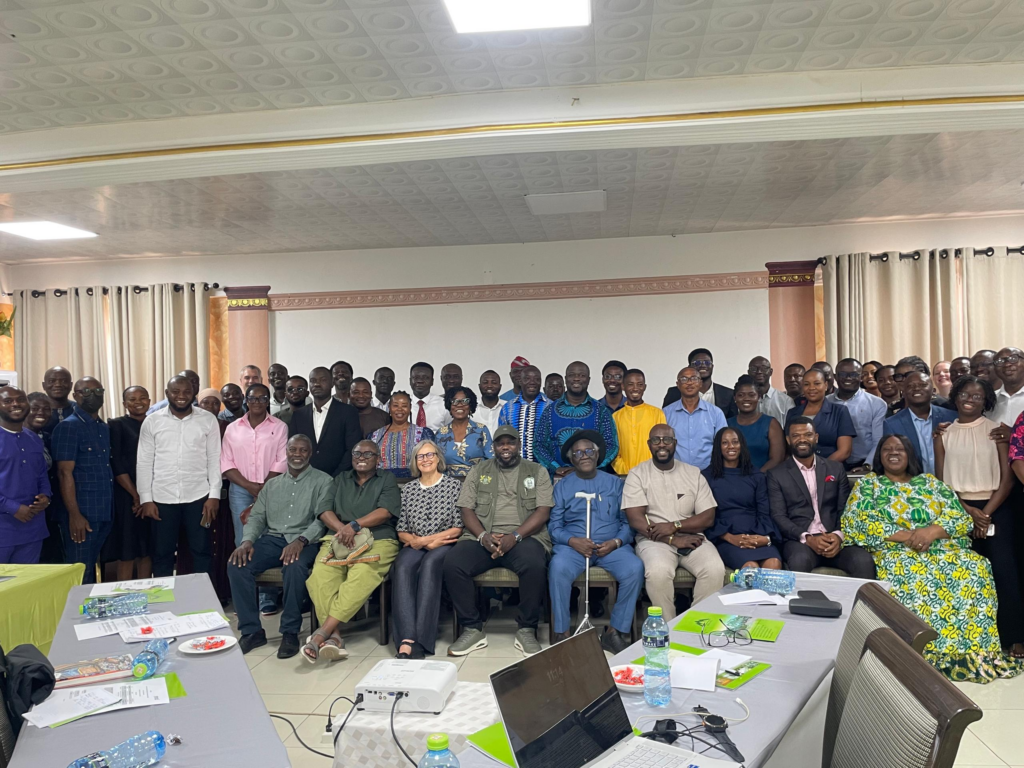
A cross-project learning workshop organised by the African Cities Research Consortium in Accra has called for evidence-driven reforms to deepen decentralisation and improve urban governance across the continent, bringing together government officials, academics, development partners, and community representatives to chart a new path for African cities.
The workshop, held at Ange Hill Hotel, drew participants from Ghana’s Inter-Ministerial Coordinating Committee on Decentralisation, the National Development Planning Commission, the Greater Accra Regional Coordinating Council, several Municipal Assemblies, and research teams from across Africa. It was convened under the auspices of the ACRC, a research platform funded by the United Kingdom’s Foreign, Commonwealth and Development Office.
Community Knowledge as a Foundation
Central to the discussions was the argument that urban reform must be rooted in the lived experiences of city residents rather than imposed through top-down technocratic planning. Diana Mitlin, who leads the ACRC, emphasised that most residents of African cities navigate considerable adversity on a daily basis, often without meaningful support from formal governance structures.
“We are very conscious that most residents in African cities, and indeed in the world, muddle through. They put their lives together despite the considerable adversity they face,” Ms Mitlin said. She cautioned against siloed approaches to urban challenges, noting that improving one system — such as water supply — could inadvertently undermine another if drainage infrastructure was neglected.
The ACRC, founded in 2020, initially studied twelve African cities before selecting five — Accra, Harare, Kampala, Lagos, and Nairobi — for implementation-focused action-research projects. In Accra, highlighted initiatives include a waste-to-product programme at Old Fadama that converts refuse into marketable goods, and research that has helped informal waste collectors, known locally as “bola taxis,” organise into stronger groups capable of engaging more effectively with local authorities.
Ghana’s Decentralisation Journey
Ghana’s own decentralisation trajectory provided critical context for the workshop. Professor Kwamena Ahwoi, a veteran of local government reform, reflected on the country’s progress since the Local Government Law of 1988, noting that the establishment of the Inter-Ministerial Coordinating Committee had accelerated achievements that eluded the first sixteen years of decentralisation efforts.
The country’s new National Decentralisation Policy, launched in 2025 under the theme “Resetting Democratic Decentralisation for Accountable Public Service Delivery and Accelerated Development,” was a focal point. Dr Esther Offei-Aboagye outlined its core objectives: empowering communities, making local governments accountable and responsive, and strengthening political, administrative, and fiscal decentralisation. The government recently announced that over 80 per cent of the District Assemblies Common Fund would be transferred directly to local assemblies — a policy move that aligns with the workshop’s emphasis on fiscal decentralisation.
“The reason for decentralisation as we put in our Constitution is to allow citizens to own it, to inform it, to drive it and to influence it,” Dr Offei-Aboagye said. The policy also incorporates cross-cutting priorities including climate change, gender inclusion, disability rights, technology and innovation, and safety and security.
From Research to Implementation
A recurring theme throughout the workshop was the need to close the gap between academic research and practical policy implementation. Participants argued that research findings must be translated into actionable reforms that municipal assemblies and community organisations can implement on the ground, rather than remaining confined to academic journals.
The workshop also highlighted how urban governance challenges intersect with broader development concerns. Ghana’s recurring urban flooding, for instance, has been linked to decades of poor civic attitudes and weak regulatory enforcement — problems that decentralisation reforms could help address if local authorities are empowered and adequately resourced. Participants urged that fiscal commitments be matched by institutional capacity-building at the district level to ensure funds are managed transparently and effectively.
Image Source: MYJOYONLINE