Ghana's Flooding Crisis Rooted in Years of Poor Attitudes and Weak Enforcement, Researcher Says
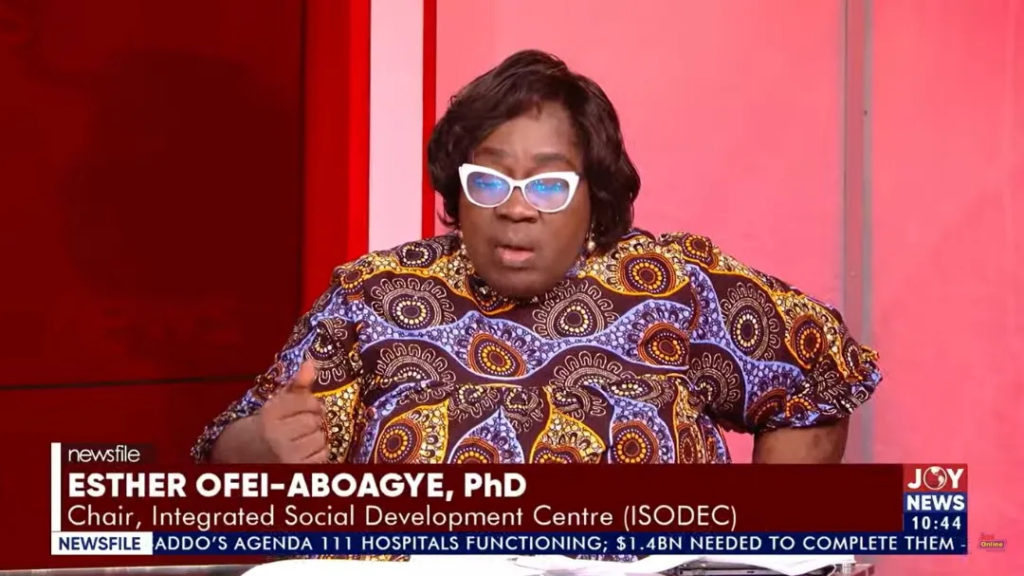
Ghana’s recurring urban flooding is not an act of nature alone — it is the cumulative result of decades of poor civic attitudes, weak regulatory enforcement, and a fundamental failure of shared responsibility, according to researcher Dr Esther Offei-Aboagye.
“The problem has been several years in the making,” Dr Offei-Aboagye said in a recent interview, responding to fresh flooding incidents across parts of the country. “We have had a number of urban development initiatives, but we must ask ourselves why these things have not worked.”
Her diagnosis cuts deeper than infrastructure deficits. At its core, she argues, the crisis reflects a society that has tolerated — and sometimes participated in — the systematic degradation of its own environment. Watercourses and wetlands have been filled with plastic, debris, and construction material to make way for buildings. Encroachments on drainage channels go unchecked. Waste disposal norms are routinely flouted.
A Failure of Collective Ownership
“There has been a missing sense of shared ownership and co-responsibility for where our nation is going,” Dr Offei-Aboagye said. “We need to invest in seeing ourselves as each other’s keepers and encourage citizens to speak up when things are going wrong.”
She pointed to the disconnect between research and policy action. Findings from the African Cities Research Consortium, which operates in Accra, Lagos, and Harare, and from the Inter-Ministerial Coordinating Committee on Decentralisation have produced valuable insights — but those insights remain on shelves rather than informing local government practice.
“The work that has been done in the area of research should not remain on the shelves,” she said. “We need to identify lessons that can be shared with other assemblies and communities.”
Local Government Hamstrung by Politics
Dr Offei-Aboagye identified a critical structural weakness: Metropolitan, Municipal and District Chief Executives lack the independence to enforce planning and environmental regulations. Fear of political repercussions silences the very officials who are supposed to protect public spaces.
“I dream of a day when a chief executive can stand up and say, ‘This is wrong, and I will not support it,’ regardless of whose interests are involved,” she said — a remark that underscores the tension between political loyalty and public duty that pervades local governance in Ghana.
She advocated for the direct election of MMDCEs as a means of boosting accountability and granting local leaders the legitimacy to act in the public interest, a reform that has long been debated but never implemented. The proposal aligns with ongoing calls to strengthen decentralisation, including the government’s recent pledge to transfer more than 80 per cent of the District Assemblies Common Fund directly to assemblies.
From Waste to Opportunity
Among the more forward-looking recommendations is the scaling of waste-to-wealth initiatives, particularly in communities like Old Fadama in Accra, where researchers and local entrepreneurs are developing enterprises that convert waste into economic opportunity — recycling, up-cycling, and youth employment included.
Such projects, if replicated across other assemblies, could address both the environmental and economic dimensions of the flooding crisis simultaneously.
Ghana’s flooding problem will not be solved by drainage engineering alone. It requires a fundamental shift in civic culture — one in which citizens, officials, and communities accept that the spaces they inhabit are shared, and that neglecting them carries consequences for everyone.
Image Source: MYJOYONLINE