Over 80% of Common Fund to Go Directly to District Assemblies, Chief of Staff Announces
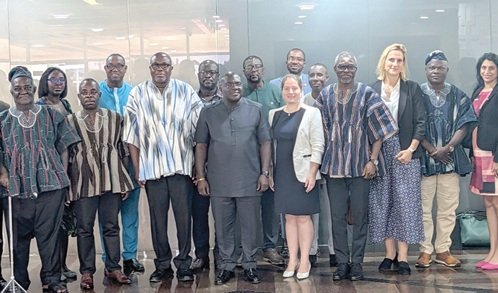
The government will transfer more than 80 per cent of the District Assemblies Common Fund directly to Metropolitan, Municipal and District Assemblies as part of a sweeping push to deepen fiscal decentralisation and strengthen local governance, Chief of Staff Julius Debrah has announced.
The move, unveiled during a high-level engagement between the government and Development Partners on the implementation of the National Decentralisation Policy and Strategic Framework 2026-2030 at Jubilee House in Accra, is intended to enhance the autonomy of assemblies and enable them to respond more effectively to the development needs of their communities.
Mr Debrah, who previously served as Minister of Local Government and Rural Development, said the new decentralisation policy underscored the government’s commitment to building stronger local governance institutions, improving service delivery and promoting inclusive development. He explained that the framework would also improve inter-governmental coordination and accelerate development at both national and local levels.
“The success of decentralisation depends on strong partnerships and sustained collaboration among all stakeholders,” the Chief of Staff said, commending Development Partners for their continued support through technical assistance, policy engagement, institutional strengthening and financing.
The announcement represents a significant shift in how the Common Fund — a constitutionally mandated allocation of national revenue to district-level governance — has traditionally been distributed. By channelling the bulk of funds directly to assemblies rather than through central government intermediaries, the policy aims to reduce bureaucratic delays and give local authorities greater control over their budgets.
Dr Gameli Kewuribe Hoedoafia, Executive Secretary of the Inter-Ministerial Coordinating Committee on Decentralisation, described the approval of the policy as a major milestone but cautioned that the focus must now shift to implementation to ensure the framework translates into tangible benefits for citizens. He called for continued collaboration through the Sector-Wide Approach to decentralisation.
The Minister of Local Government, Chieftaincy and Religious Affairs, Ahmed Ibrahim, outlined a key component of the reform agenda: political decentralisation, including plans to move towards a more democratic process for selecting Metropolitan, Municipal and District Chief Executives. According to him, the reform would deepen local democracy and give citizens a greater role in determining their local leadership.
The move towards direct funding echoes calls from civil society organisations. RISE-Ghana recently urged the government to double the administrative expenditure cap for district assemblies from 5 per cent to 10 per cent, arguing that the existing ceiling severely constrained the operational capacity of local governance structures.
Speaking on behalf of Development Partners, Janine Walz, Deputy Ambassador of Switzerland to Ghana and Chargé d’Affaires, welcomed the policy and pledged continued support for its implementation. She praised Ghana’s progress in decentralisation but urged further efforts to strengthen accountability, citizen participation and the financial independence of local assemblies.
Ghana’s decentralisation journey has spanned decades, with successive governments pledging to bring governance closer to the people. The latest policy framework, running from 2026 to 2030, represents perhaps the most concrete commitment yet to making that promise a reality through direct fiscal transfers and democratic reforms at the district level.
Image Source: MYJOYONLINE