Africa Must Build Stronger Political Advisory Capacity to Counter Evolving Security Threats
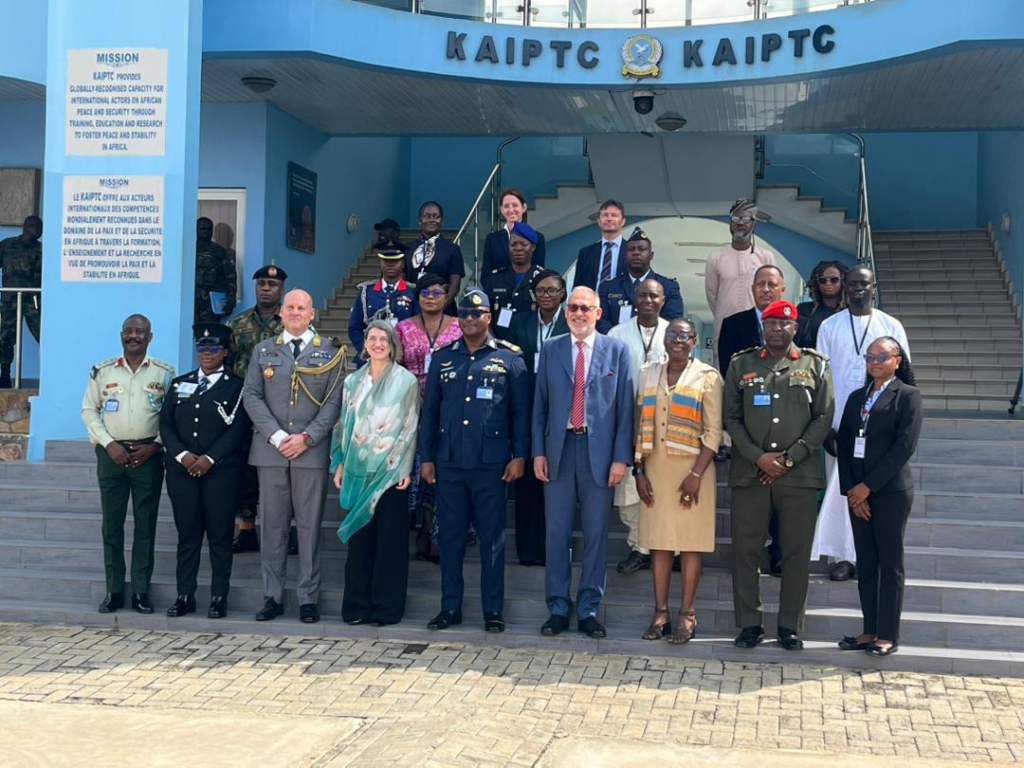
Senior security and peacebuilding officials from Ghana and Austria have called for increased investment in political advisory expertise across Africa, warning that the continent’s rapidly evolving security landscape demands a new generation of professionals capable of providing informed strategic guidance to peace support operations.
The call was made at the opening of the 9th Political Advisors Course for African Operations at the Kofi Annan International Peacekeeping Training Centre in Accra on Monday, a two-week programme jointly organised by KAIPTC and the Austrian Ministry of Defence to strengthen the capacity of political advisors serving in United Nations, African Union, ECOWAS and other peace support missions.
Air Vice Marshal David A. Akrong, Commandant of KAIPTC, described the course as both timely and essential as African countries grapple with increasingly complex and interconnected security threats. “The instability affecting parts of the Sahel, the rise of violent extremism, transnational crime, political transitions and growing humanitarian pressures continue to test the resilience of states and institutions throughout our region,” he told participants.
The Commandant stressed that the challenges facing Africa can no longer be addressed through military responses alone. Instead, they require integrated approaches combining security interventions with political engagement, dialogue, mediation and strategic decision-making. He cautioned that even relatively stable countries are vulnerable to the ripple effects of regional instability, noting that Ghana itself is “already experiencing the initial effects” of these developments.
Central to the discussions was the growing importance of political advisors in contemporary peace support operations. Air Vice Marshal Akrong argued that today’s conflicts are increasingly shaped by political, economic, social and humanitarian factors, making political analysis and strategic foresight indispensable tools for mission success.
“Political Advisors help commanders, mission leaders and policymakers understand complex political environments, anticipate emerging risks and develop informed responses to crises,” he explained, adding that their work often involves mediation, negotiation, stakeholder engagement and strategic communication aimed at preventing conflicts from escalating.
Günther Barnet, Coordinator of the National Security Council in Austria’s Ministry of Defence, reflected on the long-standing partnership between Austria and Ghana that gave birth to the Political Advisors Course. Discussions on establishing the programme began in 2015, leading to the inaugural course in 2017. Since then, the initiative has become a flagship cooperation project, interrupted only by the COVID-19 pandemic in 2020.
Mr Barnet offered a candid assessment of the challenges that led to the course’s creation. He recalled a period of international optimism surrounding efforts to stabilise Mali and the wider Sahel region, when organisations believed coordinated interventions could restore security and strengthen governance. “So despite all our efforts, we didn’t succeed until now,” he admitted, acknowledging the immense complexity of modern conflicts.
Despite these setbacks, Mr Barnet argued that the challenges only reinforce the need for stronger political advisory capabilities. He emphasised that effective political advising involves more than technical knowledge — it requires understanding how political leaders think and how decisions are made under pressure. “Good political advising is not only about the skills and tools that you will hear about during this course. It is also the understanding of when should I advise what,” he said.
The call for enhanced advisory capacity comes as Ghana’s political leaders continue to stress the importance of democratic governance and institutional resilience. Majority Leader Mahama Ayariga recently urged young Ghanaians to embrace and defend the country’s democratic institutions, a message that resonates with KAIPTC’s broader mission of building peaceful and stable societies across the continent.
Image Source: MYJOYONLINE