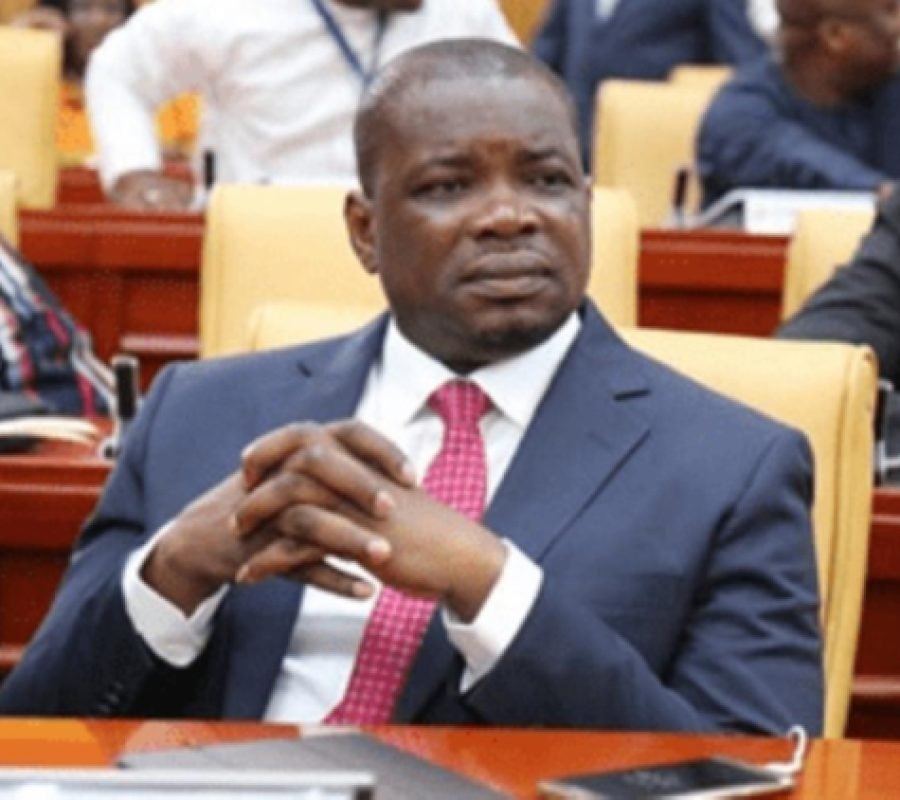
Mahama Ayariga Urges Young Ghanaians to Defend Democratic Governance
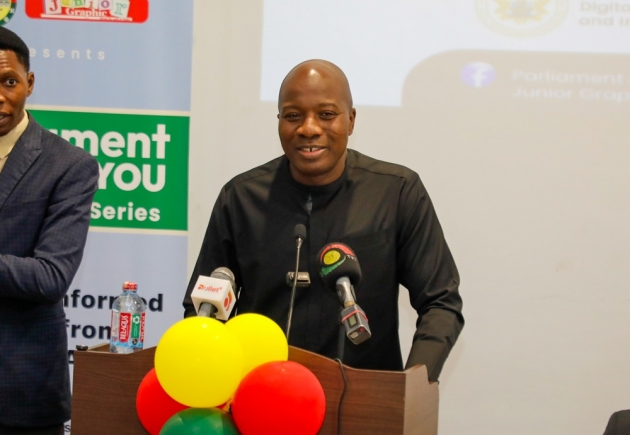
The Majority Leader in Parliament, Mahama Ayariga, has made an impassioned appeal to young Ghanaians to embrace and defend the country’s democratic institutions, warning that the freedoms enshrined in the constitution should never be taken for granted.
Speaking at the launch of “Parliament and You,” a new civic education partnership between Parliament and the Junior Graphic, Mr Ayariga used the occasion to trace Ghana’s turbulent political history and argue that parliamentary democracy remains the surest guarantee of pluralistic governance.
“You cannot have a different political party in the Executive. The Executive is either fully NDC or fully NPP. But in Parliament, you can have all the different political parties which have won seats,” he told an audience of schoolchildren, parliamentary leaders and media executives at Parliament House on Sunday.
The “Parliament and You” programme aims to reach approximately 50,000 children aged 10 to 17 through weekly child-friendly publications in the Junior Graphic. The content will simplify parliamentary concepts, functions and procedures through features, stories, quizzes, puzzles, illustrations and competitions.
A Lesson in Constitutional History
Mr Ayariga walked the young attendees through Ghana’s successive republics and the disruptions caused by military interventions, noting that each coup d’état followed a familiar pattern.
“When they form a military government, the soldiers who assume governance step into the shoes of the executive. They normally leave the judges, that is the judiciary, but at all times, they always shut down parliament,” he explained, referencing the coups of 1966 and subsequent military takeovers.
“And then they rule by decrees. That is to say, they pass the laws themselves without a parliament.”
The Majority Leader argued that this history made the defence of Parliament not merely an institutional concern but a civic duty. He expressed hope that educational initiatives like “Parliament and You” would cultivate a generation that instinctively resists any attempt to dismantle elected governance.
“It has become necessary for Parliament to seek to rally the population to stand firmly behind it so that in future if anybody attempts to overthrow the government and to shut down Parliament, the people will stand behind their Parliament,” he said.
Democracy as Deliberation
Central to Mr Ayariga’s message was the idea that democracy is fundamentally about the contest of ideas. He stressed that parliamentary deliberations frequently improve proposed legislation because members are willing to incorporate worthwhile suggestions regardless of party origin.
“The idea of democracy is that let them say whatever they want to say. When you finish, you put the matter to a vote,” he stated, framing Parliament as the institutional space where differing political philosophies can coexist and contribute to national decision-making.
The call comes at a time of relatively strong public confidence in the Mahama administration. A recent Global InfoAnalytics poll put the President’s approval rating at 71 percent, the highest since 2020, suggesting a political environment in which the governing party’s legislative agenda faces less public resistance than at any point in recent memory.
Investing in Civic Education
The launch was attended by prominent figures including First Deputy Speaker Bernard Ahiafor, Minister of Communication, Digital Technology and Innovations Samuel Nartey George, Clerk-to-Parliament Ebenezer Ahumah Djietror, and senior leadership of the Graphic Communications Group Ltd.
The initiative drew significant financial and material support. Mr Ayariga announced a GH¢200,000 contribution from his office, while Minority Leader Alexander Afenyo-Markin donated GH¢100,000. Minister Samuel Nartey George pledged 25 laptops to be awarded to winners of quarterly quizzes testing students’ knowledge of the weekly educational series.
Mr Ayariga encouraged students to take advantage of opportunities to visit Parliament, observe proceedings and deepen their understanding of how the institution functions. He noted that similar initiatives in other jurisdictions had inspired young people to establish model parliaments in schools and communities as practical tools for learning about democratic governance.
The programme represents a deliberate effort by Parliament to invest in civic literacy at a time when democratic institutions across the region face varying degrees of pressure. By targeting children in their formative years, the initiative seeks to build a constituency of informed citizens who understand — and are prepared to defend — the mechanisms of representative government.
Image Source: MYJOYONLINE