GhIE Calls for All Building Designs to Be Prepared and Approved by Recognised Professionals
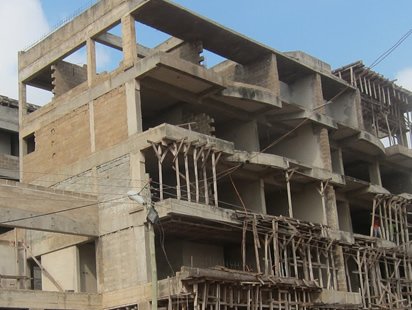
The Ghana Institution of Engineering (GhIE), in collaboration with several partner organisations, has issued an urgent call for a fundamental reform of the country’s building design and approval processes, recommending that all building designs must be prepared and approved exclusively by recognised Built Environment Professionals.
The recommendation, announced on Thursday, comes amid growing concerns over the frequency of building collapses and structural failures across Ghana, many of which have been attributed to unqualified individuals designing and supervising construction projects without the oversight of licensed engineers, architects, or surveyors.
The GhIE’s intervention reflects a broader reckoning within Ghana’s construction sector. For years, the country has grappled with a patchwork of enforcement mechanisms that allow buildings to rise without proper structural vetting. In many peri-urban and rural areas, buildings are constructed from designs drawn by untrained artisans, with no independent review of load-bearing calculations, foundation specifications, or material standards.
The consequences have been devastating. Building collapses in Accra, Kumasi, and other major cities have claimed dozens of lives in recent years, while countless more structures suffer from latent defects that put occupants at daily risk. The Institution’s recommendation is not merely a professional courtesy — it is a public safety imperative.
Under the proposed framework, only professionals registered with recognised Built Environment bodies — including engineers, architects, quantity surveyors, and planners — would be authorised to prepare and certify building designs. The recommendation also calls for Metropolitan, Municipal and District Assemblies (MMDAs) to reject any building permit application that does not bear the endorsement of a qualified professional.
This is not the first time the engineering profession has raised the alarm. The challenge, as with many regulatory reforms in Ghana, lies in implementation. District assemblies, which serve as the frontline regulators of physical development, often lack the technical capacity to scrutinise building plans. In some cases, assembly staff without engineering backgrounds are tasked with evaluating structural drawings — a process that amounts to little more than rubber-stamping.
The GhIE’s recommendation arrives at a critical juncture. President Mahama’s pledge to address Accra’s chronic flooding has underscored the link between poor urban planning, substandard construction, and the city’s vulnerability to extreme weather events. Buildings erected without proper drainage considerations or structural resilience exacerbate the damage when floods strike, turning preventable infrastructure failures into national emergencies.
The Institution is urging the government to strengthen the regulatory architecture governing the construction industry, including mandatory site inspections at critical stages of construction, the establishment of a national building code enforcement body, and stiffer penalties for professionals who certify substandard work.
Ghana’s construction industry is one of the fastest-growing sectors in the economy, driven by urbanisation, infrastructure investment, and a housing deficit estimated at nearly two million units. But growth without governance is a recipe for disaster. The GhIE’s call is a reminder that the buildings Ghanaians live, work, and worship in must be designed by people who understand the science of structural integrity — and that the state must enforce this standard without exception.
Image Source: GHANA BUSINESS NEWS