Ghana Immigration Service Raises Alarm Over Abuse of ECOWAS Free Movement Protocol, Warns of Security Threats
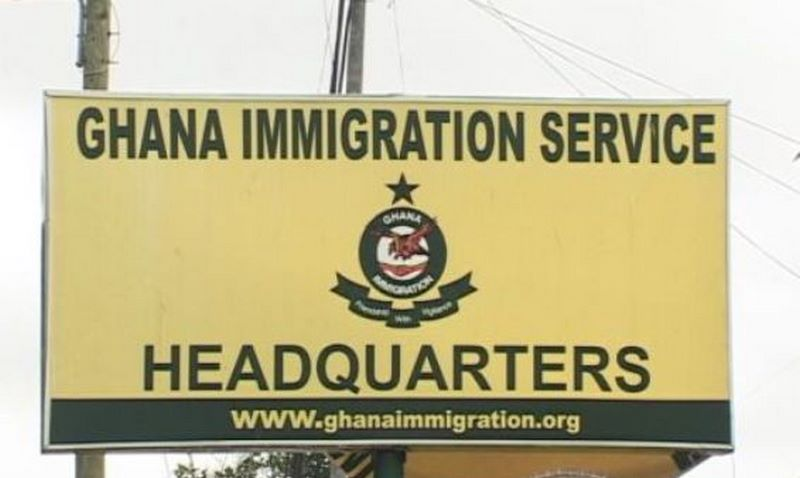
The Ghana Immigration Service has sounded an urgent alarm over what it describes as a growing pattern of abuse of the ECOWAS Free Movement Protocol, warning that the regional agreement designed to facilitate legitimate travel and trade is being exploited by criminal networks engaged in human trafficking, cyber fraud, and organised street begging.
The concerns emerged during high-level discussions between GIS officials and a delegation from the West African Monetary Institute, led by Dr Abraham Abdulai, at the Immigration Service’s headquarters in Accra this week. The meeting formed part of WAMI’s broader study visit to evaluate implementation challenges surrounding the ECOWAS Protocol on Free Movement, regional trade, and the rollout of the ECOWAS biometric identification system.
Deputy Comptroller-General of Immigration in charge of Command, Post and Operations, Faisal Disu, did not mince words about the scale of the problem. “Ghana is currently attracting a lot of bad actors into the country,” he warned, adding that proceeds from organised begging networks could potentially be channelled toward financing terrorism. The assertion underscores a security dimension that extends well beyond conventional immigration enforcement.
The ECOWAS Free Movement Protocol, first adopted in 1979, grants citizens of member states the right to enter, reside, and establish economic activities in any member country. The agreement has been instrumental in fostering regional integration and trade across West Africa. However, its implementation has long been hampered by gaps in surveillance, inconsistent documentation standards, and the absence of a unified biometric database — gaps that criminal networks have proven adept at exploiting.
Progress on the ECOWAS National Biometric Identity Card remains painfully slow. According to discussions at the meeting, only Ghana, Senegal, and Côte d’Ivoire have fully implemented the system, leaving the vast majority of the bloc’s 15 member states without the digital infrastructure needed to track movement across borders effectively. Currency disparities across the sub-region were also identified as a complicating factor, creating additional friction in efforts to monitor cross-border financial flows.
Dr Abdulai noted that WAMI’s ongoing assessment will help develop strategies and benchmarks, including the establishment of a centralised database of ECOWAS citizens, to strengthen border management across the region. The initiative represents a recognition that national-level enforcement alone cannot address challenges that are inherently transnational in character.
Both institutions emphasised the urgent need for public advocacy and sensitisation campaigns focused on regular migration and the dangers of unapproved border crossing routes. The GIS announced plans to intensify border patrols to safeguard national security while ensuring that the principle of free movement supports, rather than undermines, Ghana’s peace and stability.
The meeting’s recommendations are expected to feed into broader ECOWAS policy reforms aimed at striking a balance between facilitating legitimate regional movement and closing the security loopholes that criminal networks continue to exploit. For Ghana, which has positioned itself as a gateway to West African markets, getting that balance right is not merely a matter of immigration policy — it is a question of national security and regional credibility.
Image Source: MYJOYONLINE