Mining and ICT Surge Ghana Economic Growth to 6.4% in First Quarter of 2026
Ghana’s economy expanded by 6.4 per cent in the first quarter of 2026, up from 6.2 per cent recorded in the same period a year earlier, driven largely by a sharp rebound in mining and quarrying and an extraordinary surge in information and communication technology.
Announcing the provisional first quarter Gross Domestic Product estimates in Accra, the Ghana Statistical Service reported that the acceleration came alongside a dramatic easing of price pressures. The GDP deflator — a measure of inflation for everything the economy produces — declined from 23.9 per cent in the first quarter of 2025 to just 4.1 per cent in 2026, signalling that growth is increasingly real rather than inflation-driven.
Government Statistician Dr Alhassan Iddrisu told journalists that nominal GDP reached GH₢420.4 billion in the first quarter, up from GH₢378.0 billion a year earlier, while real GDP stood at GH₢57.4 billion compared with GH₢53.9 billion. The country’s non-oil real GDP grew at 6.3 per cent, reflecting broad-based expansion beyond the petroleum sector.
“On a seasonally adjusted quarter-on-quarter basis, real GDP rose 1.6 per cent in the first quarter of 2026, up from 1.5 per cent in the fourth quarter of 2025, confirming that the economy’s growth momentum is sustained and not merely a base effect,” Dr Iddrisu said.
Information and Communication Technology emerged as the standout performer, surging 25.2 per cent year-on-year — its highest reading in several quarters — and contributing 26.9 per cent to overall GDP growth. The sector’s sustained double-digit expansion points to the digital economy as a powerful long-term engine for Ghana’s growth, analysts say.
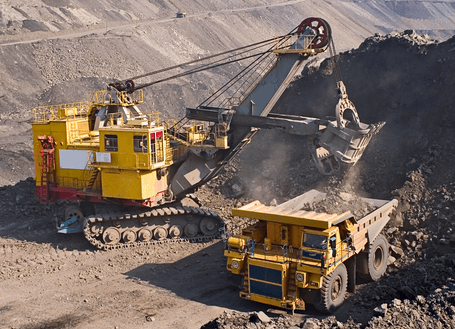
The industry sector increased to 6.9 per cent growth, up from just 4.1 per cent in the same quarter of 2025, powered by a sharp rebound in mining and quarrying, which grew 10.7 per cent after three consecutive quarters of negative growth. Gold maintained strong double-digit year-on-year growth of 15.7 per cent, continuing its role as the backbone of Ghana’s industrial output, while oil and gas returned to positive territory with growth of 7.0 per cent after contracting by 29 per cent in the second quarter of 2025.
The services sector remained the largest contributor to the economy, accounting for 45.7 per cent of GDP at basic prices and recording growth of 7.1 per cent. Transport and Storage expanded 13 per cent, while Trade and Repair of Vehicles grew 9.0 per cent. The drag within services came from Accommodation and Food Service Activities, which contracted by 13.6 per cent year-on-year.
Agriculture grew 4.0 per cent, a moderation from 6.6 per cent in the first quarter of 2025. Forestry and Logging rebounded strongly at 9.0 per cent, while cocoa expanded 3.8 per cent, continuing its recovery from severe contractions in 2023 and 2024. Fishing, however, contracted by 18.5 per cent year-on-year — its sharpest decline in the data series — raising what Dr Iddrisu called “urgent concerns about the state of Ghana’s fishing industry.”
From the expenditure side, growth was dominated by a 36.1 per cent surge in investment, up from 6.2 per cent a year earlier, indicating a significant pickup in capital spending and business confidence. Household consumption grew 7.5 per cent while government consumption expanded 7.9 per cent.
Dr Iddrisu recommended that the government sustain macroeconomic stability policies and private-sector growth measures while urgently addressing weaknesses in fishing, accommodation and food services, and water supply. He also called for increased investment in infrastructure and digital transformation to harness the potential of the ICT sector.
Image Source: GHANA BUSINESS NEWS