Forestry Commission Staff Attacked as Mob Burns Timber Checkpoint Facility in Bono East
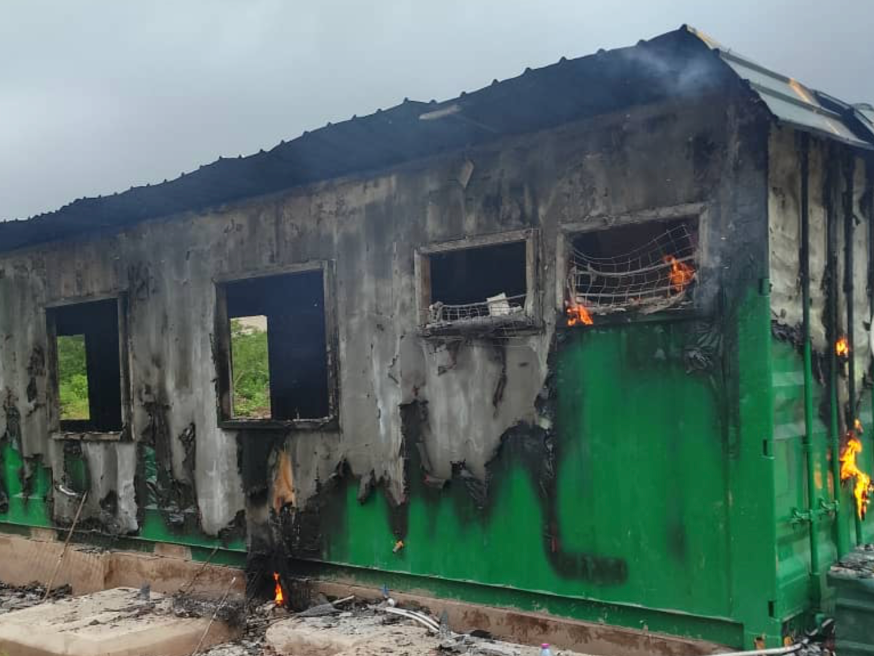
The Forestry Commission has condemned a violent assault on its personnel and the destruction of a newly built accommodation facility at Babatokuma near Kintampo in the Bono East Region, calling the attack “an affront to State authority.”
The incident occurred on Tuesday, June 9, at approximately 3:30 p.m., when a mob stormed the facility, assaulted officers on duty, vandalised the structure, and set it ablaze. The accommodation had been constructed to house personnel deployed to monitor timber transportation and curb the illegal movement of timber products to neighbouring countries—part of the Commission’s broader effort to protect Ghana’s dwindling forest resources.
According to the Commission, the attackers claimed that the checkpoint’s operations threatened their timber business interests in the area. Several officers sustained injuries and were taken to the Kintampo Government Hospital for treatment. The incident has been reported to the Kintampo Divisional Police Command.
The Commission said it is working with the police and other security agencies to identify and apprehend the perpetrators, some of whom were captured on video during the attack. It expressed alarm over what it described as a growing culture of impunity, noting that similar assaults on its personnel and facilities have occurred in the past.
The attack lays bare the tensions between Ghana’s efforts to enforce forest protection laws and the economic interests of those who profit from the timber trade—often illegally. Ghana’s forests have suffered decades of degradation, driven by logging, mining, and agricultural expansion. The country lost approximately 1.4 million hectares of tree cover between 2001 and 2023, according to Global Forest Watch data, a rate of deforestation that has alarmed environmentalists and prompted successive governments to strengthen monitoring and enforcement mechanisms.
The Babatokuma checkpoint was part of that enforcement infrastructure. Its destruction not only removes a critical monitoring point but also sends a dangerous signal that those engaged in illegal timber harvesting are willing to use violence to protect their operations.
The Commission warned that continued disregard for forest laws could have serious ecological and socio-economic consequences. Ghana’s forests provide essential ecosystem services—water catchment protection, carbon sequestration, biodiversity conservation—that underpin agriculture, water supply, and climate resilience across the country.
The incident raises questions about the security of forestry personnel working in remote areas and the adequacy of state protection for those tasked with enforcing environmental regulations. Without stronger security backing and a credible deterrent against such attacks, the Commission’s ability to fulfil its mandate will remain compromised.
Image Source: MYJOYONLINE