CSIR Warns Weak Use of Soil Data Is Undermining Ghana’s Agricultural Productivity
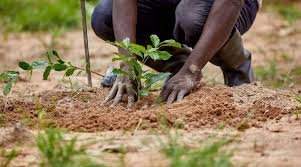
Ghana’s agricultural transformation is being held back not by a shortage of scientific knowledge, but by a persistent failure to use the soil data the country already possesses, the Council for Scientific and Industrial Research (CSIR) Soil Research Institute has warned.
Dr. Collins Tay, Director of the Institute, said Ghana has built sophisticated soil research systems capable of guiding highly precise agricultural decisions — yet these tools remain largely untapped in both national planning and day-to-day farming practice. The gap, he argued, is costing the country dearly in yields, fertiliser efficiency, and food security.
Precision Agriculture, Unrealised
At the heart of CSIR’s concern is the Ghana Soil Information System, a platform designed to map the entire country’s soil properties in granular detail. The system allows researchers to assess pH levels, nutrient content, and biological activity at specific locations, enabling recommendations tailored to individual plots of land rather than broad regional generalisations.
“This system is very powerful because it allows us to map the entire country in terms of soil properties. So when a farmer comes, we don’t just give general advice. We look at the specific location, we check the pH, we check the nutrients, we check the biological activity of the soil, and then we give a recommendation that is specific to that land,” Dr. Tay said.
The implications are significant. At a time when agricultural input costs remain stubbornly high, precision soil data could save farmers substantial sums by eliminating unnecessary fertiliser application. Dr. Tay pointed out that in some areas, soil already contains sufficient nutrients — but without proper guidance, farmers continue to apply fertiliser indiscriminately, adding nitrogen where it is not needed and driving up costs while causing environmental damage.
The Generalisation Trap
The core problem, according to Dr. Tay, is that Ghana’s farming advisory and fertiliser subsidy programmes continue to operate on a one-size-fits-all basis. “The truth is that we are still operating in a very generalised system. But soil is not general. Soil is specific. Two farms just a few kilometres apart can have completely different characteristics. So if you treat them the same, you will not get the best results,” he explained.
This generalisation extends to national agricultural policy. Fertiliser subsidy programmes, which represent a major expenditure for the government, are not systematically informed by soil science data. The result is a misallocation of resources: money spent on fertiliser that soils do not need, while deficiencies in other areas go unaddressed.
A Call for Integration
Dr. Tay is calling for stronger collaboration between government institutions and research bodies to bridge the gap between soil science and agricultural practice. Specifically, he wants soil data to be formally integrated into fertiliser subsidy programmes and national agricultural planning frameworks.
“We are calling for a system where decisions are based on data, not guesswork. Because if we continue to ignore soil science, then we will continue to spend money on fertiliser and still not get the results we want in terms of food production,” he stated.
The warning comes at a critical juncture for Ghana’s agricultural sector, which employs a significant majority of the rural population and remains the backbone of the national economy. As the government seeks to improve productivity and strengthen food security, experts say the effective use of soil intelligence could be one of the most important — and most neglected — tools available.
Image Source: MYJOYONLINE