Vice President Calls for Collaboration to Unlock Economic Potential of Ghana's Culture and Creative Industry
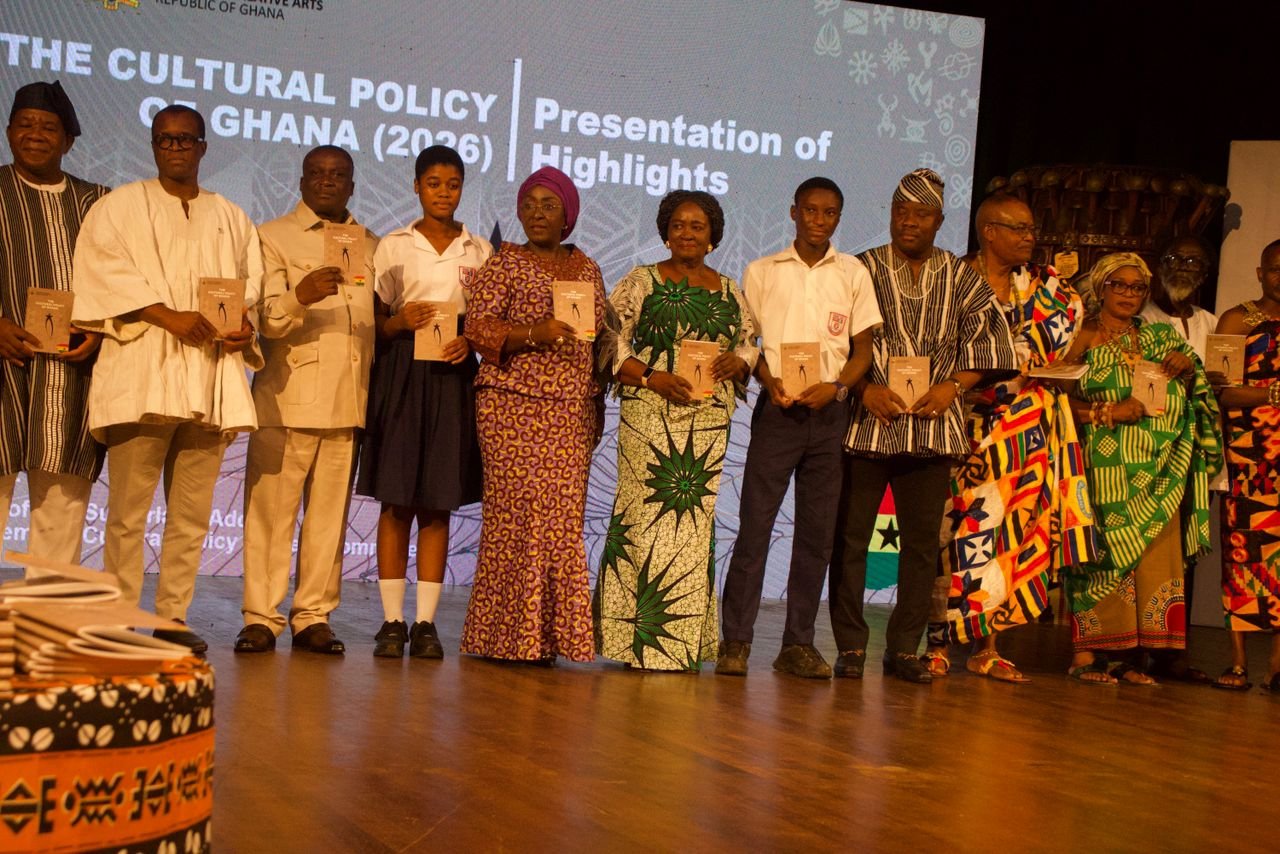
Vice President Professor Jane Naana Opoku-Agyemang has called for stronger stakeholder collaboration to unlock the full economic potential of Ghana’s culture and creativity industry, positioning heritage and the arts not merely as expressions of identity but as powerful engines of national development.
Speaking at the launch of the Revised Cultural Policy of Ghana in Accra on Tuesday, Prof. Opoku-Agyemang argued that the nation must draw on its cultural and creative strengths to create jobs, drive inclusive economic growth and project Ghana’s voice with confidence on the world stage.
“We must build a nation that draws strength from its heritage, creates opportunities through innovation, and projects its voice with confidence and influence on the world stage,” she told an audience that included diplomats, traditional leaders, cultural practitioners and government officials. “Let Ghana stand as proof that culture is not only a reflection of identity, but also one of the most powerful drivers of development.”
A Policy Rooted in Heritage and Ambition
The Revised Cultural Policy replaces Ghana’s 2004 framework and represents a significant shift in how the government views the role of culture in national planning. The new document recognises culture as the foundation of national identity and development, emphasising that Ghana’s rich heritage — both tangible, such as monuments and artefacts, and intangible, including languages, traditions and knowledge systems — should be a source of pride and a key driver of economic growth, social cohesion and sustainable development.
The policy’s launch comes at a moment when the government is seeking to diversify the economy and reduce dependence on traditional commodity exports. Earlier this year, the government unveiled the revised cultural policy framework as part of a broader strategy to position heritage and creative industries as engines of job creation and social transformation.
UNESCO Recognition and Global Ambitions
Prof. Opoku-Agyemang highlighted recent milestones in Ghana’s cultural diplomacy, including the recognition and inclusion of Kente and Highlife music on the UNESCO list of Intangible Cultural Heritage of Humanity. She described these achievements as evidence that Ghana’s cultural expressions are not merely national treasures but gateways to global recognition and economic opportunity.
“These achievements remind us that our cultural expressions are not only the treasures of Ghana, but that they are gates to the world,” she said, stressing that history is indispensable from a nation’s identity and future.
The Vice President urged citizens to learn additional local languages to promote social cohesion, while calling on the creative sector to embrace technology as a means of digitising indigenous culture and amplifying the reach of Ghanaian artists. “We must also use technology in ways that are innovative and rooted in our values for the benefit of our people, especially in the areas of job creation,” she noted.
Ministry Outlines Economic Vision
Madam Ablah Dzifa Gomashie, the Minister of Tourism, Culture and Creative Arts, stressed the need to harness the economic potential embedded in Ghana’s culture and traditions. She said the policy document was developed after broad consultations and reflected a consensus across government, civil society and the creative sector.
“By harnessing the economic potentials of culture and traditions, we can promote entrepreneurship, create sustainable economic opportunities, and empower our people, particularly the youth and women, while preserving the rich cultural heritage that defines us as a nation,” she said.
Madam Gomashie revealed that the Ministry and its partners were completing work on the UNESCO Cultural Indicator Framework, which will measure the impact of culture on economic growth. “On completion, the framework will improve evidence-based policy making, improve resource allocation, and support advocacy for investment in the culture and creative arts sector,” she explained, adding that it would also help Ghana track its contribution to the Sustainable Development Goals.
International Partners Pledge Support
Representatives of UNESCO and the European Union pledged their support for the policy’s implementation. Mr Rune Skinnebach, the EU Ambassador to Ghana, and Mr Edmond Moukala, the UNESCO Representative in Ghana, both highlighted the importance of investing in culture as a driver of employment and economic opportunity.
They described the document as Ghana’s strategic commitment to making culture an integral part of national development, cautioning that digital transformation should not lead to cultural erosion but should instead be harnessed to preserve and promote Ghana’s rich heritage for future generations.
Image Source: GHANA BUSINESS NEWS