Kenya Courts Chinese Investors to Build Local Tea Processing Industry
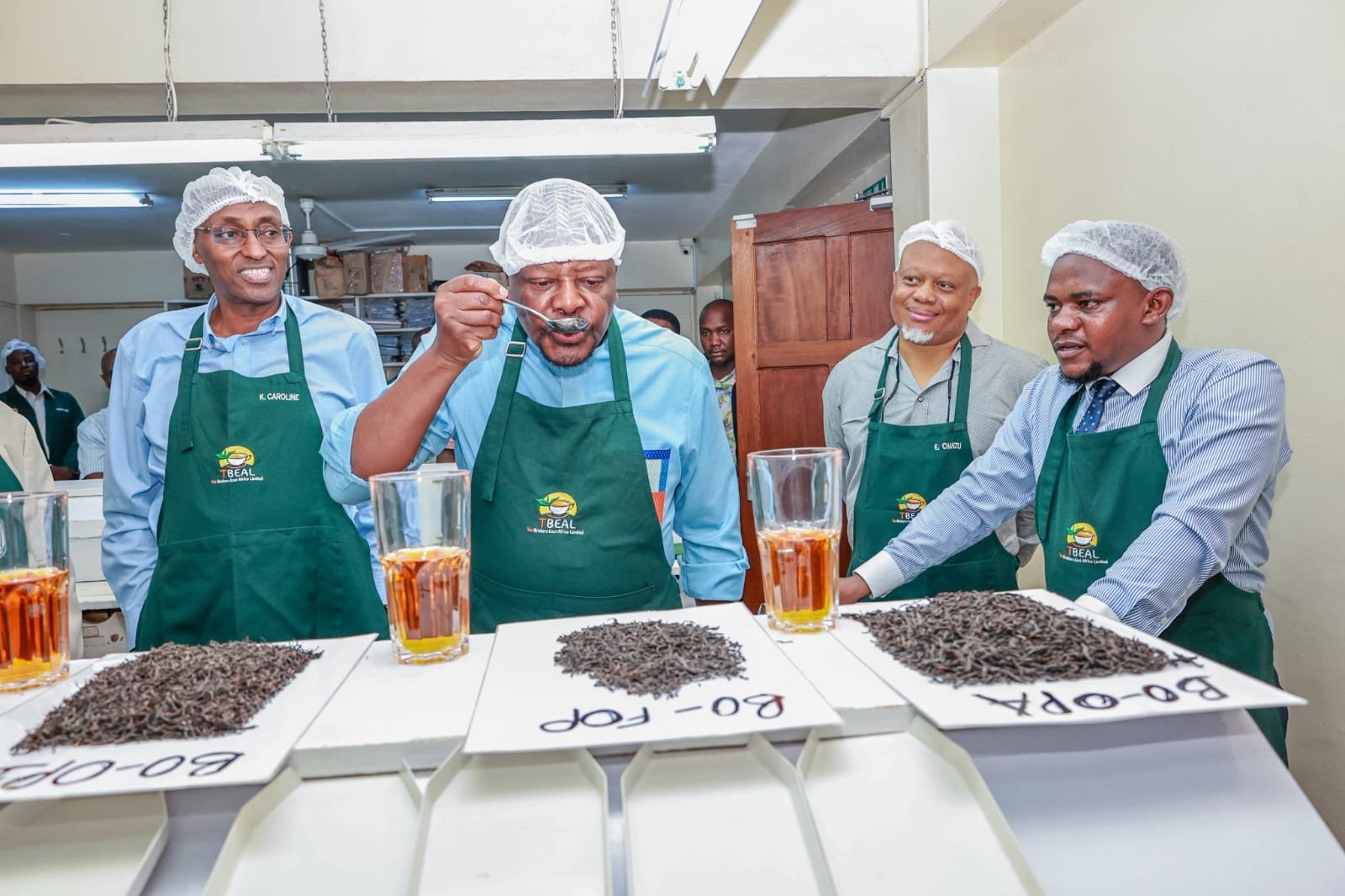
Kenya is stepping up efforts to attract Chinese investment into tea processing, packaging and manufacturing as it seeks to capture more value from one of its biggest export earners instead of continuing to ship most of its crop in raw form.
Agriculture Cabinet Secretary Mutahi Kagwe has been at the forefront of the push, engaging Chinese business delegations and pitching Kenya as a viable destination for downstream tea investment. The strategy represents a fundamental shift in how East Africa’s largest economy approaches its tea sector — moving beyond the colonial-era model of bulk commodity exports toward a more industrialised, value-added approach.
Kenya is the world’s largest exporter of black tea and the third-largest producer globally, yet the country captures only a fraction of the final retail value of its product. The vast majority of Kenyan tea is exported in bulk, processed and packaged abroad, and sold to consumers at multiples of the farmgate price. The economic logic of onshoring that processing is compelling, but decades of underinvestment in manufacturing infrastructure have left the sector reliant on foreign buyers to do the value-adding work.
Chinese interest in Kenyan tea is not entirely new. China has been expanding its agricultural footprint across Africa for more than a decade, investing in everything from cotton ginning in Tanzania to sisal processing in Mozambique. But the tea sector carries particular strategic significance. China’s own domestic tea market is the world’s largest, and Chinese firms have deep expertise in tea processing technology, packaging design, and global supply chain logistics.
The Kenyan government’s pitch is straightforward: set up processing plants in Kenya, access raw material at source, and ship finished products to global markets under Kenyan-origin branding. For Chinese investors, the attraction lies in proximity to raw materials, lower labour costs compared to domestic operations, and preferential market access through trade agreements such as the African Growth and Opportunity Act (Agoa) and the African Continental Free Trade Area (AfCFTA).
However, the initiative is not without its critics. Some Kenyan agricultural economists have cautioned that Chinese investment in processing could replicate patterns seen in other African countries, where foreign-owned factories extract primary resources with limited technology transfer or local employment benefits. The challenges faced by Kenyan entrepreneurs in navigating import and trade logistics highlight the structural barriers that local businesses continue to face in competing with well-capitalised foreign firms.
There are also questions about the impact on smallholder farmers, who account for more than 60 per cent of Kenya’s tea production. If Chinese-owned processing facilities prefer to source from large-scale estates, the benefits of industrialisation could bypass the very communities that grow the crop.
The Tea Board of Kenya has sought to reassure stakeholders that any investment framework will include provisions for local content requirements, technology transfer obligations, and minimum procurement thresholds from smallholder cooperatives. Whether those provisions will be enforced in practice remains an open question, given Kenya’s mixed track record on regulatory oversight of foreign direct investment.
What is clear is that the status quo — exporting raw leaf and importing finished tea products at inflated prices — is economically untenable. If Kenya can successfully attract Chinese capital while maintaining meaningful local participation, the tea sector could become a model for value-added industrialisation across the continent.
Image Source: GHANAMMA