The Republic of Fake Awards: When Every Hunter Claims to Have Killed an Elephant
I nearly missed my opportunity.
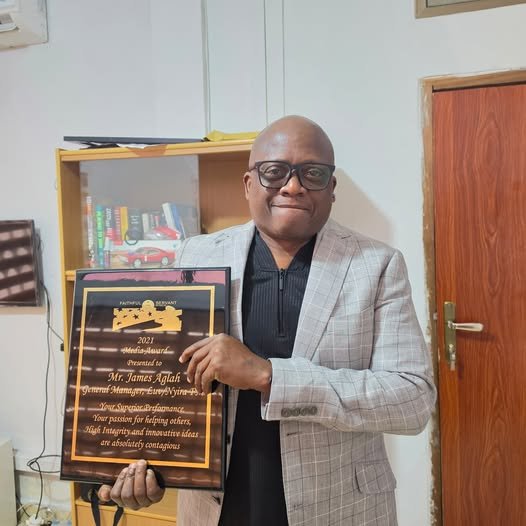
The realisation struck me sometime this week as I scrolled through social media and encountered yet another photograph of a distinguished Ghanaian standing beside a plaque large enough to serve as a dining table. The recipient was smiling. The organisers were smiling. The photographer was smiling. Even the plaque itself seemed to be smiling.
That was when panic set in. Apparently, everybody in Ghana was receiving an award except me.
Ministers were receiving awards. CEOs were receiving awards. Public officials were receiving awards. Every week, another photograph emerged from a hotel ballroom showing someone being celebrated as Outstanding, Visionary, Transformational, Influential, Exceptional, Dynamic or Best Performing. The titles had become so plentiful that I began to fear I had somehow missed an important national registration exercise.
I was therefore preparing to submit my application for the prestigious title of “Most Consistent Taxpayer Under Emotional Stress” when the Presidency unexpectedly intervened and spoiled the entire business.
The statement reportedly advised ministers, CEOs and public officials to stop accepting awards from organisations whose credibility, assessment methods and evaluation criteria could not be properly established. I read the statement once. Then I read it again. And suddenly it dawned on me that we had reached a remarkable moment in our national history.
Government had found it necessary to remind grown adults to investigate who was praising them before accepting the praise. Only in the Republic of Uncommon Sense could such a public reminder become necessary.
Recognition vs. Decoration
Let me confess that I have absolutely nothing against awards. Recognition has always been part of civilised society. The best farmer deserves recognition. The best student deserves recognition. The best footballer deserves recognition. Even the village palm wine tapper deserves recognition, provided he has not sampled too much of his own inventory before the judges arrive.
Recognition is not the problem. The problem begins when recognition becomes more abundant than achievement.
Somewhere along the line, awards in our Republic started multiplying faster than mosquitoes after a Kumasi rainstorm. Suddenly everybody became outstanding. Everybody became visionary. Everybody became transformational. Everybody became influential. Everybody became exceptional. If things continue at the current pace, I suspect newborn babies will soon begin receiving Future Leadership Excellence Awards before they learn how to crawl.
An old man in my hometown once observed that when every hunter returns from the forest claiming to have killed an elephant, either somebody is lying or the forest has become dangerously empty. His wisdom returned to me as I reflected on our growing national trophy collection.
The Trader’s Question
Every recipient appeared to be the best. Every citation sounded like a nomination for sainthood. Every ceremony promised to honour excellence. Yet ordinary citizens continued asking stubborn questions.
I imagined a trader at Kejetia staring at one of those award photographs in the newspaper. After studying it carefully, she looks up and asks, “If all these people are best-performing, who exactly is responsible for the problems they are trying to solve?” Before anyone can answer, a taxi driver who has been listening quietly joins the conversation. “And if everybody is the most influential person in Ghana,” he asks, “who exactly is being influenced?”
Those are uncomfortable questions, but uncomfortable questions have a habit of revealing uncomfortable truths.
The truth is that genuine excellence exists in this country. There are public servants doing remarkable work under difficult conditions. There are teachers changing lives in classrooms. There are entrepreneurs creating jobs. There are healthcare workers saving lives every day. Such people deserve recognition. In fact, they probably deserve more recognition than they receive. But meaningful recognition depends on credibility.
A gold medal means something because people trust the competition. A university degree means something because people trust the institution. An award means something because people trust the process that produced it. Without trust, recognition slowly becomes decoration. And decoration, however attractive, cannot build roads, improve hospitals, stabilise electricity or create jobs. A plaque cannot fill a pothole. A certificate cannot shorten traffic. A trophy cannot keep the lights on.
Results Before Plaques
The Presidency’s intervention follows weeks of growing public backlash over the proliferation of awards ceremonies recognising government officials. Critics have questioned the legitimacy of many such events, with governance experts arguing that the electorate, not self-appointed bodies, should be the primary judges of public performance.
When every rooster in the village is declared Bird of the Year, eventually even the turkey begins to suspect fraud. Perhaps that is where we now find ourselves — not in a country suffering from a shortage of awards, but in one where awards have become so plentiful that government must occasionally remind people to verify the source before accepting them.
Perhaps the most revolutionary idea hidden inside this entire debate is that public performance should be measured by results rather than plaques. Roads do not improve because someone receives a trophy. Hospitals do not function better because a chief executive poses beside a certificate. Electricity does not become more reliable because somebody has been declared visionary.
Results must come first. Recognition should follow. Or, as our ancestors wisely taught us, the sweetness of the soup is not determined by the beauty of the ladle. It is determined by what is inside the pot.
Image Source: MYJOYONLINE