Prof. Agyemang-Duah Questions Credibility of Awards for Public Officials
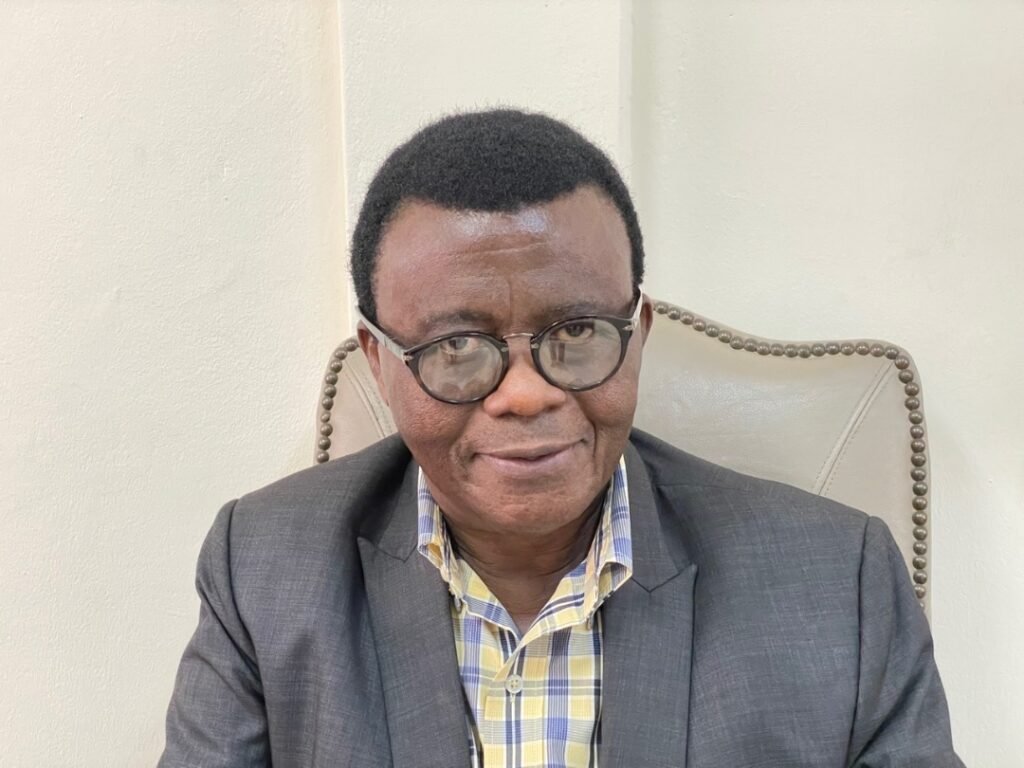
A growing trend of private organisations bestowing awards on government officials has drawn sharp criticism from governance expert Prof. Baffour Agyemang-Duah, who argues that the electorate — not self-appointed committees — should determine the performance of those in public office.
Speaking on Channel One TV on Monday, June 8, Prof. Agyemang-Duah acknowledged that public servants may merit recognition for exceptional work. But he cautioned against award programmes that honour large numbers of government appointees without clearly outlining the assessment standards used to select them.
Public officials are elected or appointed to serve the public, and the best people to judge the performance of such officials would be the public, not a small group of people who sit somewhere without even sharing the criteria for these awards with the public that put them there, he said.
The remarks come at a sensitive moment. The Presidency has recently intervened in the controversy surrounding the Ghana Ministers of State Excellence Honours, which recognised several government officials, including Greater Accra Regional Minister Linda Obenewaa Akweley Ocloo. In a directive signed by Secretary to the President Callistus Mahama, the Presidency ordered ministers, chief executives of state institutions and other political appointees not to accept or participate in awards organised by private entities without prior approval.
The directive cited concerns that many such organisations have unclear credentials and fail to provide transparent and verifiable standards for evaluating public officials.
Democracy as the Ultimate Report Card
Prof. Agyemang-Duah, a respected voice on governance and democratic accountability, argued that elections provide the ultimate test of performance in a democracy. Citizens, he said, have the opportunity to either endorse or reject leaders through the ballot box — a mechanism far more credible than any privately organised recognition scheme.
His critique touches on a deeper tension in Ghana’s political culture: the willingness of private entities to confer legitimacy on public officials through awards that lack transparent methodology. In many cases, Prof. Agyemang-Duah noted, the criteria for selection are never made public, leaving citizens in the dark about what exactly their leaders are being honoured for.
The proliferation of such awards, he argued, risks creating a parallel system of accountability that competes with — and potentially undermines — the democratic process itself. When officials can point to awards as evidence of their competence, the incentive to submit to genuine public scrutiny diminishes.
A Broader Pattern
The controversy is not entirely new. Ghana has seen a steady increase in award schemes targeting political office holders over the past decade, many of which are organised by entities with limited public profiles. Critics have long questioned whether some of these programmes serve primarily as fundraising vehicles or networking opportunities rather than genuine merit-based recognition.
The Presidency’s intervention signals a recognition at the highest levels of government that the practice has become problematic. By requiring prior approval for participation, the directive effectively places a check on the informal economy of political recognition — though enforcement remains to be seen.
For Prof. Agyemang-Duah, the solution lies not in more regulation of award schemes but in a cultural shift that re-centres democratic accountability as the primary measure of public service. The people who put officials in office are the ones best placed to judge whether they deserve praise or censure, he said. That is what elections are for.
As the debate continues, the episode raises fundamental questions about the relationship between private recognition and public accountability in Ghana’s democratic system — questions that are unlikely to be resolved by a single presidential directive.
Image Source: MYJOYONLINE