Kenya’s Tribal Architecture Faces Gen Z Test in 2027
For decades, Kenyan elections have followed a predictable script. Voters do not weigh economic performance or policy platforms with the detached rationality of shareholders reviewing a quarterly report. Instead, they march to the ballot box animated by something far older and far more visceral: tribal loyalty.
Returning to a theme that has long preoccupied analysts of East African politics, the central question ahead of the 2027 presidential election is whether President William Ruto’s ambitious slate of high-profile development projects will have moved the needle enough on ordinary Kenyans’ daily lives to help secure him a second term. Put the question to economists and the answer, paradoxically, is that Kenyans have historically not voted based on the state of the economy — a pattern more common in industrialised democracies.
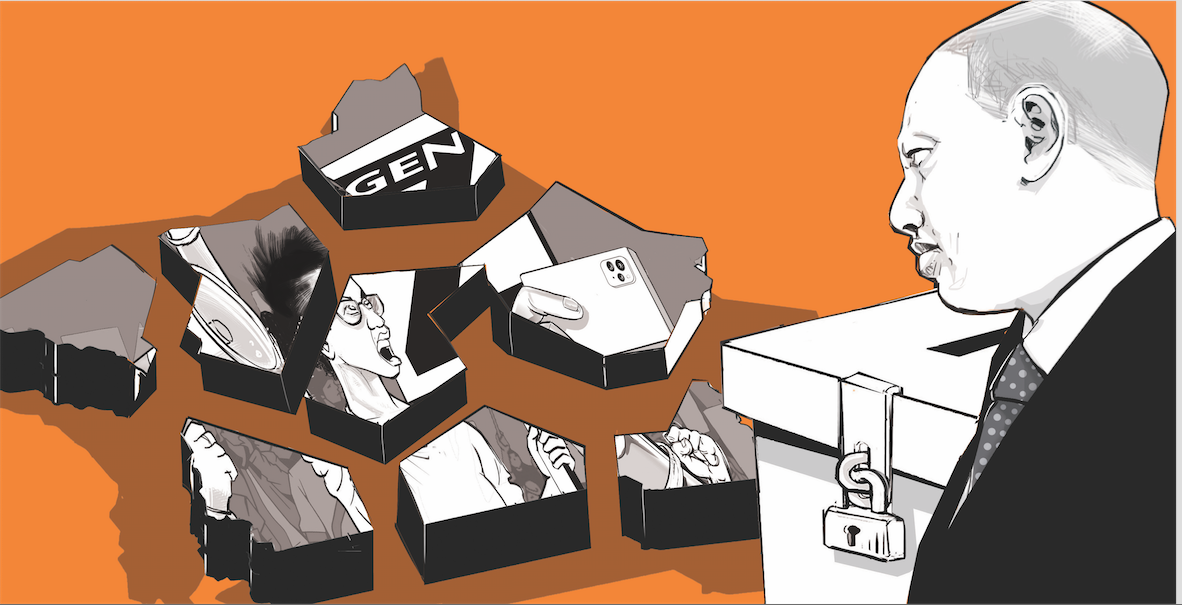
But the events of 2024 may have changed the calculus. The Gen Z-led demonstrations that swept across Kenyan cities that year marked the first time a mass mobilisation in the country had a clear, undeniable focus on a purely economic grievance. Young Kenyans, many of them first-time voters, took to the streets to protest a finance bill they saw as punishing an already struggling middle class. The protests were fierce, at times violent, and culminated in an extraordinary breach of Parliament itself.
The question now is whether that energy can translate into electoral force.
The Tribal Calculus
To understand the challenge the Gen Z movement faces, one must first appreciate the depth of Kenya’s tribal voting architecture. Regional narratives — the sense of “us against them” — have long been the organising principle of Kenyan politics. Which region is perceived to be on “our side” matters far more than any technocratic assessment of a government’s economic record.
The potency of this identity-driven loyalty is not limited to politics. Consider the extraordinary scenes in Nairobi recently, when enormous crowds gathered to celebrate Arsenal winning the English Premier League. These fans had waited 22 years for their team to return to glory — a period during which, logically, they might have transferred their allegiance to a more successful club. They did not. Their loyalty was rock-solid.
Kenyan politics operates on much the same psychology. The coastal region, for example, remained loyal to the late opposition leader and former Prime Minister Raila Odinga for no fewer than 20 years, through repeated presidential election defeats. The people of the coast believed, with an almost religious conviction, that only Odinga could address their twin grievances: historical land injustices and the collapse of regional food processing industries, from sugarcane to cashew nuts. Every attempt to pry that vote bloc away from him failed, just as every effort to penetrate his Nyanza political heartland proved futile.
A New Kind of Movement
The Gen Z protests of 2024 offered a tantalising glimpse of something different. The movement’s clarion call — “tribeless, leaderless, fearless” — resonated precisely because it rejected the ethnic arithmetic that had defined Kenyan politics since independence. Young people from across the country’s many ethnic groups marched together, united not by tribal identity but by shared economic frustration.
The tremors were felt far beyond Kenya’s borders. Similar demonstrations erupted in Tanzania following a contentious general election, sending shockwaves through the broader East African political establishment.
Yet translating street energy into ballot-box power is a fundamentally different proposition. Burning barricades and storming Parliament are, in a sense, the easy part. Generating a unified, nationwide vote large enough to produce a decisive impact on a presidential election outcome requires organisation, discipline, and a candidate — none of which the Gen Z movement has yet consolidated.
Ruto’s Gamble
For his part, President Ruto has wagered heavily on the bet that tangible development — new roads, expanded digital infrastructure, agricultural subsidies — will be enough to overcome the tribal headwinds. It is a strategy borrowed from the playbooks of leaders across the developing world who have sought to govern their way to re-election through bricks and mortar rather than ethnic coalition-building.
At present, it seems unlikely that the Gen Z cohort would rally behind Ruto’s candidacy. The very frustrations that drove them to the streets in 2024 were directed at his government’s policies. But a year is a very long time in politics, and the distance between protest movements and electoral alliances is measured not in months but in the slow accumulation of trust, structure, and strategic compromise.
What is clear is that the 2027 election will serve as a litmus test — not just for Ruto’s presidency, but for whether Kenya’s political culture is capable of evolving beyond the tribal architecture that has defined it for six decades. The Gen Z generation has proven it can shake the foundations. Whether it can rebuild them remains the most consequential open question in Kenyan politics today.
Image Source: GHANAMMA