Yazz Expands Nationwide Campaign to Combat Period Poverty Through School Outreach
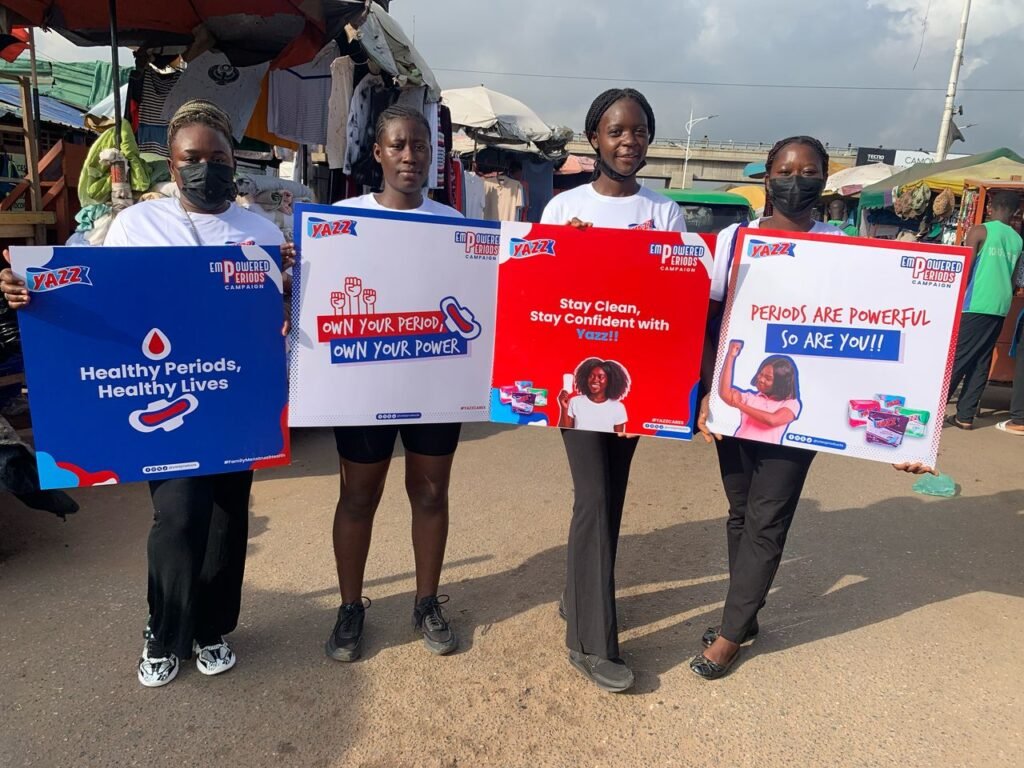
Yazz Personal Care Products has launched an ambitious nationwide school outreach campaign designed to tackle period poverty and improve menstrual hygiene education among adolescent girls across Ghana, marking the latest escalation in the brand’s long-running advocacy for girls’ health and education.
The campaign, part of Yazz’s annual #EmpoweredPeriodsCampaign, saw simultaneous outreach programmes activated across 19 locations on May 28. Volunteers distributed free sanitary pads and delivered menstrual hygiene education to thousands of students and young women, extending the reach of the company’s flagship social intervention, The Dignity Project.
The initiative arrives at a critical moment. Period poverty — the inability to afford menstrual hygiene products — remains a persistent barrier to girls’ education in Ghana. Research has consistently shown that many adolescent girls miss school during their menstrual cycles, not because of illness, but because they lack access to basic sanitary products. The consequences ripple outward: missed classes lead to falling behind, which leads to dropping out, which narrows life prospects in communities that can least afford it.
Akosua Naana Lexis Obenewaa Opoku-Agyemang, Marketing Executive of Lexta Ghana Limited, which manufactures Yazz, said the scale of the activation reflected the depth of the problem. “Our massive outreach across 19 locations proves that tackling period poverty is a continuous, deeply felt mission for us,” she stated. “Through The Dignity Project and our annual Empowered Periods Campaign, we ensure young girls experience their cycles with dignity, comfort, and confidence in their personal care.”
Beyond pad distribution, the brand is expanding its engagement with high schools through a broader programme addressing adolescent health concerns including breast cancer awareness, oral health, personal hygiene and mental wellness. The school-based approach allows Yazz to create safe spaces where students can discuss sensitive health topics openly, with mentors providing guidance on issues that are often shrouded in cultural silence.
The campaign reflects a growing recognition among private-sector actors that menstrual health is not merely a hygiene issue but an equity one. When girls cannot manage their periods with dignity, the cost is borne not just by them individually but by their families, communities and the national economy. Ghana’s demographic dividend depends on keeping girls in school, and period poverty is one of the most tangible and solvable obstacles to that goal.
Yazz’s approach also underscores the limits of corporate social responsibility as a standalone solution. While brand-led campaigns fill an important gap, the structural challenge of menstrual equity requires policy attention: subsidised sanitary products in schools, tax exemptions on menstrual hygiene goods, and integration of menstrual health into the national education curriculum. These are conversations that the private sector can catalyse but government must ultimately own.
The 19-location activation on May 28 coincided with Menstrual Hygiene Day, a global awareness moment that has gained traction in Ghana in recent years. Organisations including Women in Mining Ghana have also marked the occasion with school outreach programmes, suggesting a broadening coalition of actors committed to the cause.
Over the years, Yazz has evolved from a personal care brand into a visible advocate for girls’ health, education and self-confidence. Whether this corporate activism translates into lasting systemic change will depend on whether the conversations started in school halls find their way into policy chambers. For now, the sanitary pads are in the hands of girls who need them, and that is a start worth building on.
Image Source: MYJOYONLINE