Africa's AI Ascent: Why Ghana Must Convert Ambition Into Execution
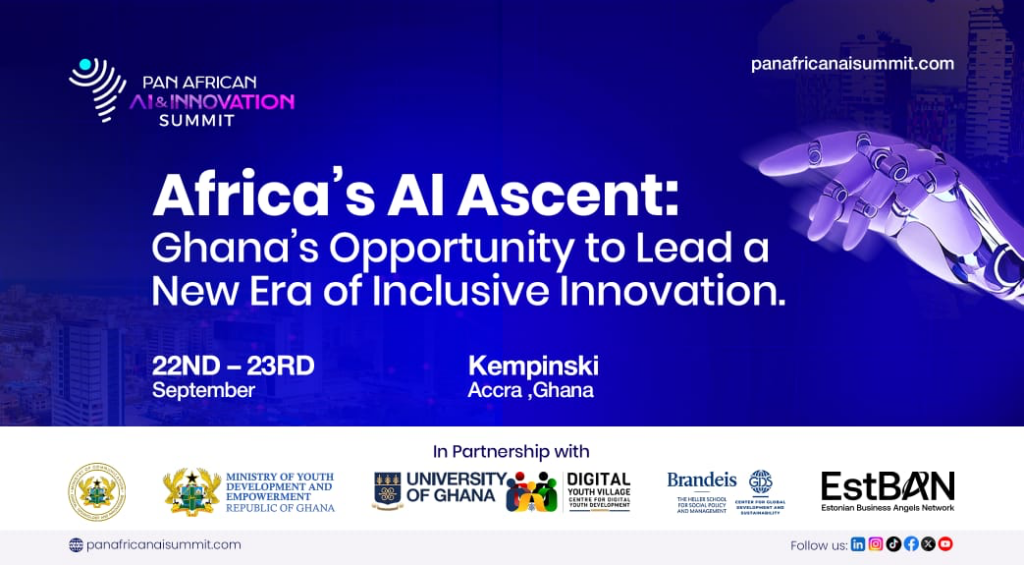
Ghana is preparing to host the Pan African AI and Innovation Summit in Accra this September, and the stakes are higher than the event’s impressive venue at the Kempinski Hotel might suggest. Artificial intelligence is rapidly becoming a foundational layer of economic infrastructure — as critical to future competitiveness as roads, ports and broadband. The question facing Ghana is not whether to engage with AI, but whether it can convert policy announcements into productive capacity before the window of opportunity narrows.
The government’s recent launch of a National Artificial Intelligence strategy, coupled with plans for a US$250 million AI Computing Centre with an initial US$20 million allocation, signals genuine intent. But intent and execution are separated by a chasm that many African nations have struggled to cross. The September summit must serve as a platform for bridging that gap — not merely a showcase of optimism.
The Productivity Case for Business
For Ghanaian business leaders, AI should be understood primarily as a productivity tool rather than a technological curiosity. Properly deployed, it can reduce customer service costs, improve credit assessment accuracy, strengthen fraud detection, streamline inventory management and accelerate decision-making from complex data sets. These are not theoretical benefits — they are measurable advantages that determine which firms grow and which stagnate.
The opportunity is particularly acute in financial services. Banks, insurers, fintechs and capital market operators in Ghana sit on vast volumes of customer data. AI systems, responsibly governed, can help these institutions understand behavioural patterns, detect suspicious transactions, personalise products and extend services to populations currently excluded from formal credit channels. In a country where many small businesses remain invisible to traditional lending systems, AI-enabled risk assessment could widen financial inclusion dramatically.
The recent push by Ghanaian financial institutions to embrace digital transformation — as demonstrated by UMB’s continental leadership awards for digital banking innovation — suggests the sector is moving in the right direction. AI adoption would accelerate that trajectory considerably.
The Risks Are Not Abstract
Yet the dangers of poorly designed AI systems are equally concrete. Algorithms that reinforce existing biases, exclude vulnerable groups, misuse personal data or make opaque decisions that citizens cannot challenge pose genuine threats to social trust. In financial services, this matters profoundly. If an automated system determines who receives a loan, insurance cover or public benefit, then fairness, transparency and accountability cannot be afterthoughts.
Ghana’s move to strengthen data protection frameworks and regulate automated decision-making is therefore essential. Trust is economic infrastructure. Without it, citizens will hesitate to share data, investors will hesitate to fund platforms and businesses will struggle to scale digital services.
Digital Sovereignty and the Talent Pipeline
One of the summit’s central themes — digital sovereignty — deserves particular attention. Africa cannot build a competitive AI economy if its data, computing power, models and technical standards are entirely controlled elsewhere. This is not a call to reject global partnerships, which remain indispensable. It is a demand that those partnerships be structured around mutual value, local capacity and long-term ownership.
The proposed AI Computing Centre in Accra should be treated as a national asset for research, innovation and enterprise development, not merely a prestige project. It can support universities, start-ups, government agencies and private firms that currently lack affordable access to advanced computing resources. Infrastructure like the University of Ghana Digital Youth Village and the Responsible AI Lab are already laying the groundwork for a domestic talent pipeline.
But computing infrastructure without human capital is expensive decoration. Ghana must invest aggressively in AI literacy, data science, software engineering, cybersecurity and ethics education. Africa has the world’s youngest population. If young people are trained only to use AI applications created elsewhere, the continent remains a consumer market. If they are trained to build, localise and commercialise AI solutions, Africa becomes a producer.
Beyond the Hype
Investors should look beyond the glamour of consumer applications. The most valuable AI opportunities in Africa lie in agricultural intelligence, health diagnostics, regulatory technology, insurance analytics, logistics optimisation, local-language education and small business productivity tools — sectors where data exists but is underused, and where margins for improvement are enormous.
Ghana has a genuine opportunity to position itself as one of Africa’s leading centres for responsible AI development. But leadership will depend on execution, not announcements. The country must align policy, infrastructure, finance, regulation and talent development into a coherent system. It must ensure AI serves farmers as well as financiers, students as well as software engineers, small enterprises as well as large institutions.
The September summit will be a test of whether Ghana can move from aspiration to implementation. The continent is watching.
Image Source: MYJOYONLINE