Ghana Climate Change Education Remains Inadequate Despite Growing Environmental Threats
Five years of research among teachers and university students in Ghana has revealed a troubling paradox: while public awareness of climate change has grown, fundamental misconceptions persist, and the education system is doing little to correct them.
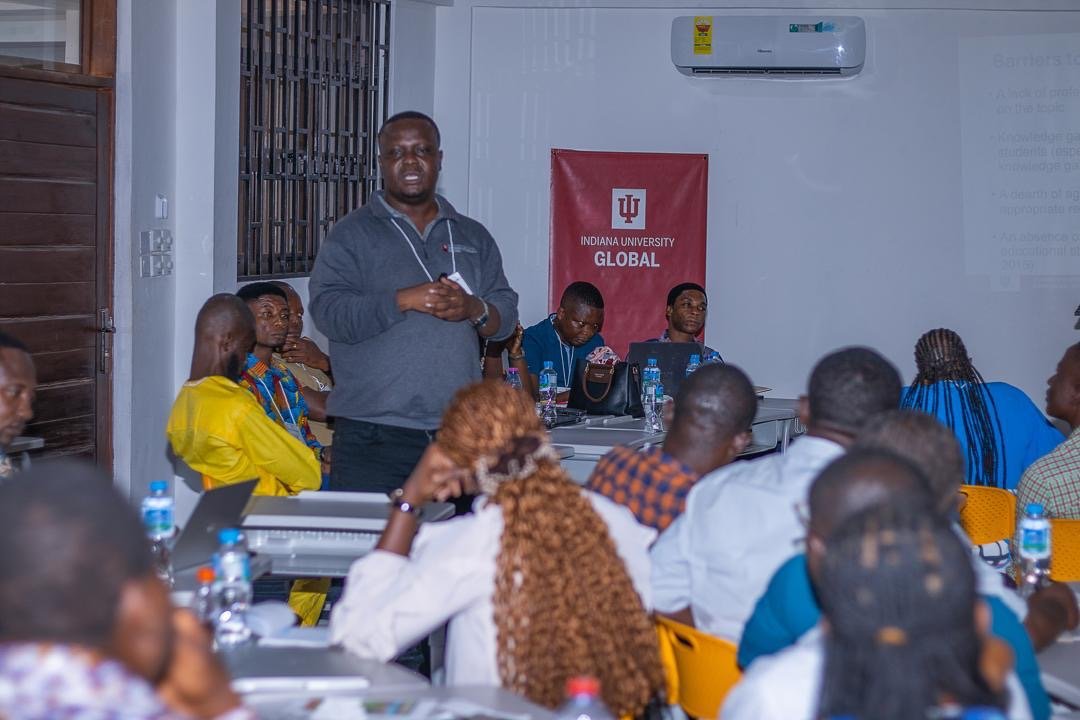
Dr Samuel Cornelius Nyarko, Principal Investigator for the Climate Change and Health Project, presented the findings at a three-day professional development workshop in Accra for 61 senior secondary school teachers from across the country. His message was blunt: Ghana is not investing in the people who are supposed to teach the next generation about the most consequential challenge of their lives.
“Not even a dollar has been invested in training teachers to effectively teach climate change,” Dr Nyarko said.
The Misconception Problem
The research revealed that many teachers wrongly associate climate change with ozone depletion, a distinct environmental issue, and with diseases such as cataracts. These are not minor errors. When teachers confuse the mechanisms of climate change with those of ozone layer depletion, they fundamentally misrepresent the nature of the problem to their students.
Climate change, driven primarily by the accumulation of greenhouse gases from fossil fuel combustion, deforestation, and industrial processes, operates through a different mechanism than ozone depletion, which involves the breakdown of stratospheric ozone by chlorofluorocarbons and other chemicals. Conflating the two leads to confusion about causes, effects, and critically, solutions.
The implications extend beyond the classroom. Students who leave school with a flawed understanding of climate change are less equipped to engage with the policy debates, technological innovations, and behavioural changes that the crisis demands.
A Curriculum Left Behind
Dr Nyarko pointed out that the current climate-related content taught from primary school to junior high school remains shallow and insufficient to prepare students for emerging environmental challenges. He called for the integration of environmental science, earth science, and geoscience into the basic school curriculum, subjects that would give students a more rigorous grounding in the systems that govern the planet’s climate.
Ghana, he noted, already has the human capital to support such reforms. The University of Ghana alone trains large numbers of geology students annually, many of whom could contribute to curriculum development and teacher training.
The Neglected Investment
The workshop itself, organised by the Climate Change and Health Project in partnership with Indiana University’s Ghana Gateway office, was an attempt to fill the gap that government policy has left. Dr Abigail Mercy Opong Tetteh, Programme Manager for Indiana University Ghana Gateway, described the disconnect between public discourse on climate change and what is actually taught in schools.
“We always talk about climate change at conferences and workshops, but teachers are often left out,” she said.
The three-day training was designed to build teachers’ capacity to deliver climate education using locally relevant approaches. The curriculum was developed within the Ghanaian educational context rather than imported from abroad, and facilitators were drawn from Ghanaian institutions including the Water Research Institute and the Ghana Education Service.
Why It Matters Now
Ghana is already experiencing the effects of climate change in ways that are difficult to ignore. Increasingly severe floods, coastal erosion in areas such as Keta, and rising heat levels across the country are not abstract projections, they are present realities affecting communities, livelihoods, and infrastructure.
The Keta coastline, in particular, has become a symbol of Ghana’s vulnerability. Rising sea levels and erosion have displaced communities and destroyed property, prompting repeated calls for intervention that have yet to yield comprehensive solutions.
Against this backdrop, the argument for robust climate education is not merely academic. It is practical. Communities that understand the science behind changing weather patterns, rising seas, and shifting agricultural conditions are better positioned to adapt. Teachers, as Dr Nyarko emphasised, are key actors in climate awareness and education, but only if they themselves understand what they are teaching.
A Call for Policy Action
Dr Nyarko’s call for government investment in climate education and teacher training reflects a broader frustration with the gap between Ghana’s climate commitments and its educational infrastructure. The government has invested in mitigation efforts, renewable energy projects, reforestation initiatives, and international climate negotiations, but has largely overlooked the domestic education system as a tool for long-term resilience.
The workshop for 61 teachers is a start, but it is a modest one. Ghana has thousands of secondary schools and tens of thousands of teachers. Without systemic investment in curriculum reform and professional development, the misconceptions Dr Nyarko’s research has identified will continue to propagate through classrooms year after year.
The climate crisis will not wait for Ghana’s education system to catch up. But the education system, if properly resourced, could ensure that the next generation faces the challenge with clear eyes and sound knowledge.
Image Source: GHANA BUSINESS NEWS