Nkenkensu-Techiman Highway Accident: 12 Killed in Devastating Crash That Exposes Ghana’s Road Safety Crisis
The Nkenkensu-Techiman Highway accident that claimed 12 lives on Tuesday afternoon has cast a harsh spotlight on the persistent road safety crisis gripping Ghana’s major highways, with eyewitness accounts revealing dangerous overtaking behaviour and critically delayed emergency response times that may have cost additional lives.
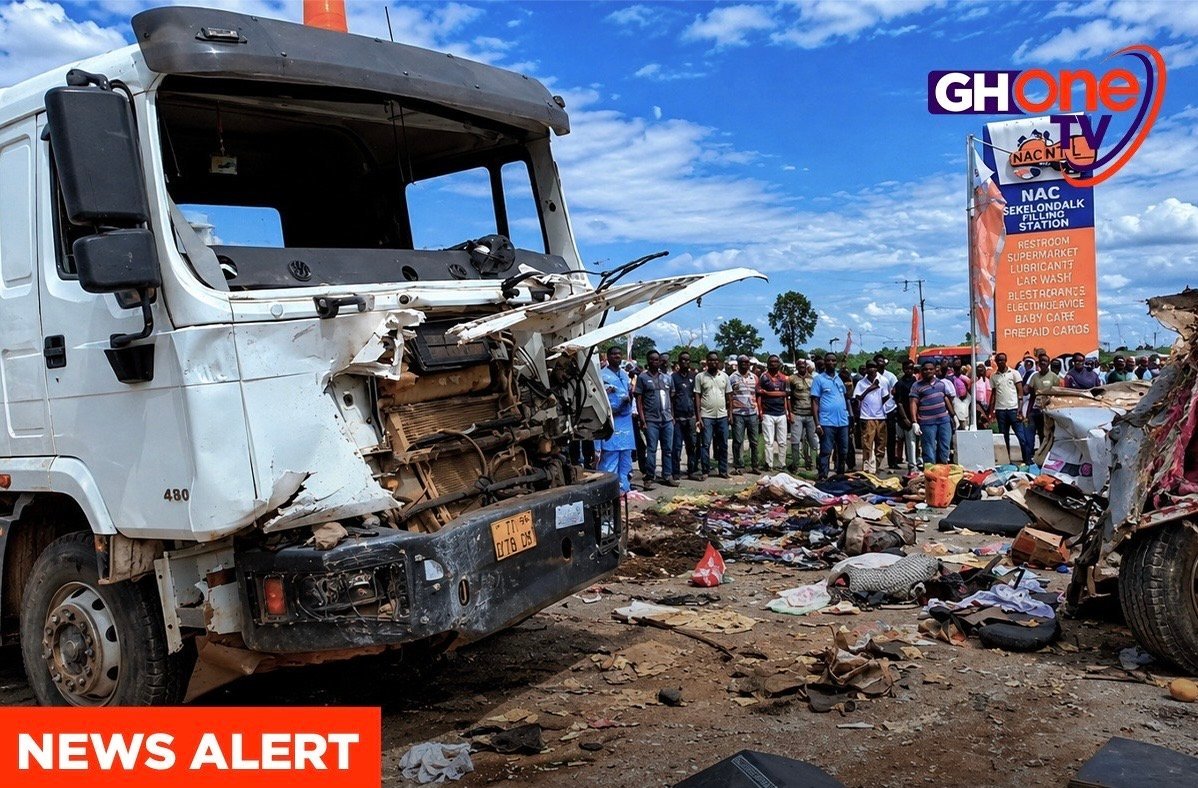
The fatal collision occurred at Nkenkensu in the Offinso North District of the Ashanti Region, when a commercial mini-bus travelling from Kumasi to Techiman collided head-on with an oncoming trailer on the Kumasi-Techiman highway. Medical personnel at the Nkenkensu Government Hospital confirmed that 12 passengers were pronounced dead on arrival, while two survivors sustained critical injuries and are currently receiving treatment.
How the Nkenkensu-Techiman Highway Accident Happened
According to eyewitnesses, the Nkenkensu-Techiman Highway accident occurred at approximately 2:00 p.m. on Tuesday when the driver of the commercial mini-bus reportedly attempted to overtake another vehicle. In doing so, the driver veered into the lane of an approaching trailer heading towards Kumasi, resulting in a catastrophic head-on collision.
The force of the impact left the mini-bus virtually destroyed, with emergency responders and bystanders working to extract victims from the wreckage. The scene was described by those present as deeply distressing, with the scale of casualties overwhelming local resources.
Eric Twumasi Frimpong, an eyewitness who spoke to GHOne News, recounted the harrowing moments following the crash. “It took more than an hour before an ambulance arrived to transport the injured victims to the hospital,” he said, raising serious questions about the adequacy of emergency medical infrastructure along the Kumasi-Techiman corridor.
The bodies of the deceased have since been deposited at the Nkenkensu Government Hospital morgue for preservation and identification, as families across the Ashanti Region and beyond begin to grapple with the devastating toll of the crash.
Emergency Response Failures After the Nkenkensu-Techiman Highway Accident
One of the most alarming aspects of the Nkenkensu-Techiman Highway accident was the reported delay in emergency response. The more-than-one-hour wait for an ambulance to arrive at the scene highlights systemic weaknesses in Ghana’s emergency medical services, particularly in rural and peri-urban areas along major highways.
Road safety experts have long argued that the “golden hour” — the critical period immediately following a traumatic injury during which medical intervention is most likely to prevent death — is routinely missed in Ghana due to inadequate ambulance services, poorly equipped roadside facilities, and a lack of coordination between emergency responders.
In the case of the Nkenkensu-Techiman Highway accident, it remains unclear how many of the 12 fatalities might have survived had emergency medical care arrived sooner. What is clear is that the delay compounded an already tragic situation and underscored the urgent need for investment in emergency response infrastructure along Ghana’s busiest highways.
The National Road Safety Authority (NRSA) has in recent years called for the deployment of more ambulances along major corridors, but progress has been slow. The Kumasi-Techiman highway, which connects the Ashanti Region to the Bono East Region, is one of the busiest and most dangerous roads in the country, yet it lacks the emergency infrastructure needed to respond effectively to accidents of this magnitude.
The Broader Road Safety Crisis Behind the Nkenkensu-Techiman Highway Accident
The Nkenkensu-Techiman Highway accident is the latest in a long and grim catalogue of fatal road crashes in Ghana. According to the World Health Organisation (WHO), road traffic accidents remain one of the leading causes of death in the country, with thousands of lives lost each year due to a combination of reckless driving, poor road design, inadequate vehicle maintenance, and weak enforcement of traffic regulations.
Reckless overtaking, the behaviour that reportedly caused Tuesday’s crash, is one of the most common contributing factors to fatal accidents on Ghanaian highways. Despite repeated campaigns by the NRSA and other stakeholders to educate drivers about the dangers of dangerous overtaking, the practice remains widespread, particularly among commercial vehicle operators under pressure to complete trips quickly.
The Kumasi-Techiman highway has been the site of numerous fatal accidents in recent years. The road, while a critical economic artery connecting major commercial centres, is characterised by narrow stretches, sharp bends, and heavy traffic from both commercial and private vehicles. These conditions, combined with the aggressive driving habits that pervade Ghanaian highway culture, create a deadly combination that claims lives with alarming regularity.
Road safety advocates have called for a multi-pronged approach to addressing the crisis, including stricter enforcement of traffic laws, improved road infrastructure, mandatory driver retraining programmes, and the installation of speed cameras and other monitoring devices along major highways.
What Must Change After the Nkenkensu-Techiman Highway Accident?
In the aftermath of the Nkenkensu-Techiman Highway accident, there is a renewed sense of urgency among road safety advocates and government officials alike. The scale of the tragedy — 12 lives lost in a single incident — has reignited debate about the adequacy of Ghana’s road safety framework and the political will to implement meaningful reforms.
Among the measures being discussed in the wake of the crash are the deployment of more traffic police along the Kumasi-Techiman corridor, the construction of dedicated overtaking lanes on dangerous stretches of the highway, and the introduction of mandatory rest stops for commercial drivers to combat fatigue-related accidents.
There are also calls for the government to accelerate the dualisation of the Kumasi-Techiman highway, a project that has been on the drawing board for years but has yet to receive the funding and political commitment needed to move forward. A dual carriageway, road safety experts argue, would significantly reduce the risk of head-on collisions by separating traffic travelling in opposite directions.
For the families of the 12 victims, however, these policy discussions offer little comfort. The Nkenkensu-Techiman Highway accident has left a trail of grief and loss that will be felt for years to come, a painful reminder that behind every road safety statistic is a human life cut short.
As Ghana mourns the victims of this devastating crash, the question remains: how many more lives must be lost before the country’s highways become safe for travel? The answer, as always, lies in the actions taken by those with the power to effect change.
Source: Starr FM