TVET Ghana Development Demands 5 Bold Moves as Mahama Declares It Must Drive National Progress
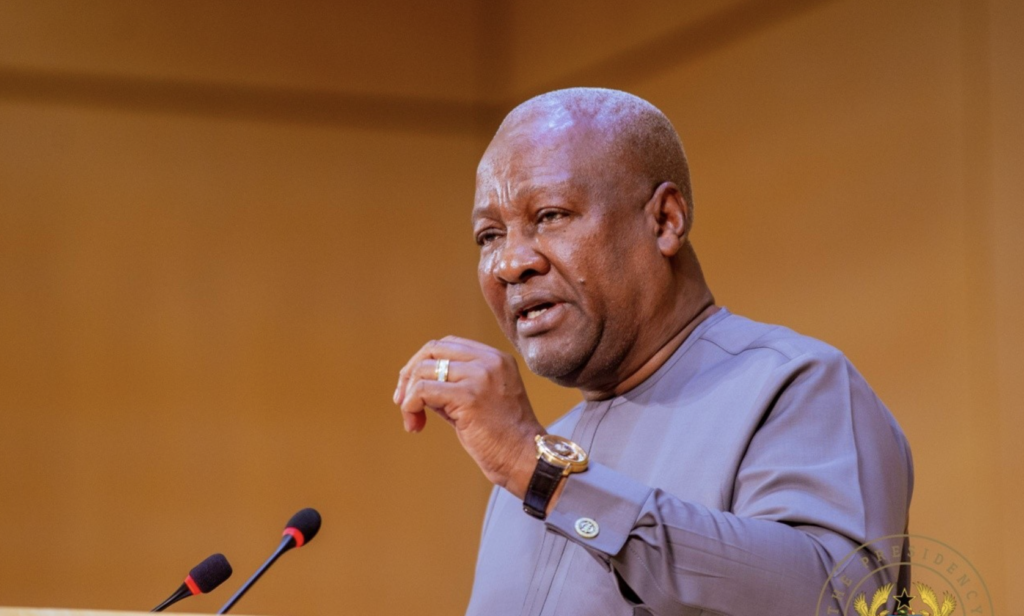
TVET Ghana development received a powerful endorsement on Monday when President John Dramani Mahama declared that Technical and Vocational Education and Training must no longer be treated as second-tier education but embraced as a central engine of national progress. Speaking at the 4th Applied Research Conference of Technical Universities in Effia, Western Region, the President outlined an ambitious vision that includes new universities, substantial funding, and a renewed commitment to practical skills training.
The conference, themed “Advancing TVET for Innovation, Technology Transfer and Entrepreneurship for Sustainable Development,” drew lecturers, researchers, students, and policymakers from across the country. Mahama used the platform to challenge long-standing perceptions that technical education occupies a lower rung on Ghana’s academic ladder.
Why TVET Ghana Development Must Become a National Priority
For decades, Ghana’s education system has privileged academic pathways over practical skills, leaving a critical gap in the country’s industrial workforce. President Mahama argued that this mindset must change if Ghana is to compete in a rapidly evolving global economy. He stressed that technical universities must focus on producing graduates who can solve real-world problems, meet industry demands, and create sustainable employment opportunities.
“TVET must drive Ghana’s development,” the President declared, framing the statement not as aspirational rhetoric but as a policy imperative. His remarks come at a time when youth unemployment remains one of the country’s most pressing challenges, with thousands of graduates entering the job market each year without the practical competencies employers require.
The conversion of polytechnics into technical universities a decade ago was, in Mahama’s view, a foundational step toward Ghana’s industrialisation agenda. However, he acknowledged that more investment and institutional support are needed to unlock the full potential of these institutions.
Mahama Announces GH¢10 Million Fund to Accelerate TVET Ghana Development
One of the most significant announcements at the conference was the creation of a GH¢10 million support fund specifically for technical universities. The fund will be supplemented by additional allocations earmarked for doctoral training and research, signalling the government’s intent to build a robust pipeline of skilled professionals and researchers.
This financial commitment arrives at a critical juncture. Many technical universities across the country have struggled with inadequate infrastructure, outdated curricula, and limited access to modern equipment. The new fund, if properly managed, could address some of these chronic challenges and position Ghana’s technical institutions as centres of excellence.
President Mahama also revealed plans to establish a new science university in the Savannah Area, along with two additional technical universities in Techiman and Jasikan. These expansions aim to decentralise access to quality technical education and bring opportunities closer to communities that have historically been underserved.
STEM, Artificial Intelligence, and Robotics at the Heart of TVET Ghana Development
Beyond infrastructure and funding, President Mahama placed considerable emphasis on the need for continuous investment in Science, Technology, Engineering, and Mathematics (STEM), as well as emerging fields such as artificial intelligence and robotics. He argued that preparing Ghana’s younger generation for the demands of the future economy requires integrating these disciplines into the core of TVET curricula.
This vision aligns with broader global trends. Countries such as Germany, South Korea, and Singapore have long championed technical and vocational education as drivers of economic transformation, producing skilled workforces that power advanced manufacturing, technology, and innovation sectors. Ghana’s push to elevate TVET represents a strategic attempt to replicate these successes on African soil.
The President commended lecturers, researchers, and students for their contributions to national development through innovation and practical skills training. He called on technical universities to deepen their partnerships with industry, ensuring that research outputs translate into commercially viable products and services. The emphasis on practical education echoes recent initiatives such as the Deloitte Ghana Volunteer Day, which empowered over 4,500 students through mentorship and skills development programmes.
Inclusive Education and Disability Support Strengthen TVET Ghana Development Agenda
In a move that underscores the administration’s commitment to equity, President Mahama pledged a GH¢50 million annual tertiary support fund for persons with disabilities. This initiative recognises that inclusive education is not merely a social good but an economic imperative, ensuring that all Ghanaians, regardless of physical ability, can contribute to the nation’s development.
The pledge was welcomed by stakeholders at the conference, many of whom have long advocated for greater support for students with disabilities in tertiary institutions. Access to education, they argue, must be matched with the resources and infrastructure needed to ensure meaningful participation and success. Community-driven education support has already shown promise, as demonstrated by the Mawuli School PTA donation that delivered 300 desks and water tanks to improve the learning environment.
What TVET Ghana Development Means for the Country’s Industrial Future
Ghana’s industrialisation ambitions hinge on its ability to produce a workforce equipped with practical, market-relevant skills. The emphasis on TVET as a driver of development, rather than a fallback option for students who do not pursue traditional academic routes, represents a fundamental shift in how the country approaches education and economic planning.
The success of this vision will depend on several factors, including sustained government funding, effective curriculum reform, strong industry partnerships, and a cultural shift in how society perceives technical education. If these elements come together, Ghana could position itself as a regional leader in skills development and innovation.
President Mahama’s announcements at the 4th Applied Research Conference signal a clear direction of travel. Whether the implementation matches the ambition remains to be seen, but the commitment to elevating TVET Ghana development to the centre of national policy is, at the very least, a promising start.
As the country grapples with high youth unemployment, an evolving global economy, and the urgent need for industrial growth, investing in technical and vocational education may prove to be one of the smartest strategic decisions Ghana can make.
Source: MyJoyOnline