Ghana Mineral Wealth Foreign Investment Demands 6 Bold Truths Ken Ashigbey Reveals Now
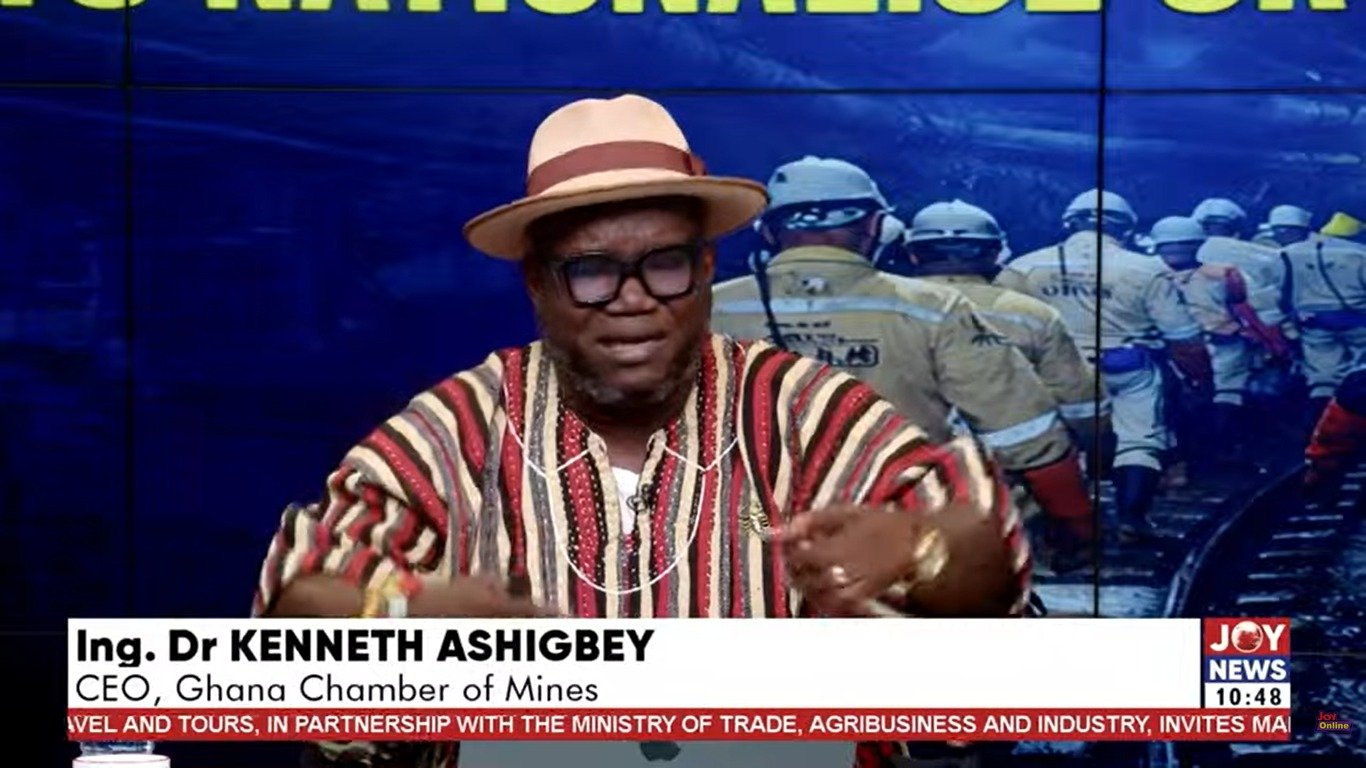
Ghana mineral wealth foreign investment remains the central question gripping the nation’s extractive sector, as the Chief Executive Officer of the Ghana Chamber of Mines, Ken Ashigbey, delivered a stark assessment of the country’s mining future during a high-level policy dialogue in Accra on Tuesday, May 26.
Speaking at the JoyNews-organised event titled “To Nationalise or Transform? Rethinking Ghana’s Approach to Mining, Oil and Critical Minerals,” Mr Ashigbey argued forcefully that Ghana cannot rely solely on domestic capacity to exploit its vast mineral resources and that foreign investment remains the indispensable catalyst for unlocking the sector’s full potential.
Ghana Mineral Wealth Foreign Investment: Why the Nation Cannot Go It Alone
The scale of Ghana’s mineral deposits is simply too large for local actors to develop effectively, according to Mr Ashigbey. He painted a picture of staggering untapped potential, describing underground gold reserves running into what he termed “trillions of ounces” across six major gold belts that remain largely unexplored.
“The thing we should bear in mind is that, beyond the things we are mining, there are six gold belts, the six trillions of ounces of gold that are sitting there and we as Ghanaians alone will not be able to do it; we still need to be able to attract some investors to come and do it,” he told the gathering of industry leaders, policymakers, academics and governance experts.
The dialogue comes at a pivotal moment for Ghana’s extractive industries. The country has been a gold-producing nation for over a century and possesses significant deposits of bauxite and manganese. Since the start of commercial crude production from the Jubilee Field in December 2010, Ghana has also become an oil-producing state. More recently, attention has shifted toward lithium and other critical minerals as the global energy transition accelerates demand for battery-related resources.
The Untapped Potential Behind Ghana’s Mineral Wealth and Foreign Investment Needs
Ghana mineral wealth foreign investment discussions are not merely academic. The country’s mining sector contributes significantly to government revenue, employment and foreign exchange earnings. Yet the gap between what exists underground and what is actually being extracted remains enormous.
Mr Ashigbey’s remarks highlight the fundamental tension between resource sovereignty and practical development needs. While some voices in the national conversation advocate full nationalisation of mining assets, the Chamber of Mines CEO pointed to the capital-intensive and technologically complex nature of modern mining as reasons why international partnerships remain unavoidable.
The question of Ghana mineral wealth foreign investment extends beyond gold. As the world pivots toward clean energy, Ghana’s deposits of lithium, cobalt and other critical minerals position the country as a potentially significant player in global supply chains. However, exploiting these resources requires exploration infrastructure, technical expertise and sustained capital investment that far exceeds current domestic capacity.
According to the World Bank’s mining sector analysis, developing countries with rich mineral endowments typically require foreign direct investment to bridge the gap between resource potential and actual production. Ghana is no exception to this pattern.
Why Ghana Mineral Wealth Foreign Investment Is a Policy Imperative
The policy dialogue that prompted Mr Ashigbey’s comments reflects a broader national reckoning with how best to manage extractive resources. The debate over nationalisation versus transformation is not new, but it has gained urgency as Ghana seeks to maximise returns from its natural endowments while attracting the capital necessary for development.
Ghana mineral wealth foreign investment considerations also intersect with the country’s broader economic strategy. The mining sector’s performance directly affects the cedi’s stability, government budget projections and employment prospects in mining communities across the Ashanti, Western and Eastern regions.
Mr Ashigbey called for a strategic approach that balances domestic participation with international capital and expertise. This hybrid model, he argued, offers the best pathway to ensuring Ghanaians benefit from their mineral wealth while maintaining the investment flows necessary for sector growth.
Related debates about Ghana’s mining future have intensified in recent months. The discussion about increasing Ghana’s share in the value chain through partnerships rather than isolation underscores the complexity of balancing national interests with the practical requirements of resource development.
Exploration Challenges Threaten Ghana’s Mineral Wealth and Foreign Investment Pipeline
A critical dimension of Ghana mineral wealth foreign investment that Mr Ashigbey highlighted is the state of exploration activity. He warned that much of what Ghana mines today is based on exploration work carried out more than 15 years ago, raising questions about the sustainability of current production levels.
“The precursor for mining, which is exploration, is the critical thing. A lot of what we are mining today is based on exploration we did over 15 years ago. So what is going to be the basis of our mining going forward?” he questioned.
The high cost of exploration remains a major barrier, requiring sustained investment from both state and private sector players. Without renewed exploration, Ghana risks depleting known reserves without replacing them with new discoveries, potentially undermining the long-term viability of its mining industry.
This challenge reinforces the case for Ghana mineral wealth foreign investment at the exploration stage, not merely at the production level. International mining companies typically bring exploration expertise and risk capital that domestic actors cannot replicate, making foreign partnership essential from the earliest stages of resource development.
The broader extractive sector roundtable discussion also touched on the monumental decision facing Ghana’s extractive sector between nationalisation and transformation approaches.
What Ghana’s Mineral Wealth Foreign Investment Debate Means for the Future
Ghana mineral wealth foreign investment will remain a defining policy question for years to come. As global demand for critical minerals intensifies and Ghana positions itself within international supply chains, the choices made today about investment frameworks, partnership models and regulatory approaches will shape the country’s economic trajectory for generations.
Mr Ashigbey’s intervention at the JoyNews policy dialogue adds a powerful voice to those arguing that pragmatism must temper ideology in managing Ghana’s natural resources. The evidence suggests that a balanced approach—one that welcomes foreign capital while strengthening domestic capacity and ensuring equitable benefit-sharing—offers the most promising path forward.
The stakes are enormous. Ghana’s mineral endowment represents one of the most significant economic assets on the African continent. How the nation chooses to develop that endowment—through isolation or partnership, through nationalisation or transformation—will determine whether its mineral wealth translates into broad-based prosperity or remains an untapped promise.
Source: MyJoyOnline
Image Source: MYJOYONLINE