Ghana Cocoa Law Reform Exposes 7 Powerful Reasons Farmers Demand Justice Now
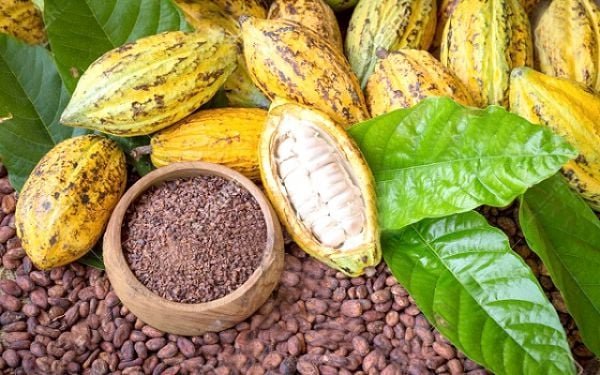
The push for Ghana cocoa law reform has reached a critical juncture, as growing evidence reveals that the country’s decades-old monopsony system is systematically depriving cocoa farmers of fair compensation for their labour — effectively reducing them to what critics describe as a form of servitude.
At the heart of the debate is a 1984 law, whose antecedents trace back to the colonial era, that denies cocoa farmers the right to freely negotiate prices and sell their property to buyers of their choice. Instead, farmers are forced to sell exclusively to the Ghana Cocoa Board (COCOBOD) at below-market prices set unilaterally by the state. Trading outside this monopsony is a criminal offence carrying a minimum five-year prison sentence.
The case for Ghana cocoa law reform is not merely an economic argument. It is a fundamental question of property rights, constitutional protections, and whether the state should imprison people for selling their own produce in a free market.
Ghana Cocoa Law Reform Needed After Decades of Below-Market Prices
Over the 30-year period between the 1990/1991 and 2020/2021 cocoa seasons, cocoa farmers earned, on average, just 55.8 percent of the global cocoa price, according to preliminary analysis of data from the International Cocoa Organisation (ICCO). In the 1993/1994 cocoa season, the farm gate price paid to farmers plunged to as low as 32 percent of the world price.
These figures represent an extraordinary wealth transfer from some of Ghana’s poorest and most hardworking citizens to the state apparatus. Cocoa cultivation is among the most demanding forms of agriculture. Farmers must first secure land, often through fragile tenancy arrangements such as abunu or abusa, then spend three to five years clearing, planting, pruning, spraying, and tending cocoa trees — all without earning a single cedi from the crop.
During that period, they rise before dawn in villages with limited roads, healthcare, and electricity, while still struggling to feed their families and keep their children in school. Climate change has compounded these hardships, with higher temperatures reducing yields, longer rains fuelling disease and pests, and increasingly erratic weather deepening uncertainty for the next generation of farmers.
Ghana Cocoa Law Reform Confronts Colonial-Era Monopsony
The statutory monopsony that Ghana cocoa law reform advocates seek to dismantle is not an indigenous creation. Before the British colonial government introduced the Ghana Cocoa Board’s statutory monopsony, the Gold Coast’s cocoa sector operated through a competitive market system with multiple buyers, organised farmer cooperatives, and prices determined through negotiation rather than by state fiat.
Ghana is today the only major cocoa-producing country in the world that retains a full statutory monopsony over the purchase of cocoa from smallholder farmers. Every other major producer has, in some form, liberalised. Even Côte d’Ivoire, the world’s largest producer, now operates what may fairly be described as a hybrid system.
In that model, a regulatory body called the Conseil du Café Cacao sets a guaranteed minimum farm gate price each season and supervises the sector. Within that price floor, however, a plurality of licensed private buyers, exporters, and cooperatives compete to purchase cocoa from farmers. The state retains a meaningful role in protecting farmers from price volatility and ensuring sectoral stability, but it does not stand between farmer and buyer as the sole purchaser.
Ghana Cocoa Law Reform Supported by Government’s Own Strategy
The proposal for Ghana cocoa law reform is not a radical foreign imposition. In the 1990s, acting on advice from the International Monetary Fund and after broad stakeholder consultations, the Cabinet of Ghana approved reducing state involvement in cocoa marketing. This position was later reflected in the Medium-Term Cocoa Development Strategy of 1999.
In other words, the decision was already made at the highest level of executive decision-making. It was simply never implemented. That fact disposes of any suggestion that what reformers now seek is radical, foreign, or untested in Ghanaian governance.
The advocacy has taken on new urgency amid broader economic pressures. Ghana’s currency has been under severe strain, with the cedi depreciation exposing multiple forces driving Ghana’s currency slide in 2026. At the same time, questions about how extractive industries are managed have intensified, as seen in the ongoing debate over Ghana mining tax reform for small-scale miners.
Ghana Cocoa Law Reform Must Protect Farmers’ Constitutional Rights
The most powerful argument for Ghana cocoa law reform rests on the Ghanaian Constitution itself. The constitution explicitly requires “prompt, fair and adequate compensation” when the state takes property from citizens. Yet the monopsony system effectively forces cocoa farmers to surrender their harvest at prices determined entirely by the state, without any mechanism for negotiation or fair market valuation.
“The hard-earned fruit of a farmer’s labour should not be subjected to a forced sale to a state-designated buyer at a unilaterally determined, below-market farm gate price,” argue reform advocates. They are not calling for the abolition of COCOBOD or complete deregulation of the sector. Rather, they insist that if the state entity offers a preferable price in a given season, farmers will voluntarily sell to the state. But if another buyer offers a better price, it should not be a crime to sell to that buyer.
The cocoa industry is projected to be worth $146 billion by 2035, according to industry analyses. There is no rational justification for shortchanging the poor cocoa farmer who sustains the entire industry. With thoughtful and creative approaches to structuring the sector, it should be possible to ensure that value is distributed more fairly — allowing government, regulators, farmers, and all participants across the supply chain to benefit.
For Ghana cocoa law reform to succeed, the state can continue to mobilise revenue through income taxes, export levies, buyer licence fees, penalties on non-compliant participants in the value chain, and even cocoa tourism. What it cannot legitimately do is criminalise the basic right of citizens to sell their own property at a fair price.
Source: MyJoyOnline