Cedi Depreciation Exposed: 7 Powerful Forces Driving Ghana Currency Slide in 2026
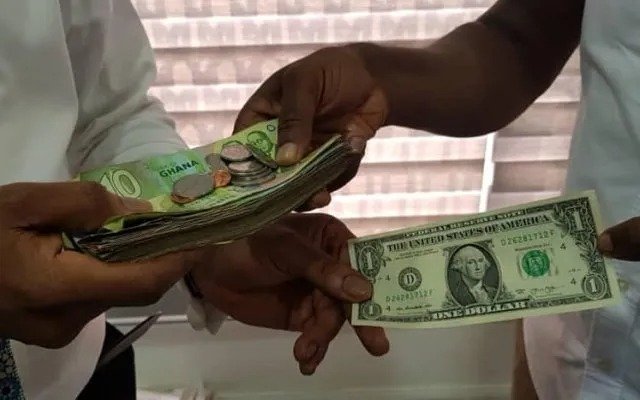
The Ghana cedi depreciation has emerged as a pressing economic concern for millions of Ghanaians, particularly after the currency’s remarkable 40.7 percent appreciation against the US dollar in 2025. Since late March 2026, the cedi has been on a sustained weakening path, driven by a confluence of global and domestic pressures that have caught many off guard after the currency’s strongest performance in modern Ghanaian history.
The cedi started 2025 trading around GH¢14.7 to the dollar and ended the year near GH¢10.4, a rally that restored confidence in the local currency after decades of nearly continuous annual depreciation. Yet the current slide raises critical questions about whether this is a temporary blip or the beginning of a broader correction. A closer examination of the underlying factors suggests the situation, while serious, remains far from a crisis.
Why the Cedi Depreciation Began After the Middle East Conflict Escalation
The primary catalyst for the current Ghana cedi depreciation traces directly to the escalation of the US-Israel-Iran conflict in the Middle East beginning in late March 2026. Global oil prices surged sharply, rising from around $60 to $70 per barrel before the conflict to periods exceeding $100 per barrel. For a country like Ghana that imports the overwhelming majority of its refined petroleum products, this price shock translated directly into a significantly higher monthly fuel import bill.
Industry estimates cited by MyJoyOnline indicate that Ghana’s monthly petroleum import requirements have climbed to roughly $500 million, up from approximately $400 million during the same period in 2025. That $100 million monthly increase alone represents a substantial surge in dollar demand that naturally puts downward pressure on the cedi.
Seasonal Pressures Amplifying the Cedi Depreciation in 2026
Beyond the energy import shock, several seasonal factors have converged to intensify the demand for foreign exchange. Following the release of many companies’ 2025 financial statements, foreign-owned firms operating in Ghana have been repatriating dividends to parent companies abroad. These transactions require dollars, as no company in South Africa, the United Kingdom or elsewhere will accept cedis as dividend payments.
Additionally, businesses across Ghana typically restock their inventories around the middle of the year, creating another layer of dollar demand for imports. Together, these seasonal pressures have elevated the demand for foreign exchange at precisely the moment when global disruptions were already straining supply.
How Gold Export Disruptions Deepened the Cedi Depreciation
On the supply side, parts of Ghana’s foreign exchange inflows faced temporary disruptions during the early stages of the Middle East conflict. Ghana sells the overwhelming majority of its small-scale sector gold through GoldBod to markets such as Dubai and India. When the conflict escalated, parts of Middle Eastern airspace were temporarily disrupted, affecting trade routes and logistics.
GoldBod’s Chief Executive Officer, Sammy Gyamfi, publicly confirmed that the agency had temporarily halted some gold exports, describing it as a management decision amid market uncertainty. At the same time, Reuters reported that GoldBod was exploring increased gold sales to India. However, India itself has recently taken steps to manage gold imports as part of efforts to support the rupee and manage its own external balances. These developments slowed portions of Ghana’s foreign exchange inflows at a time when dollar demand was rising sharply.
Why the Bank of Ghana Is Not Defending the Cedi Depreciation Aggressively
Many observers have questioned why the Bank of Ghana has not stepped in more forcefully to arrest the slide. The answer lies in a fundamental shift in monetary policy philosophy. The central bank is currently operating under a revised foreign exchange intermediation framework developed with the International Monetary Fund in late 2025. That framework is designed to reduce excessive intervention and allow the exchange rate to adjust more freely, provided movements remain orderly.
As Ghana transitions from the IMF Extended Credit Facility programme toward a Policy Coordination Instrument arrangement, maintaining policy credibility has become increasingly important. Heavy intervention to artificially defend the cedi could send the wrong signal to investors and international markets, particularly at a time when Ghana is attempting to demonstrate stronger macroeconomic discipline.
Governor Johnson Pandit Asiama has repeatedly maintained that dollar supply remains robust, with Ghana’s gross international reserves standing around $14 billion. As he noted, “the cedi is expected to move. It can depreciate or appreciate. Our concern is to avoid excessive volatility.” This distinction is critical: the Bank of Ghana is not focused on defending a fixed exchange rate but on preventing disorderly market conditions and sharp speculative swings. President Mahama himself indicated during 2025 engagements with the business community that a gradual annual depreciation of around 5 percent would be considered acceptable if it supports stability and competitiveness.
What the Cedi Depreciation Means for Ghana’s Economic Outlook
A 5 percent depreciation from the cedi’s end-2025 level would place the currency somewhere around GH¢11 to the dollar by the end of 2026, which remains far stronger than where the currency traded before its 2025 rally. Many of the major factors that supported the cedi’s appreciation in 2025 still broadly remain in place. Gold prices are still elevated, fiscal policy has remained relatively disciplined, and Ghana continues to benefit from strong gold export earnings.
The creation of GoldBod also changed the foreign exchange dynamics of the market by centralizing much of Ghana’s gold export proceeds and channeling those inflows toward the Bank of Ghana. The available evidence suggests the current situation remains manageable. Dollar reserves remain relatively strong, Ghana’s key export commodities continue to perform well, and the Bank of Ghana still retains substantial capacity to intervene if market conditions become excessively volatile. At this stage, the recent Ghana cedi depreciation appears more like a controlled adjustment to shifting global conditions than the start of a broader currency crisis.
For Ghanaians watching the exchange rate with anxiety, the broader picture offers reassurance. The structural improvements made in 2025, including fiscal discipline and centralized gold export management through GoldBod, have not been undone. The cedi depreciation of 2026 is a reminder that currencies move in both directions, but the fundamentals supporting the cedi remain broadly intact.
Source: MyJoyOnline