Accelerate transport decarbonization as auto industry grows.
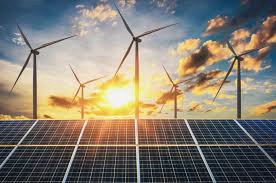
Today marks the International Day of Clean Energy, and the U.K. – Ghana Jobs and Economic Transformation (JET) programme is joining the global community to spotlight Ghana’s vast potential for a cleaner energy future.
This future aims to boost industrial competitiveness, safeguard the environment, create high-quality jobs, and strengthen Ghana’s ambition as a leading automotive hub in West Africa, in line with Sustainable Development Goal (SDG) 7.
As champion of the Ghana Automotive Development Policy, there is a call to action for Her Excellency the Vice President of the Republic of Ghana, Professor Jane Naana Opoku-Agyemang, and the Hon. Minister of Trade, Agribusiness and Industry, to lead the adoption of measures that will strengthen Ghana’s position as a competitive clean-energy hub.
According to Terri Sarch, Development Director at the British High Commission, Accra, Ghana’s automotive sector has the potential to be a powerful driver of clean energy transition, industrial growth, and job creation.
The sector can achieve this through policies and investments that accelerate cleaner transport, strengthen local manufacturing, and deliver economic opportunities that are inclusive and sustainable.
Ghana aims to achieve an unconditional 15% reduction in greenhouse gas emissions by 2030, as outlined in its Nationally Determined Contribution (NDC) under the Paris Agreement.
Transportation is a leading source of greenhouse gas emissions in Ghana, contributing to nearly half of all energy-related emissions and increasing by nearly 15% from 2015 to 2023.
The Intergovernmental Panel on Climate Change (IPCC) warns that greenhouse gas emissions must fall by 50–80% by 2050 to avert catastrophic warming.
Therefore, it is imperative to reflect on how the automotive sector can become Ghana’s most powerful catalyst for climate action and economic growth.
There are currently 3.2 million vehicles in operation in Ghana, with an average age of 14 years, and annual vehicle imports stand at about 100,000 units per year, out of which 80% are used.
The uptake of Electric Vehicles (EV) is on the rise, with a growing Electric 2/3-wheeler base, enhancing the 24-hour economy ambition.
Ghana’s shift to a modern, low-emission vehicle fleet is progressing slowly and could take decades.
To accelerate progress, the Ministry of Trade, Agribusiness and Industry, with support from the UK-Ghana JET Programme, completed a 2025 mid-term review of the Ghana Automotive Development Policy.
The programme unlocked $98 million in investment from global car makers and facilitated the establishment of seven state-of-the-art assembly facilities with a combined installed capacity of 140,000 units per year.
However, actual demand for new vehicles remains far below this capacity, limiting the sector’s impact.
Affordability remains a key driver of demand for locally assembled new vehicles, including electric vehicles (EVs), but it is limited due to the absence of a structured asset-backed scheme.
To address this, the government should consider three practical actions: activating Clean Energy provisions in the GADP, supporting the implementation of vehicle financing schemes, and boosting confidence and demand for assembled vehicles.
By taking these actions, Ghana can accelerate its transition to a cleaner energy future, creating a healthier environment, safer roads, and a more competitive manufacturing base.
Image Source: MYJOYONLINE